Bioremediation is a process that uses living organisms, such as bacteria, fungi, and plants, to remove or neutralize contaminants from the environment. It has emerged as a sustainable and cost – effective solution for environmental cleanup. In bioremediation studies, the choice of experimental equipment is crucial, and glass petri dishes are a common item in many laboratories. As a supplier of glass petri dishes, I often get asked whether these dishes can be effectively used for bioremediation studies. In this blog, I will explore this question in detail. Glass Petri Dishes

The Basics of Bioremediation and Glass Petri Dishes
Bioremediation can be divided into two main types: in – situ and ex – situ. In – situ bioremediation involves treating contaminants at the site where they are located, while ex – situ bioremediation involves removing the contaminated material to a different location for treatment. Glass petri dishes are typically used in ex – situ studies, where small – scale experiments can be conducted under controlled conditions.
Glass petri dishes are shallow, cylindrical, lidded dishes made of glass. They have several advantages that make them suitable for bioremediation studies. Firstly, glass is a chemically inert material. This means that it does not react with most of the substances used in bioremediation experiments, such as contaminants, growth media, and microorganisms. For example, when studying the degradation of heavy metals by bacteria, the glass petri dish will not interfere with the chemical reactions taking place between the bacteria and the heavy metals.
Secondly, glass is transparent, which allows researchers to easily observe the growth and behavior of microorganisms. In bioremediation studies, it is essential to monitor the growth of the organisms responsible for contaminant degradation. The transparency of glass petri dishes enables researchers to visually assess the growth of colonies, the color changes in the growth media, and the interaction between the microorganisms and the contaminants.
Applications of Glass Petri Dishes in Bioremediation Studies
Microbial Growth and Isolation
One of the primary uses of glass petri dishes in bioremediation studies is for the growth and isolation of microorganisms. Microorganisms play a central role in bioremediation, as they are the agents that break down contaminants. Glass petri dishes are filled with a suitable growth medium, such as agar, which provides the necessary nutrients for the microorganisms to grow.
For example, if we are studying the bioremediation of oil spills, we can collect samples from the contaminated area and spread them on the agar in glass petri dishes. After incubation, different colonies of microorganisms will grow on the agar. These colonies can then be isolated and further studied to determine their ability to degrade oil.
Contaminant Degradation Experiments
Glass petri dishes can also be used to conduct experiments on contaminant degradation. Researchers can add a known amount of contaminants to the growth medium in the petri dishes and then introduce the microorganisms. Over time, they can measure the reduction in the concentration of the contaminants.
For instance, in a study on the bioremediation of pesticides, a certain amount of pesticide can be added to the agar in the glass petri dish. Then, a strain of bacteria known to have the potential to degrade the pesticide is inoculated onto the agar. By periodically analyzing the concentration of the pesticide in the medium, researchers can determine the rate and efficiency of degradation.
Studying Microbial Interactions
Bioremediation often involves the interaction of multiple microorganisms. Glass petri dishes provide a platform to study these interactions. For example, some microorganisms may work together in a symbiotic relationship to enhance the degradation of contaminants. By co – culturing different microorganisms in a glass petri dish, researchers can observe how they interact with each other and how these interactions affect the bioremediation process.
Limitations of Using Glass Petri Dishes in Bioremediation Studies
While glass petri dishes have many advantages, they also have some limitations. One of the main limitations is the scale of the experiments. Glass petri dishes are relatively small, and the amount of contaminants and microorganisms that can be used in the experiments is limited. This means that the results obtained from petri – dish experiments may not accurately represent what would happen in a real – world bioremediation scenario.
Another limitation is the potential for contamination. Although glass is a relatively clean material, it can still be contaminated with other microorganisms during handling. Contamination can affect the results of the bioremediation experiments, as the unwanted microorganisms may compete with the target microorganisms for nutrients and space.
Overcoming the Limitations
To overcome the scale limitation, researchers can conduct multiple petri – dish experiments and then scale up the results. They can also use larger glass containers or bioreactors for larger – scale experiments. To reduce the risk of contamination, proper aseptic techniques should be used when handling the glass petri dishes. This includes sterilizing the dishes before use, working in a clean environment, and using sterile equipment.
Why Choose Our Glass Petri Dishes for Bioremediation Studies
As a supplier of glass petri dishes, we take pride in providing high – quality products. Our glass petri dishes are made from high – grade glass that is resistant to thermal shock and chemical corrosion. This ensures that they can withstand the conditions of bioremediation experiments, such as the use of different growth media and the presence of contaminants.
We also offer a variety of sizes and thicknesses of glass petri dishes to meet the different needs of researchers. Whether you are conducting small – scale preliminary experiments or larger – scale studies, we have the right petri dishes for you.
In addition, our glass petri dishes are carefully inspected before shipment to ensure that they are free from defects. We understand the importance of reliable equipment in bioremediation studies, and we are committed to providing products that meet the highest standards.
Conclusion
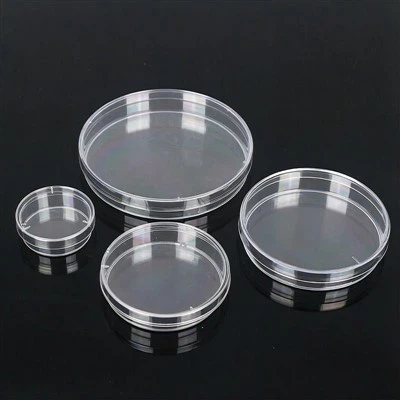
In conclusion, glass petri dishes can be effectively used for bioremediation studies. They offer several advantages, such as chemical inertness, transparency, and suitability for microbial growth and experimentation. However, they also have some limitations, such as scale and contamination issues. By understanding these limitations and taking appropriate measures to overcome them, glass petri dishes can be a valuable tool in bioremediation research.
Glass Test Tube If you are involved in bioremediation studies and are looking for high – quality glass petri dishes, we would be more than happy to discuss your requirements. Contact us to start a conversation about how our products can support your research.
References
- Atlas, R. M., & Philp, J. C. (2005). Bioremediation: Applied Microbial Solutions for Real – World Environmental Cleanup. CRC Press.
- Madigan, M. T., Martinko, J. M., Bender, K. S., Buckley, D. H., & Stahl, D. A. (2015). Brock Biology of Microorganisms. Pearson.
- Singh, A., & Ward, O. P. (2004). Bioremediation of high – molecular – weight polycyclic aromatic hydrocarbons: A review of the microbial degradation of benzo[a]pyrene. Biotechnology Advances, 22(5), 439 – 463.
Taizhou Yukang Medical Devices Co., Ltd.
As one of the leading glass petri dishes manufacturers and suppliers in China, we warmly welcome you to buy customized glass petri dishes at competitive price from our factory. If you have any enquiry about quotation, please feel free to email us.
Address: Heheng Village, Shengao Town, Jiangyan District, Taizhou City
E-mail: taizhouyukang@163.com
WebSite: https://www.tzykylqx.com/
