Hey there! I’m working as a supplier in the flow meter business, and I often get asked this question: "Can a flow meter be used in a corrosive environment?" Well, let’s dig into this topic and find out. Flow Meter
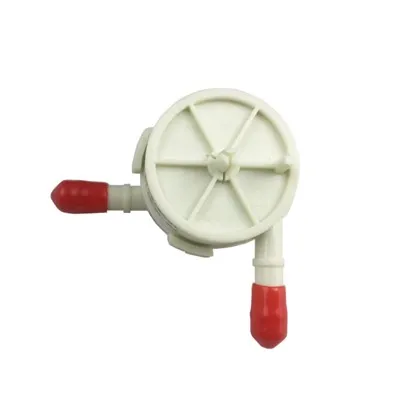
First off, let’s understand what a corrosive environment is. It’s basically a setting where there are chemicals or substances that can eat away at materials over time. Think of places like chemical plants, wastewater treatment facilities, or marine environments. In these spots, the air, water, or other substances can be full of acids, alkalis, salts, or other corrosive agents.
Now, the short answer to whether a flow meter can be used in a corrosive environment is yes, but it’s not that simple. There are a whole bunch of factors we need to consider.
One of the most important things is the material the flow meter is made of. Different materials have different levels of resistance to corrosion. For example, stainless steel is a common choice for many flow meters because it’s relatively resistant to corrosion. But not all stainless steels are created equal. Some types are better suited for certain corrosive substances than others. If we’re dealing with mild acids, a standard 304 stainless steel might do the job. But for stronger acids or highly corrosive salts, we might need to go for a more specialized stainless steel, like 316L.
Plastic materials can also be a good option. For instance, polyvinyl chloride (PVC) and polypropylene (PP) are often used in flow meters for less aggressive corrosive environments. They’re lightweight, inexpensive, and have decent corrosion resistance. However, they might not hold up well in high – temperature or high – pressure corrosive situations.
Another material that’s gaining popularity is ceramic. Ceramics are extremely resistant to corrosion and wear. They can handle a wide range of corrosive chemicals, including strong acids and alkalis. But they’re also brittle, so they need to be handled with care during installation and operation.
The type of flow meter also matters. There are several different types of flow meters out there, such as electromagnetic flow meters, ultrasonic flow meters, and turbine flow meters, and each has its own pros and cons when it comes to corrosive environments.
Electromagnetic flow meters are great for corrosive liquids because they don’t have any moving parts that can be damaged by the corrosive substances. They work based on Faraday’s law of electromagnetic induction. The only part that comes into contact with the liquid is the lining of the flow tube and the electrodes. So, if we choose the right lining material, like PTFE (polytetrafluoroethylene), which is highly resistant to a wide range of chemicals, these flow meters can work really well in corrosive environments.
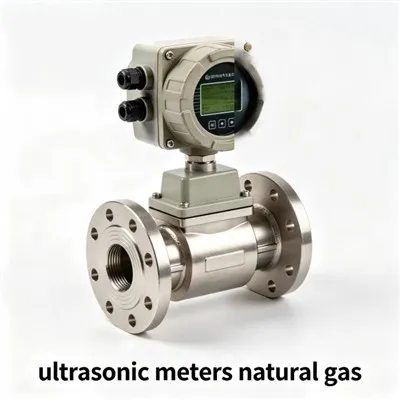
Ultrasonic flow meters are non – intrusive, which means they don’t need to be inserted into the fluid. This is a big advantage in corrosive environments because there’s no part of the meter in direct contact with the corrosive substance. They send ultrasonic waves through the fluid and measure the flow based on the change in the waves’ speed. However, they can be affected by the properties of the fluid, such as its density and viscosity, if it’s highly corrosive and has unusual chemical properties.
Turbine flow meters, on the other hand, have rotating parts. In a corrosive environment, these moving parts can be quickly damaged by the corrosive agents. The blades of the turbine can be worn down, which will affect the accuracy of the flow measurement. So, unless we use special materials to coat the turbine blades or construct the whole meter, turbine flow meters might not be the best choice for highly corrosive settings.
The operating conditions in the corrosive environment also play a huge role. Temperature, pressure, and flow rate can all impact how well a flow meter can perform. High temperatures can accelerate the corrosion process, so we need to make sure the materials of the flow meter can withstand the heat. For example, in a high – temperature chemical reaction where the liquids are also corrosive, we might need to use a flow meter with a high – temperature – resistant lining and electrodes.
Pressure is another factor. If the pressure in the system is too high, it can cause stress on the flow meter and make it more vulnerable to corrosion. We need to select a flow meter that’s rated for the specific pressure range of the application. And the flow rate can affect the wear and tear of the flow meter. A high – flow rate can cause more abrasion, especially if the corrosive fluid contains solid particles.
So, as a flow meter supplier, how do we help our customers find the right solution for a corrosive environment? Well, first of all, we need to have a detailed conversation with them. We ask about the specific chemicals in the environment, the temperature, pressure, and flow rate conditions. Then, we recommend the most suitable materials and types of flow meters based on that information.
We also offer customization options. If our standard flow meters don’t fit the exact needs of the customer’s corrosive environment, we can work on developing a customized solution. This might involve using special alloys, coatings, or linings to make the flow meter more resistant to corrosion.
In addition, we provide after – sales support. We know that a flow meter in a corrosive environment might need more maintenance and monitoring. So, we offer training on how to properly install, operate, and maintain the flow meter. We also provide regular check – ups to make sure the flow meter is working accurately and safely.
If you’ve got a project in a corrosive environment and you’re looking for a reliable flow meter, don’t hesitate to reach out. We’ve got the knowledge, experience, and products to help you find the perfect solution. Whether it’s a small – scale application or a large – scale industrial project, we’re here to assist you. Contact us today to start the conversation about your flow meter needs in a corrosive environment.
Level Sensor References
- "Handbook of Flow Measurement" by Richard W. Miller
- "Corrosion Engineering" by Samir S. Desai
Shenzhen Fineherc Technology Co., Ltd.
As one of the most experienced flow meter suppliers in China, we’re featured by quality products and low price. Please feel free to buy discount flow meter made in China here from our factory. Welcome to view our website for more information.
Address: 5th Floor, Building D, No. 39, Keji East Road, Torch Development Zone, Zhongshan City,China
E-mail: fineherc@hotmail.com
WebSite: https://www.fineherc.com/
