Hey everyone, if you’ve ever taken a peek inside a working machine—say, the conveyor belts at a warehouse, the engine of your pickup truck, or even the vending machine that spits out your midday snack—you’ve seen stamping parts, even if you didn’t notice them. I’ve been in the stamping parts game for over 8 years now, and let me tell you, these little stamped components aren’t just afterthoughts. They’re the unsung heroes keeping every piece of machinery running smoothly. Today, I’m breaking down what they actually do in all that big industrial equipment, no stuffy tech jargon promise—keep it real, keep it relatable. Stamping Parts

First off, let’s get one thing straight: when a machine is built, every part’s job matters, but stamping parts do most of the heavy lifting when it comes to structure. Wait, what do I mean by structure? Think of the frame of a packaging machine that sits on a factory floor. That frame isn’t just a random chunk of metal welded together—9 times out of 10, it’s made from stamped brackets and angle pieces. We stamp those parts out of steel or aluminum in custom shapes, punch the right holes for bolts, and bend them to fit exactly where they need to be. Without those stamped structural parts, that packaging machine would just be a pile of loose metal, right? No way it could handle 10,000 boxes an hour without wobbling or breaking apart. I actually had a customer last year who was using cheap, custom-cut metal brackets instead of our stamped ones. He came to me with a problem: his assembly line machine was vibrating so bad, it was misaligning parts and causing 2 hours of downtime every week. We swapped in our precision-stamped brackets, and that vibration dropped by 70%—turns out the stamped parts have consistent thickness and sharp, even bends that cheap cuts don’t. That’s the structural function in action, and it’s not just about holding things up; it’s about keeping the whole machine stable.
Next, stamping parts do all the heavy lifting when it comes to load bearing. Industrial machinery isn’t like your toaster—they’re moving, lifting, and pushing tons of stuff every single day. Take the hydraulic cylinders on a construction excavator, for example. The arm of that excavator has to lift 20 tons of dirt and rock without bending or snapping. What’s the part that connects the arm to the bucket? A custom-stamped clevis mount. We design those mounts to take repeated, extreme pressure—they go through that same lift, lower, tilt cycle thousands of times a day, every day, 6 months straight. Stamping allows us to make these parts with high-strength steel that’s been shaped exactly to handle that load, no extra weight. If you tried to make a clevis mount from a random metal plate, it wouldn’t hold up half as long—too much material would go to waste, and the shape wouldn’t be optimized for stress points. Another example: the conveyor rollers on a mining machine. Each roller has a stamped end cap that keeps it aligned and supports the weight of the ore. Those end caps have to be tough enough to handle 500 pounds of rock rolling on them 24/7, and our stamped ones? They last 3 times longer than machined ones because the stamping process compacts the metal, making it stronger without adding bulk. That’s load bearing—stamping parts take the brunt of all that force so the rest of the machine doesn’t have to.
Now, let’s talk about a less obvious function: sealing and alignment. Wait, how does a stamped part seal something? Let’s use an example from the automotive manufacturing side, since a lot of our stamping parts go to car factories. The engine of a car has a lot of moving parts, and oil leaks would be a disaster—they’d ruin the engine fast. The stamped gaskets and flanges we make fit perfectly between the engine block and the oil pan, or between the cylinder head and the intake manifold. Because stamping can make parts with super tight tolerances—like, within a thousandth of an inch—those gaskets create a near-perfect seal, no oil getting out and no dust getting in. That’s not just a car thing, either. Industrial pump machinery relies on stamped seal rings to keep liquids and gases from leaking out of the connections between pump components. Without those stamped seals, you’d have a leaky pump that wastes product and forces costly repairs.
Alignment is another big one. If you’ve ever watched a machine assemble small parts, like putting together a phone or a toy car, there’s a part that guides each tiny component into the exact right spot. That’s a stamped guide rail or a locator pin. We make these parts with precise holes and edges, so when a robot or feed mechanism moves a part through the machine, the stamped guide lines it up perfectly—no cross-threading, no misalignment, no wasted parts. I had a customer who makes medical devices last month—they were manually aligning small metal parts during assembly, which was slow and had a 5% error rate. We installed a set of our custom-stamped alignment guides, and their error rate dropped to almost zero, and their production time per device was cut by 15%. That’s the alignment function doing work—stamped parts make sure every moving part in the machine is where it’s supposed to be, when it’s supposed to be there.
Let’s not forget about noise reduction and vibration dampening, which is a huge deal for industrial and commercial machines. A lot of people don’t think about how much noise big machinery makes, but it’s not just annoying—it’s bad for worker safety, and it can even signal a machine is worn out. Stamping parts play a big role here too. For example, the stamped housing for an industrial fan motor. We design those housings to be slightly flexible, not rigid, so they absorb the vibration from the motor spinning. Think of it like how a yoga mat absorbs your impact when you step on it—except for metal. We’ve found that using stamped motor housings instead of welded ones cuts the noise level of a fan by about 3-5 decibels. That might not sound like much, but in a factory where dozens of fans are running, that adds up to a much quieter, safer work environment. Another example: the stamped rubber mounts that go between a machine’s base and its frame. Those mounts are stamped to have a specific shape that isolates the machine’s vibration from the floor, so the whole factory doesn’t shake every time the machine turns on. We had a customer who was getting complaints from the office next to their production floor—they could feel the machines vibrating through the walls. Swapping in our stamped vibration mounts fixed that completely; no more complaints, and their machine’s parts were wearing out slower too, since less vibration was stressing them.
Oh, and let’s mention durability, because that’s what all these functions boil down to at the end of the day. Industrial machinery is expensive, and no one wants to replace parts every other month. Stamping parts are made from solid metal, and the stamping process actually strengthens the metal a bit. When you stamp a piece of metal, you’re shaping it and compacting it at the same time, so it’s not just a flat metal plate bent—its structure is tighter. That means stamped parts are resistant to corrosion, wear, and impact. We have a customer that makes agricultural equipment, like tractor harvesters. The stamped parts they use for the harvesting heads go through rain, dirt, and repeated impact with crop residue all harvest season. Our stamped parts last 2 harvest seasons (that’s about 6 months straight of use) before needing replacement, whereas the machined parts they used before only lasted one harvest. That’s not just saving them money on parts—it’s saving them downtime, which is huge when harvest season only comes once a year.
Wait, let’s get real here too—no part is perfect, but stamping parts are versatile enough to work in almost every type of machinery. From small vending machines to giant construction equipment, stamping parts are everywhere. And as a stamping parts supplier, I can tell you that one size doesn’t fit all. Every machine is different, so we make custom stamping parts tailored to each customer’s needs. Whether someone needs a small bracket for a coffee machine or a heavy-duty clevis mount for a mining excavator, we can design and stamp it to fit exactly what the machine needs.
If you’re someone who works with machinery—whether you’re an engineer designing new equipment, a maintenance manager dealing with broken parts, or a small business owner keeping your machines running—you know how important it is to have reliable parts that do their job right. Stamping parts aren’t just generic metal bits; they’re specialized components that handle structure, load bearing, sealing, alignment, noise reduction, and durability. Without them, most of the machinery we use every day wouldn’t work at all, or would break constantly.
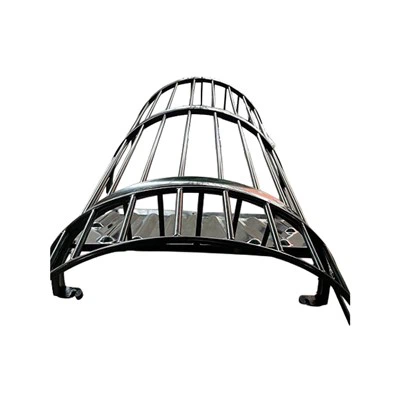
At the end of the day, I’ve seen first-hand how much of a difference a good stamping part makes. It’s not just about making a metal shape—it’s about making something that works as hard as the machine it’s in. If you’re looking for stamping parts for your machinery, whether you need standard sizes or custom designs, we can help. Just reach out to our team to talk through your needs, and we’ll find a solution that works for you.
Cold-Rolled Steel Cabinet References:
- Groover, M.P. Fundamentals of Modern Manufacturing: Materials, Processes, and Systems. Wiley, 2020.
- Tlusty, J. Manufacturing Processes and Equipment. Prentice Hall, 2000.
- American Iron and Steel Institute. Steel Stamping for Industrial Equipment Applications. AISI, 2022.
- Kalpakjian, S., & Schmid, S.R. Manufacturing Engineering and Technology. Pearson, 2019.
- Society of Manufacturing Engineers. Stamping Process Best Practices for Industrial Machinery. SME, 2021.
Hangzhou Zhalihui Import And Export Co., Ltd.
We are one of the most experienced stamping parts manufacturers and suppliers in China, specialized in providing high quality customized products. Please feel free to buy discount stamping parts in stock here from our factory. Contact us for quotation.
Address: Room 2801, Building 2, Taifu Plaza, No.17, Tonghui Middle Road, Chengxiang Street, Xiaoshan, Hangzhou, Zhejiang
E-mail: Chars_1979@hotmail.com
WebSite: https://www.zhalihui.com/
