If you’ve been in the manufacturing, aerospace, medical, or even high-end automotive parts space, you’ve definitely heard the hype around titanium alloys. Lightweight, super strong, corrosion-resistant—they feel like the perfect material for just about anything that needs to hold up under pressure, right? And yeah, as a titanium alloy supplier, I get why everyone’s obsessed with them. We ship tons of grade 5 titanium, Ti-6Al-4V, every month for things like aircraft engine brackets, surgical implants, and even high-end mountain bike frames. But here’s the thing: I don’t sugarcoat the downsides, because I’d rather be honest with you than have you end up with a part that fails mid-project because you didn’t know what you were getting into. Titanium alloys aren’t the end-all-be-all, and if you’re not careful, their flaws can derail your timelines, blow your budget, or even put safety at risk. Let’s break down the real, non-hyped disadvantages that actually matter if you’re working with these alloys. Titanium Alloy
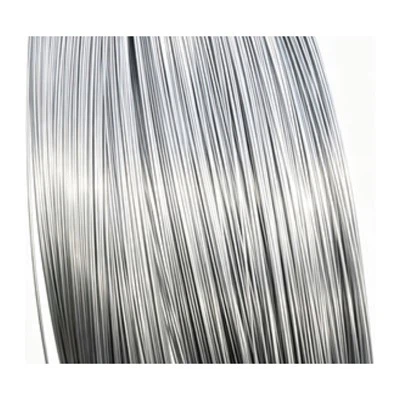
First up, and probably the biggest one we run into on a weekly basis: the cost. Let’s do a quick comparison to the material most of our customers used before they reached out to us—stainless steel, specifically 304 or 316. A 1-inch solid block of Ti-6Al-4V, our most popular grade, is roughly 4 to 5 times more expensive than the same size of 304 stainless. And it’s not just the raw material price. The processing costs are way higher too. Titanium has this thing called a high melting point—around 1,668°C (3,034°F), which is way higher than steel’s 1,538°C (2,800°F). So melting and casting it takes way more energy, not to mention specialized equipment that’s not cheap to run. Add to that the fact that titanium reacts super easily with oxygen, nitrogen, and even carbon at high temperatures—if you’re melting it in a regular environment, you end up with impurities that make the part brittle. That means we have to use vacuum furnaces or inert gas atmospheres for melting, which adds hours of time and thousands of dollars to each batch.
Then there’s machining. Man, machining titanium is a nightmare for most shops, and even some experienced ones. Why? Because titanium has this weird combination of high strength and low thermal conductivity. What does that mean for you? All the heat from cutting a piece of titanium doesn’t dissipate into the part like it does with steel or aluminum. It gets concentrated right at the cutting edge of your drill, mill, or lathe bit. That heat is so intense, it can not only dull the tool in seconds—but also damage the titanium itself, leading to micro-cracks or grain growth that weakens the part. I’ve seen a custom bike frame shop ruin three high-end carbide drill bits in an hour of drilling through a 1/2-inch titanium tube, and end up with a frame that had hidden micro-cracks they didn’t catch until they pressure-tested it later. Not only did that cost them three days of work, but they had to eat the cost of the new bits and the ruined material. And if you don’t have machinists who actually know how to work with titanium—like ones who use sharp, rigid tools, lower cutting speeds, and plenty of specialized coolant—you’re going to have a bad time. Even experienced shops will tell you machining titanium takes 2 to 3 times longer than machining the equivalent part in steel, which adds more labor costs.
Corrosion resistance? Wait, didn’t I just say that titanium is corrosion-resistant? Yeah, that’s true—but only most of the time. That’s a huge caveat I wish more people understood. Titanium’s superpower is that it forms that tight, invisible oxide layer on its surface almost instantly when it’s exposed to air or water, which protects it from rust and corrosion. But that oxide layer isn’t indestructible. There are two big scenarios where it fails. First, crevice corrosion. That’s when you have two titanium parts (or a titanium part and another metal) clamped together with tiny gaps between them—like the bolts holding a titanium heat exchanger to a steel pipe, or two titanium plates in a medical implant. If moisture or salt gets trapped in that crevice, the oxygen level drops, and the oxide layer breaks down. Then you get corrosion that eats away at the metal right in that gap, which can cause bolts to snap or implants to loosen over time. We actually had a customer a couple years back who was building a marine-grade turbine and didn’t account for crevice corrosion between the titanium blades and their steel hub. Within 6 months, the blades were shifting, and they had to replace the whole assembly at a cost way higher than if they’d used a compatible gasket or coated the hub. The second big corrosion issue is exposure to highly concentrated acids, specifically hydrochloric acid, sulfuric acid, and even some phosphoric acids at elevated temperatures. Most titanium alloys hold up great to weak acids, but if you’re working with something like a chemical processing plant that uses 20% hydrochloric acid at 50°C, standard Ti-6Al-4V will corrode faster than 304 stainless. We’ve had to tell several chemical clients that they need a more specialized titanium grade, like Grade 7 (which has palladium added to improve corrosion resistance) or even a non-titanium alloy, because their process is too harsh.
Next, weldability issues. A lot of aerospace, automotive, and medical parts get welded, and titanium is tricky here too. Again, that reactivity with gases like oxygen and nitrogen is the problem. If you weld titanium in open air, the high heat of the weld zone will soak up oxygen and nitrogen, making the weld area super brittle. A weld that should be just as strong as the base metal can crack apart under minimal stress. And not just any weld—even a small tack weld or a heat-affected zone (the area around the weld that gets hot but isn’t melted) is vulnerable. Fixing this isn’t easy. You have to use a process called gas tungsten arc welding (GTAW) with an inert gas shield—usually argon—to cover the weld and the surrounding area while it cools. For some high-stakes parts, like surgical implants, you even have to do the welding inside a glove box filled with argon, which adds a ton of time and cost. I’ve seen a medical device startup try to weld their titanium hip prototypes in their garage with a cheap MIG welder—total disaster. The welds were brittle, failed during testing, and they had to scrap six months of work before we walked them through the proper process. Also, titanium has a high coefficient of thermal expansion. That means when it heats up and cools down during welding, it expands and contracts more than most steels. If you don’t account for that by clamping parts tightly or using filler metals that match the expansion rate, you end up with warped parts that are impossible to assemble correctly.
Then there’s the problem with compatibility. Wait, what’s compatibility got to do with titanium? It’s galvanic corrosion, and it’s a big one when you’re assembling titanium parts with other metals. Galvanic corrosion happens when two different metals are in contact in an electrolyte—like saltwater or moisture—and one acts as an anode (the part that corrodes) and the other as a cathode. Titanium is actually really noble, meaning it’s super cathodic. If you touch titanium to a less noble metal like aluminum, carbon steel, or even some stainless steels, in a moist environment, the less noble metal will corrode quickly. We had a construction customer a while back who used titanium bolts to secure steel facade panels on a skyscraper. Within a year, the steel panels were rusting through right where they touched the titanium bolts—because the galvanic reaction ate the steel way faster than it would have if they’d used steel bolts. The fix here was to use insulating gaskets or coatings between the titanium and the other metal, but that’s an extra step a lot of people don’t think about until it’s too late.
Wait, let’s not forget high-temperature performance, too—even though titanium is strong, it’s a temperature wimp above around 400°C (752°F). Below that, it’s great, with high strength-to-weight. But once you get above 400°C, its tensile strength drops off a cliff. By 600°C (1,112°F), titanium is barely stronger than aluminum at room temperature, and it starts to creep—meaning it slowly deforms under constant stress. That’s why you don’t see titanium used in car engine exhaust manifolds or furnace parts, which get way hotter than that. We once had a customer who wanted to use titanium for turbocharger blades in a performance car, and we had to tell them no way—titanium would warp and break at the 900°C temperatures turbo blades hit. They had to switch to a nickel-based superalloy instead.
And finally, availability and lead times. Let’s be real—titanium isn’t as common as steel or aluminum, especially the specialty grades. If you need a custom sized billet or a near-net shape for a one-off project, lead times can stretch to 4 to 6 weeks, sometimes longer. For high-volume orders, it’s not much better—we’ve had customers wait 8 weeks for a batch of Ti-6Al-4V sheets because global titanium production is limited, and demand from aerospace and medical has been through the roof the last few years. Raw titanium sponge, the base material we turn into alloy, is produced in just a handful of countries, so supply chain issues (like what we saw during the pandemic) can make prices spike and lead times blow out even more.
Look, I’m not trying to talk you out of using titanium alloys—they’re amazing materials for the right job. A surgical implant made of titanium is way better than stainless because it’s biocompatible and light. An aerospace bracket made of titanium saves thousands of pounds of weight, improving fuel efficiency. A mountain bike frame made of titanium lasts forever and rides smooth. But they’re not a one-size-fits-all solution, and ignoring these disadvantages will only lead to headaches, extra costs, and failed projects.

If you’re working on a new part and you’re wondering if titanium is right for you, or you’re dealing with a titanium project that’s hitting snags, hit us up. We don’t just sell you titanium—we help you navigate all these pitfalls, whether that’s suggesting a different grade, recommending machining or welding processes, or helping you avoid costly mistakes. Let’s talk through your project, no sales pressure, just honest advice from a supplier that’s been in this game long enough to know titanium’s strengths and weaknesses.
Molybdenum Alloy References:
- Lütjering, G., & Williams, J. C. (2007). Titanium (2nd ed.). Springer.
- Boyer, R. R. (1996). An overview on the use of titanium in the aerospace industry. Materials Science and Engineering: A, 213(1-2), 103-114.
- Donachie, M. J. (2000). Titanium: A Technical Guide (2nd ed.). ASM International.
- Craven, A. J. (2010). Galvanic corrosion of titanium in contact with other metals. Corrosion Science, 52(10), 3217-3225.
- Konkol, P. J., & Nichols, F. A. (1990). Machining characteristics of titanium alloys. Journal of Materials Processing Technology, 22(3), 257-272.
China Super Tech Co., Ltd.
As one of the most professional titanium alloy manufacturers and suppliers in China, we warmly welcome you to buy OEM titanium alloy from our factory. All custom made products are with high quality and competitive price. Contact us for quotation.
Address: Wangjing Science and Technology Park, Guangshun North Street, Chaoyang District, Beijing
E-mail: sales@moly-tungsten.com
WebSite: https://www.moly-tungsten.com/
