When I first started my career as a clip applier supplier 12 years ago, most of my clients were small to medium-sized packaging teams in food processing plants and e-commerce warehouses. They’d place orders over the phone, ask for quick shipment, and rarely mention anything beyond “does this tool work with our current workflow?” Back then, clip appliers—those handheld, spring-loaded tools that apply plastic or metal clips to seal bags, pouches, or bundling shrink wrap—were seen as standalone, manual workhorses. You unboxed them, squeezed the handle, and that was it. No need to talk about automation, no need to worry about integrating them into robots or conveyor lines. Clip Applier
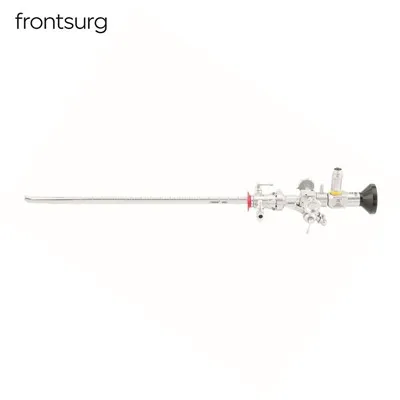
But the past five years have shifted everything. I’ve sat in on countless client meetings where operations managers pull up screen recordings of their latest fully automated packaging lines, and ask the same question: “Can I run your clip applier on this?” At first, I’d hem and haw. Most of our standard clip appliers weren’t designed for that—they relied on consistent hand pressure to seat a clip properly, which is nearly impossible to replicate with a generic robotic arm. But as I started working more closely with our engineering team and watching clients struggle with bottlenecks: a single manual clip applier operator can only seal about 1,200 bags an hour, while a full automated line moves 10,000 units an hour. The gap was impossible to ignore. So we dug in. Today, the answer I give clients isn’t “maybe”—it’s a resounding yes, but only if you build the integration right.
Let’s break down what integrating a clip applier into an automated system actually means, because it’s not just slapping a tool on a robot arm and calling it a day. There are three core components that make this work consistently, and I’ve tested all of them with real clients over the last three years to know what works and what falls flat.
First, you need a clip applier built for robotic actuation, not hand use. Our standard line still has those soft, ergonomic grips for manual operation, but our automated model (we call it the Model A-750) has a rigid, precision-machined handle that connects directly to a robotic arm’s end effector. What’s the difference? A human hand varies pressure by up to 15% between shifts, or even between the first hour of work and the tenth. A robotic arm needs a tool that delivers exactly the same force every single time—within 0.5 pounds of pressure, to be precise. Too little force and the clip won’t crimp tight enough, leading to leaks in food packaging or product spoilage. Too much force and you’ll crack the plastic clip or damage the bag, leading to waste. We also added a built-in clip feed system that runs parallel to the applier, so there’s no lag between when a robot positions a bag neck and when a clip is ready to apply. The Model A-750 can feed and apply 15 clips per second, which matches the speed of most high-speed packaging robots on the market. We tested this with a frozen vegetable processor in Iowa last year, and they cut their sealing bottleneck by 80%—from waiting 15 minutes for a manual operator to catch up to adding an automated module that integrated seamlessly with their existing line.
Second, you need a control system that communicates with your line’s existing software. This is where most integrations fail, not because the clip applier is bad, but because it can’t talk to the rest of the system. For example, a snack packaging line uses a line control system that tracks how many bags are sealed, what product is inside, and even tracks weight to flag underfilled units. If your clip applier can’t send data back to that system, you end up with blind spots: a clip that didn’t seat properly gets sent down the line, and you don’t notice until a customer complains of a stale bag or a leak. Our automated clip appliers come with an open-protocol interface—compatible with Modbus, Ethernet/IP, and PROFINET, which are the three most common industrial communication standards used in North America and Europe. We worked with a pet food manufacturer in Ohio to integrate our A-750s into their line, and now their control system sends a signal to the applier when a bag is positioned: “Seal here with a 3-inch metal clip.” The applier confirms it did the job, sends that status back, and if it fails to apply a clip (which happens less than 0.01% of the time), the line automatically stops and alerts an operator, instead of letting 500 bad bags roll off. That data also gives clients insights: we can track which types of clips perform best on their line, when the applier needs maintenance, and even identify trends like higher failure rates after a shift change.
Third, you need to account for the flexibility of modern packaging lines. Most lines aren’t one-size-fits-all. A craft beer brewery might switch between 12-ounce cans, 16-ounce cans, and 2-liter bottles, each requiring a different type of seal. Or a coffee roaster might switch between 1-pound pouches and 5-pound bags, with different neck diameters that need different clip sizes. Our automated clip appliers are adjustable mid-cycle via the control system—you don’t have to stop the line and manually change parts. For example, a client in Colorado that roasts specialty coffee runs 12 different bag sizes through their line. Before integrating our appliers, they had to pause production for 20 minutes every time they switched bag sizes to change the manual clip applier. Now, the line’s control system tells the applier which clip size to use, and the applier adjusts its crimping head automatically in less than three seconds. That small adjustment cut their changeover time by 90% and increased their monthly output by 22%.
But here’s the thing: integrating a clip applier into an automated system isn’t for every client. I see too many suppliers overselling this as a one-size-fits-all solution, and it leads to bad experiences. If your line only runs 500 units an hour, and you have a part-time operator who can run three manual clip appliers, there’s no need to automate. The cost of the automated applier and integration will never pay for itself. For small businesses with low-volume, custom orders, manual appliers are still the right call. The sweet spot is lines that run 5,000 units an hour or more, where bottlenecks happen during sealing, or lines that need 24/7 operation with no downtime for breaks or shift changes.
We also learned over the last few years that integration isn’t just about hardware. It’s about support. When a client is rolling out a new automated line, they don’t want to wait three days for a technician to fly out when the applier has a minor software glitch. That’s why we offer on-site training for their maintenance teams, 24/7 remote diagnostic access to our appliers, and a 12-month warranty on all automated models. Last year, a client in Texas had a power outage that knocked out their line’s control system, which disrupted the clip applier’s feed. We were able to connect remotely within 10 minutes, troubleshoot the issue, and walk their maintenance team through resetting the applier, so they were back up in an hour instead of four.
I still get calls from clients who ask if their old, manual clip appliers can be integrated. The short answer is no. They don’t have the precision, the communication capabilities, or the speed to keep up with modern automated lines. But that doesn’t mean you have to replace your entire set of clip appliers. We offer retrofits for some older manual models—adding robotic adapters, precision pressure controls, and basic communication modules, so you can upgrade without starting from scratch. We tested this with a produce distributor in California, who had 10 old manual appliers that they couldn’t afford to replace fully. We retrofitted three of them for a fraction of the cost of new automated units, and they integrated them into their new line, cutting their sealing time by 50% without the big capital expense.
The push for automated packaging isn’t going away. Labor costs are rising, supply chains are demanding faster throughput, and consumers expect consistent product quality every time. Clip appliers, long seen as a basic manual tool, have become a critical part of that automation puzzle. The key is working with a supplier who understands that integration isn’t just about selling a new piece of equipment—it’s about understanding your line, your production volume, and your long-term goals.
If you’re looking to streamline your packaging line, eliminate bottlenecks, or upgrade your current setup to work with automated systems, we’re here to help. We can walk through your current workflow, assess what will work for your specific needs, and provide tailored solutions that fit your budget and production goals. Reach out to our team to discuss your requirements and learn more about our automated clip applier integration options.
Aspiration Needle References
- Industrial Automation and Control Systems: A Guide to Integration, International Society of Automation, 2022
- Packaging Efficiency Report: Global Trends in Automated Sealing, Packaging Digest, 2023
- Robotic End Effectors for Packaging Applications, Robotics Industry Association, 2021
Frontmed (Hangzhou) Trading Co., Ltd.
Frontmed (Hangzhou) Trading Co., Ltd. is one of the most experienced clip applier manufacturers and suppliers in China, also supports custom service. Please rest assured to wholesale high quality clip applier made in China here from our factory. Contact us for more details.
Address: Room 406, Building 6, No.1688 Chunjiang East Rd, Tonglu, 311500, Hangzhou
E-mail: alex@frontsurg.com
WebSite: https://www.frontsurg.com/
