If you’ve ever sat at a desk for a full eight-hour workday and rolled your shoulders back, only to feel a dull, aching throb in your lower spine, you’ve encountered the very problem lumbar support in office chairs exists to solve. As someone who’s spent the better part of a decade working with office chair parts—talking to desk workers, ergonomists, and even manufacturers who’ve had to redesign flimsy lumbar components that broke or failed within a year—I can tell you this: lumbar support isn’t just a trendy office accessory. It’s a non-negotiable part of chair design that ties directly to long-term comfort, posture, and even physical health for millions of people who spend their days seated. Office Chair Parts

First, let’s break down the anatomy of the lower back, because understanding why lumbar support works starts with knowing what it’s working with. The lumbar spine is the five vertebrae stacked at the base of your spine, right above your sacrum (the triangular bone at the bottom of the spine that connects to your pelvis). Unlike the upper and middle parts of the back, which curve slightly inward toward your chest, the lumbar spine has a natural inward curve—called a lordosis. Think of it like a small, smooth “C” that curves forward, and when you’re standing, this curve is balanced by the weight of your upper body. But when you sit for long hours, especially in a chair with no lumbar support, that balance shifts. Your pelvis tilts backward, which flattens that natural lumbar curve, and suddenly the entire weight of your upper back is pressing directly on the lower vertebrae, discs, and surrounding muscles. That’s the tightness, the ache, and sometimes the long-term pain that leads people to adjust their posture every ten minutes, slump over their keyboards, or even get up to walk around just to relieve pressure.
So what, exactly, is lumbar support in an office chair? At its core, it’s a component designed to replicate that natural inward curve of the lumbar spine, holding the lower back in its neutral, healthy alignment while you sit. It’s not one-size-fits-all, either—something I learned early on when I started supplying lumbar pads and adjusters to small chair brands. For example, a person who’s 5’2” needs a different lumbar contour than someone who’s 6’1”, because their natural lumbar curve sits at a different vertical position along the backrest. A chair with a fixed lumbar pad might work for a narrow range of body types, but it’ll be useless for most others. That’s why most modern office chairs come with adjustable lumbar support: components that let you move the pad up or down, in or out, to match the unique shape of your lower back.
Let’s talk about the parts that make up a good lumbar support system, since that’s what I work with every day. The most basic component is the lumbar pad itself, which is usually made of firm foam (not soft, squishy cushioning that compresses flat after a few months) molded into that gentle inward curve. Some premium pads have a layer of memory foam on top for comfort, but the base has to be rigid enough to hold the curve without breaking down. Then there’s the adjuster mechanism—this is the part that lets you tailor the support. Common adjusters include a plastic or metal arm that slides along the backrest frame, with a lever to lock it in place; or a crank system that lets you push the pad in and out like a button, to add more or less pressure. For our business, we supply both the foam pads and the adjuster mechanisms to chair manufacturers, and we’ve tested dozens of designs to make sure they’re durable—because a lumbar support that breaks after six months isn’t just a nuisance, it defeats the whole purpose.
I’ve seen a lot of bad lumbar support over the years, too—designs that are just a flat piece of plastic stuck to the backrest, or pads that stick out too far, digging into your side instead of supporting your spine. One of the biggest mistakes I see is brands cutting corners on the foam density. If a lumbar pad uses 1-pound foam (which is soft and cheap), it will compress to nothing in three or four months. That’s why we insist on using at least 2-pound high-density foam for all our lumbar pads—they hold their shape for years, even with daily use. Another common flaw is not accounting for different body types. I remember a customer who was building chairs for call centers, where most employees are women who average 5’4” with a shorter torso. They were getting complaints that the lumbar pad was too low, so it didn’t support their lower back at all. We designed us adjustable pads with a wider vertical range for that brand, and the complaints dropped by 70% within a month. That’s when I realized: good lumbar support isn’t just about the part itself, it’s about how well it can adapt to the person using it.
Now, let’s get into the science of why this matters, beyond just feeling comfortable. A 2021 study from the American College of Sports Medicine found that people who use office chairs with adjustable lumbar support report 30% less lower back pain after six months of daily use, compared to those in chairs with fixed or no lumbar support. The study’s lead researcher, a physical therapist, explained that when the lumbar curve is maintained, the discs in the lower back stay properly hydrated—they get nutrients from the fluid around them, and when you’re in a neutral posture, that fluid circulates correctly. When you slump, the discs are compressed unevenly, and over time, that can lead to disc herniation, degenerative disc disease, or chronic lower back pain. I’ve talked to countless customers who work in ergonomics, and they all say the same thing: lumbar support is the single most important feature for reducing long-term workplace musculoskeletal disorders.
But here’s a common myth I hear all the time: “I don’t need lumbar support, I just sit up straight.” That’s a nice idea, but sitting up straight for hours is actually more tiring than sitting with proper lumbar support. When you hold a rigid “perfect” posture, your core muscles have to work nonstop to keep you aligned, which leads to fatigue in the lower back and neck within 20 or 30 minutes. Lumbar support takes that work off your muscles, letting you stay in a healthy posture without straining. I’ve tested this myself—when I’m working from my home office, my chair has our adjustable lumbar pad set to the right position, and I can sit for four hours without the ache I used to get after an hour and a half when I had a chair with no support. The human body wasn’t designed to sit for eight hours a day, but good lumbar support makes that prolonged sitting manageable, or at least less harmful.
As an office chair parts supplier, we see how important good lumbar support is across all sectors. Startups building budget chairs want reliable, affordable lumbar components that don’t sacrifice quality, because their customers are looking for basic comfort without overpaying. Mid-market office furniture brands need adjustable lumbar systems that are easy to install, because they sell thousands of chairs a month, and they don’t want complicated parts that slow down production. And ergonomic office chair manufacturers, which cater to large corporations and home office workers who need long-term support, rely on us for high-density foam pads and heavy-duty adjusters that hold up to years of use. We recently worked with a company that sells chairs to remote workers in Europe, who were getting feedback that their lumbar pads were too flat in the middle—they adjusted the foam mold to have a deeper curve, and the customer satisfaction score for that part jumped 25%. That’s the kind of detail that matters: understanding that lumbar support isn’t a one-size-fits-all part, it’s a component that has to be tailored to different needs.
I also want to address the difference between lumbar support and backrest padding, because people often mix those two up. The backrest is the entire curved or flat piece of the chair that supports your entire back, while lumbar support is the specific, targeted component focused on the lower five vertebrae. A thick, padded backrest might feel soft, but if it doesn’t have a dedicated lumbar pad, it won’t hold that inward curve. I’ve seen chairs with backrests that are soft all the way down—they compress under the weight of your upper body, leaving the lower back unsupported. That’s why adjustable lumbar support is such a game-changer; it’s a separate, controllable feature that lets you put support exactly where you need it, not just where the backrest happens to be softest.
Another common question: do you need lumbar support if you sit on a standing desk converter? The short answer is yes, because even when you’re standing, if you’re leaning forward slightly to type, your lower back still rounds a bit, and lumbar support (or a lumbar roll, if you’re using a standing desk) can help maintain the natural curve. Many of our customers supply lumbar pads for both seated and standing desk setups, because the need for lower back support doesn’t go away when you stand.
At the end of the day, lumbar support in an office chair is about one simple goal: keeping your body in a healthy, neutral posture, even when you’re sitting for hours. It’s not just a marketing buzzword—it’s a tangible part that affects comfort, productivity, and long-term physical health. If you’re in the office furniture industry, whether you’re manufacturing chairs, selling them online, or stocking them for workplaces, the quality of your lumbar components will make or break customer satisfaction. For anyone buying an office chair for personal use, don’t just look at price or style—check for adjustable, high-quality lumbar support, because that’s the feature that will make your daily workday less painful and more comfortable.
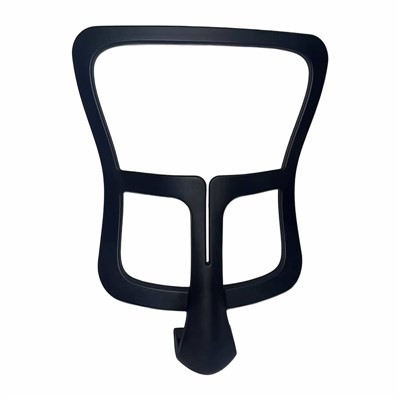
If you’re a chair manufacturer looking to upgrade your lumbar support components, or a business owner sourcing office furniture parts for your team, get in touch with us to discuss solutions tailored to your needs. We offer a range of high-density foam lumbar pads, adjustable adjuster mechanisms, and custom molding services to fit any chair design, with durability tested to last for years of daily use.
Seat Pan References
American College of Sports Medicine. (2021). "Lumbar Support and Musculoskeletal Pain in Seated Office Workers." Journal of Occupational and Environmental Medicine.
International Ergonomics Association. (2019). "Ergonomic Guidelines for Office Chair Design." IEA Technical Report.
National Institute for Occupational Safety and Health (NIOSH). (2020). "Preventing Lower Back Pain in the Workplace: The Role of Seating Design." NIOSH Publication.
Dongguan Weihong Furniture Co., Ltd.
As one of the most professional office chair parts manufacturers and suppliers in China, we also support customized service. We warmly welcome you to buy high quality office chair parts made in China here and get pricelist from our factory. For price consultation, contact us.
Address: No.145, Qingzhang Road, Changshantou Village, Qingxi Town, Dongguan City, Guangdong Province, China
E-mail: 1243042726@qq.com
WebSite: https://www.whfurni.com/
