If you’ve ever stood in a factory floor, a commercial building’s electrical room, or even a residential development’s utility closet, you’ve probably walked past a low-voltage (LV) distribution board—though you likely didn’t notice it. For anyone building these boards, or specifying them for a project, the busbar inside is the unsung hero that turns raw power into safe, manageable electricity for end users. As a supplier who’s spent 12 years designing and assembling LV distribution boards for clients across construction, manufacturing, and retail, I’ve seen firsthand how choosing the wrong busbar can turn a minor installation hiccup into a months-long project delay, or even a safety hazard. This post isn’t just a list of specs to check; it’s the practical, on-the-ground guidance I wish every specifier, engineer, and project manager had when picking a busbar that works for their board—and doesn’t force your distribution board to cut corners. Lv Distribution Board
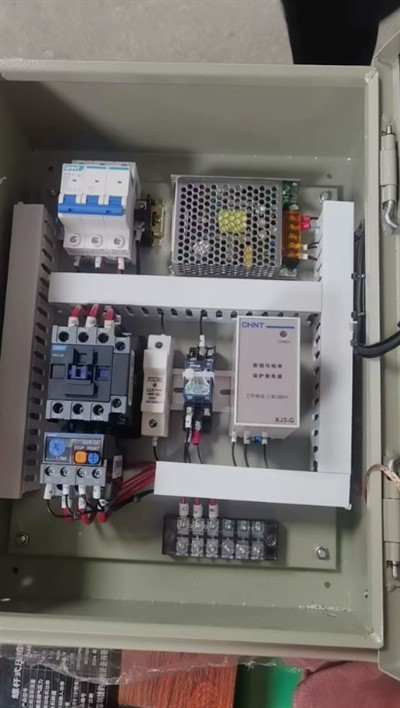
First, let’s start with the basics: what a busbar actually does for an LV distribution board, because a lot of folks new to electrical work mix them up with wires. Unlike insulated cable that carries power point-to-point, a busbar is a rigid, conductive metal strip (usually copper or aluminum) that acts as a central hub for distributing electricity. In an LV board, which typically handles up to 1,000 volts, the busbar connects the main incoming power source to branch circuits for lighting, outlets, machinery, and HVAC systems. It’s designed to carry high current loads without overheating, so the quality of that metal, its size, and its finish will directly impact how well your board performs over time.
The first and most critical decision you’ll make is choosing between copper and aluminum busbars. Early in my career, I made the mistake of pushing aluminum on a small construction project to save the client a few hundred dollars, and I learned fast why that’s a tradeoff no one should make unless the project has strict weight limits. Let’s break it down: copper has 40% higher electrical conductivity than pure aluminum, meaning it carries more current with less resistance—and less heat. That translates to a smaller footprint for the same current load, which is a big deal when LV boards have tight enclosures. Aluminum is lighter and cheaper, but its higher resistance means you need a larger cross-sectional area (often 1.5x that of copper) to handle the same load, which can cram your board full or force you to use a bigger, more expensive enclosure. It also oxidizes faster, especially in humid environments, which can create poor connections and increase the risk of arcing. That said, aluminum is still the right choice for specific applications: if you’re building a distribution board for a rooftop solar array on a large commercial building, where every kilogram of weight adds up to structural load on the roof, aluminum is the way to go. But for 90% of standard LV distribution boards—offices, retail spaces, small manufacturing plants—copper is the reliable, long-term pick. I still stand by that initial mistake: it taught me to never push a one-size-fits-all approach, even if it makes my job easier.
Next, you have to match the busbar’s cross-sectional area (CSA) to the board’s maximum current rating. This isn’t just about grabbing the thickest strip you can find; it’s about the actual load your board will carry, plus a safety margin. The National Electrical Code (NEC), which is the gold standard in the U.S. for LV electrical installations, sets clear guidelines here, but I’ve seen too many specifiers skip the margin to cut costs, and that’s where problems start. Let’s use a concrete example: a standard LV distribution board for a 10,000-square-foot retail space will have a main incoming current of 200 amps. For copper busbar, the NEC recommends a CSA of 120 mm² for a 200-amp load, but we always upsell to 150 mm². Why? Because in retail spaces, you often have unexpected loads: a new refrigeration unit added mid-project, a custom lighting display that draws extra current, or even a temporary generator hookup during renovations. A 20% safety margin might seem like overkill, but it’s the difference between a busbar that runs at 60°C under full load (well within safe limits) and one that runs at 90°C, which can degrade insulation inside the board and shorten its lifespan by 10 years. For aluminum, that same 200-amp load would require a 185 mm² CSA busbar (1.5x copper’s CSA) to hit the same temperature margin, and again, adding a 20% safety margin means going even thicker—so the cost gap between copper and aluminum shrinks a lot faster when you account for CSA and safety.
Once you’ve picked the metal and CSA, the busbar’s shape and configuration matter more than you’d think. Most LV board suppliers use three common shapes: flat bars, round bars, and trefoil (triangular) bars. Flat bars are the most common for low to medium current loads (up to 630 amps) because their wide, flat surface area dissipates heat better than round bars of the same CSA. That’s a huge benefit in tight enclosures, where heat buildup is the number one enemy of electrical components. Round bars are mostly used for higher current loads (over 630 amps) or when you need to fit a busbar into a round enclosure, but they’re less efficient at heat dissipation, so you have to ups CSA even more to compensate. Trefoil bars are a newer option that’s gaining traction: they’re three flat strips arranged in a triangle, which reduces the electromagnetic resistance (called skin effect) at higher currents. For a board with a 800-amp main load, a trefoil busbar will carry the same current as a single flat bar, but take up 30% less space in the enclosure—perfect for projects where every inch counts, like retrofitting an old electrical room that can’t be expanded. I’ve seen trefoil bars cut enclosure costs by 15% on multiple projects, but they require specialized assembly tools, so they’re not worth it for smaller boards under 400 amps. You also have to think about the busbar’s position in the board: phase, neutral, and earth bars need to be spaced correctly to avoid electrical arcing, so a flat bar’s rectangular shape makes it easier to customize spacing than round bars.
Surface finish is another detail that’s often overlooked, but it impacts performance and longevity. Busbars come in three main finishes: bare, tin-plated, and nickel-plated. Bare copper is the cheapest, but it oxidizes quickly when exposed to air and moisture, especially in industrial or outdoor applications. Oxidation creates a thin layer on the busbar’s surface that increases resistance, leading to heat buildup and loose connections—this is why we always recommend tin-plating for standard indoor boards. Tin-plating creates a protective layer that prevents oxidation, so the busbar stays conductive for 25+ years, no matter how humid the space is. For harsh environments—think a food processing plant where there’s regular moisture and cleaning chemicals, or a chemical manufacturing facility with corrosive fumes—nickel-plated busbars are non-negotiable. Nickel is far more resistant to corrosion than tin or copper, so it won’t degrade even when exposed to harsh substances. I once built a board for a small brewery that used tin-plated busbars; within two years, the steam and yeast residue had corroded the tin, leading to a partial power outage that shut down the fermentation line. Since then, we only use nickel-plated busbars for food and beverage clients, and that mistake is one I’ll never forget.
Another factor that’s unique to LV distribution boards is the busbar’s compatibility with the board’s components—specifically, circuit breakers, terminals, and enclosures. Even if you pick the perfect copper, 150 mm², tin-plated flat bar, it’s useless if the circuit breakers in your board can’t connect to it properly. That’s why we work directly with circuit breaker manufacturers to ensure our busbars have the exact hole patterns and terminal sizes that fit their products, so installers don’t have to drill custom holes or modify the busbar on-site. Modifying a busbar is a huge safety risk: drilling into a copper strip can create burrs that cause arcing, or weaken the bar enough that it breaks under load. We also make sure the busbar’s insulation (if it has any) matches the enclosure’s rating. Most LV board enclosures are rated IP20 or IP30, meaning they protect against solid objects larger than 12mm or 2.5mm, respectively, so the busbar’s insulation has to be rated for at least that. For outdoor enclosures (IP55 or higher), we use PVC-insulated busbars that are UV-stabilized, so they don’t break down from sun exposure. A lot of clients will ask to save money by using a generic busbar from a catalog, but we always push for custom-tailored ones that fit our boards’ components—because a busbar that doesn’t fit is a ticking time bomb.
Let’s also talk about sustainability, which is a big priority for most clients these days. Copper is 100% recyclable, and recycling copper uses 85% less energy than mining new copper, so it’s a far more sustainable choice than aluminum for most projects. But not all copper is created equal: we use 99.99% electrolytic tough pitch (ETP) copper for all our busbars, which has the highest conductivity and is fully recyclable. When we ship finished distribution boards, we also note the busbar type and CSA on the product label, so clients can easily recycle it when the board reaches end of life. Aluminum is recyclable too, but its lower conductivity means you end up using more metal per load, so the total carbon footprint is higher for most applications. For clients targeting LEED or BREEAM certification, going with copper busbars will almost always help their sustainability score, which is a huge perk I don’t mention enough.
Now, let’s cut through the jargon and give you a step-by-step checklist you can use when specifying a busbar for your LV distribution board:
- Match the metal to your environment: Copper for 90% of indoor standard projects, aluminum only if weight is a critical factor.
- Size the CSA for your maximum current plus a 20% safety margin, using NEC or IEC guidelines as a base.
- Pick the shape: Flat bars for low/medium current, trefoil for high current and tight enclosures, round bars only for specialty applications.
- Choose the finish: Tin-plated for standard indoor, nickel-plated for harsh/corrosive environments, never bare.
- Confirm compatibility: Ensure the busbar’s hole pattern, terminal size, and insulation fit your board’s circuit breakers and enclosure.
- Prioritize recyclability if sustainability is a key goal—ETP copper is the best choice here.
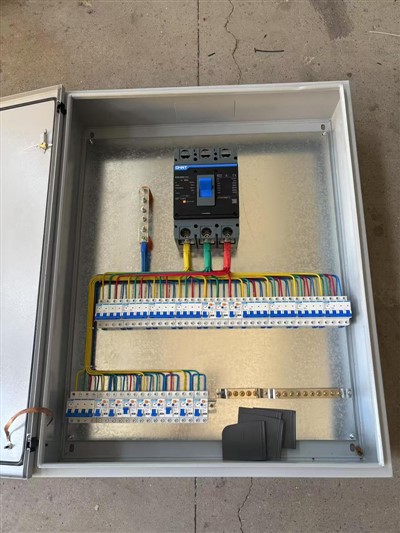
I’ve built over 50,000 LV distribution boards in my 12 years in this business, and the number one reason a board fails prematurely is a bad busbar. It’s not always the most expensive part, but it’s the one that holds the entire system together. Last year, a client who bought a competing LV board had a busbar fire that shut down their 50,000-square-foot warehouse for three days. When we inspected it, we found they’d used a 95 mm² aluminum busbar for a 200-amp load, no safety margin, and no plating—perfect recipe for disaster. That’s why I’m so passionate about sharing this guidance: I’ve seen the cost of cutting corners, both for clients and for the safety of the people who use these boards.
Secondary Distribution Box If you’re currently specifying a busbar for an LV distribution board, or you’re looking to replace an old board and want to make sure you get it right, I’d love to walk through your project with you. We can discuss your load requirements, environment, budget, and sustainability goals, and help you pick a busbar that’s not just compliant, but built to last. Reach out to our team to discuss your LV distribution board project and get a customized busbar recommendation.
- National Electrical Code (NEC), Article 370: Busways, Cribbing, and Busbars
- International Electrotechnical Commission (IEC) 61439-1: Low-voltage switchgear and controlgear assemblies – Part 1: General rules
- Copper Development Association: Busbar Selection Guidelines for Low-voltage Applications
- Aluminum Association: Aluminum Busbar Design and Installation for Electrical Systems
Anhui Nanxian Electric Co., Ltd.
With abundant experience, we are one of the most professional lv distribution board manufacturers and suppliers in China. We warmly welcome you to buy advanced lv distribution board for sale here and get quotation from our factory. All customized products are with high quality and low price.
Address: Factory Unit 03-2, Building 21, Feidong Yinfeng Industrial Park Co., Ltd., Northeast Corner of Manquan Road and Changle Road, Hefei Circular Economy Demonstration Park, Feidong County, Hefei City, Anhui Province.
E-mail: 541580567@qq.com
WebSite: https://www.nxelepower.com/
