If you’ve ever considered entering the small-scale refining space—whether for recycling used motor oil into base stocks, processing crude oil into diesel and gasoline for remote communities, or even refining vegetable oils into biofuels—one of the first questions that will cross your mind is this: How much does it actually cost to operate a small refining plant? As a supplier of small to medium refining equipment, I’ve spent years walking side-by-side with plant owners, troubleshooting their day-to-day costs, and helping them build budgets that don’t blow up six months after startup. Today, I’m breaking down every major expense, the hidden costs no one talks about, and what you can realistically expect to spend if you’re serious about this business. Refining Plant
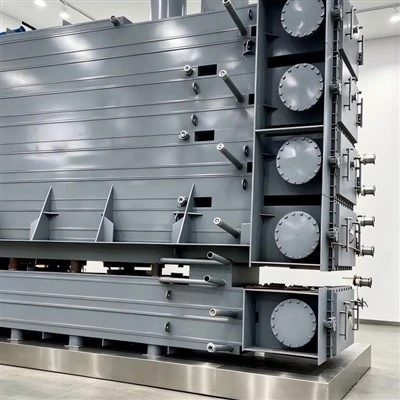
Let’s start with a critical note: There’s no one-size-fits-all number here. A 5-barrel per day (bpd) used oil refinery for a rural operation will have drastically different costs than a 50-bpd crude oil refinery serving a small municipality. But I’ll anchor this to the small refining segment—10 to 50 bpd, the sweet spot for independent operators, remote energy users, or waste oil recycling ventures—because that’s where most of my clients land. I’ve seen numbers too low to be sustainable and too high to be competitive, so let’s ground this in real-world data, not industry hype.
First, let’s split costs into two broad buckets: Capital Expenditure (CapEx) for building the plant, and Operating Expenditure (OpEx) for running it every month. Most new plant owners focus only on CapEx, but I can’t stress this enough: OpEx will make or break your profit margin. Even if you buy state-of-the-art equipment for a great price, if you misjudge monthly costs, you’ll be out of business in 12 months.
Starting with OpEx, because that’s the ongoing number you’ll face. Let’s break this down line by line for a 20-bpd refining plant, a common entry point for independent operators. The first big line item is feedstock. Feedstock is the raw material you process: crude oil, used motor oil, waste vegetable oil, or even bitumen for heavy crude refinement. For most small operators, feedstock costs 30 to 40 percent of total monthly OpEx. For example, if you process 60 barrels a month (the minimum to keep a 20-bpd plant running efficiently), and your feedstock costs $50 per barrel, that’s $3,000 a month right there. That number varies wildly by region and feedstock type: used oil can be as cheap as $30 per barrel in areas with high waste generation, while crude oil in remote locations can hit $70 per barrel because of transport. I’ve had clients in rural Texas pay $45 per barrel for local crude, while a client in sub-Saharan Africa pays $65 per barrel because of limited supply chains.
Next, utilities. Refining isn’t cheap when it comes to power, water, and fuel to run your process heaters. For a 20-bpd plant, you’ll need roughly 50 to 75 kilowatt-hours (kWh) of electricity per barrel, so 1,000 to 1,500 kWh a day. If your utility rate is $0.10 per kWh, that’s $100 to $150 a day, or $3,000 to $4,500 a month. Add to that process heat: most small refineries use natural gas or propane to heat crude during distillation, which adds another $1,500 to $2,500 a month. Water is another often-overlooked cost. Small refineries need water for cooling, processing, and emissions control—typically 10 to 15 barrels of water per barrel of product, so 600 to 900 barrels a month. If you’re connected to municipal water, that’s another $100 to $300 a month; if you have to drill a well or transport water, that can jump to $500 or more. Total utilities for a 20-bpd plant: roughly $4,600 to $7,300 a month.
Then there’s chemicals and consumables. Refining uses a range of specialty chemicals to treat crude or feedstock, remove impurities, and adjust final product quality. For small plants, this is $0.50 to $1.50 per barrel of feedstock, so $30 to $90 a month. But wait—don’t forget catalysts, if your plant uses catalytic cracking or hydrotreating to boost gasoline yields. Catalysts can be $1 to $3 per barrel, and you have to replace them every 1 to 3 years, so that’s an amortized cost of $50 to $150 a month for a 20-bpd plant. Also, you’ll need filters, spare parts for pumps and valves, and safety supplies like personal protective equipment (PPE) and spill kits. That adds another $200 to $500 a month, depending on how well you maintain equipment.
Labor is the next huge OpEx line item, and it’s where many new plant owners underestimate costs. Small refineries aren’t fully automated—you need operators to run the distillation unit, test products, handle feedstock deliveries, and manage emissions. For a 20-bpd plant, you’ll need at least two full-time operators, each earning $35,000 to $50,000 a year, plus a plant manager making $50,000 to $70,000 a year. That works out to $120,000 to $170,000 a year, or $10,000 to $14,000 a month. If you’re in a region with high labor costs, that number can be 20 percent higher. I’ve seen clients try to run the plant with only one part-time operator to save money, and 9 out of 10 end up with costly errors, product quality issues, or safety incidents. Labor isn’t a line item to cut corners on—it’s the backbone of your operation.
Regulatory and compliance costs are another hidden OpEx that trips up new owners. Refining is heavily regulated, especially when it comes to emissions, waste disposal, and product quality standards. You’ll need permits from environmental agencies, regular emissions testing, waste hauling for spent catalysts or sludge, and insurance for environmental liability. For a small plant, this costs $1,000 to $3,000 a month, depending on your location. In the U.S., for example, the EPA requires ongoing emissions monitoring for distillation units, while in the EU, you’ll have to comply with strict waste disposal rules for spent refining chemicals. If you’re processing hazardous feedstock like crude oil, insurance can add another $500 to $1,000 a month.
Add all those OpEx numbers up for a 20-bpd small refining plant: feedstock $3,000 to $4,200, utilities $4,600 to $7,300, chemicals and consumables $280 to $740, labor $10,000 to $14,000, regulatory $1,000 to $3,000. That’s a total monthly OpEx of $18,880 to $29,240. Multiply that by 12 months, and you’re looking at $226,560 to $350,880 a year in operating costs. Let me be clear: these are real numbers from my clients over the last 10 years. I’ve had a client in rural Wyoming process 25 bpd of local crude, with monthly OpEx right at $21,000, while a client in Nigeria processing waste motor oil had OpEx closer to $27,000 a month because of higher transport and labor costs.
Now, what about CapEx—the cost to build the plant in the first place? That’s the number everyone hears about, but it’s not as straightforward as “$500,000 for a 20-bpd plant.” Let’s break that down too, again for a 10 to 50-bpd plant. The equipment itself—distillation unit, feedstock storage tanks, product storage, pumps, safety systems, control panels—costs anywhere from $250,000 for a 10-bpd modular plant to $1.2 million for a 50-bpd turnkey plant. Modular plants, which are pre-built and shipped to your site, are the most popular for small operators because they’re faster to install (30 to 90 days vs. 6 to 12 months for a custom-built plant) and cheaper. But you also have site costs: land, site preparation (grading, foundations), utility connections (power, water, road access), and installation. That adds another $50,000 to $200,000, depending on your location. If you’re in a remote area with no existing utilities, you’ll have to build a power line or water well, which can easily add $100,000 or more. Also, don’t forget permit and legal fees: engineering drawings, environmental permits, zoning approvals, and legal consultations can add $20,000 to $50,000. Total CapEx for a small turnkey refining plant: $320,000 to $1.45 million.
Wait a second—why is there such a wide gap? Because of what you’re refining. A small waste oil to base oil refinery, which uses simpler distillation and hydrotreating, is cheaper than a small crude oil refinery that has to handle more corrosive crude and meet stricter gasoline and diesel standards. I’ve seen a 15-bpd waste oil plant built for $380,000 in the Midwest, while a 20-bpd crude oil plant in Texas cost $850,000. Also, if you buy used equipment to cut costs, you can lower CapEx by 30 to 50 percent—but that comes with higher risk: older equipment is less efficient, requires more maintenance, and may not meet current safety or emissions standards. I don’t recommend used equipment for new owners, but it’s an option for those with more experience.
Now, let’s talk about profit margins, because at the end of the day, that’s why you’re doing this. The average small refining plant sells its products (gasoline, diesel, base oil, biofuel) for roughly $10 to $20 per barrel more than the cost of the feedstock. For a 20-bpd plant running 25 days a month (standard for refining), that’s 500 barrels of product a month. If you make $15 per barrel profit, that’s $7,500 a month in gross profit. Wait—let’s go back to our OpEx: that’s $18,880 to $29,240 a month. That means without adding in other revenue streams or optimizing operations, many new small plants are running at a loss in their first year. That’s why so many new owners fail: they don’t plan for that gap.
So how do you make this profitable? There are a few levers you can pull. First, optimize feedstock sourcing. If you can buy feedstock in bulk or source it locally at a lower price, you can cut feedstock costs by 10 to 15 percent. I have a client in India that sources waste motor oil for $25 per barrel, vs. the average $35 per barrel in the U.S., which cuts his monthly feedstock cost by $1,800. Second, boost product yields. A good refinery can turn 85 to 90 percent of feedstock into salable products; a less efficient plant can turn only 70 percent. Getting a better yield means more product per barrel, which directly adds to your profit. Third, add revenue streams. Many small refineries don’t just sell fuel—they sell spent catalysts as scrap, carbon credits for emissions reductions, or even process waste heat for nearby buildings. A client in Canada runs a 30-bpd crude plant, and he sells excess heat to a nearby greenhouse, adding $1,200 a month in extra revenue. Fourth, automate as much as possible to cut labor costs. Modern control systems can reduce the number of operators you need by half, saving $5,000 to $7,000 a month in labor.
I also want to address common misconceptions. Some people think small refining is only for large corporations, but I’ve worked with independent operators all over the world—from a 10-bpd plant in Alaska serving remote villages that can’t access fuel pipelines, to a 50-bpd plant in Brazil processing waste vegetable oil into biodiesel. The key is doing your research before you invest. Too many new owners come to me with a rough budget, only to realize they didn’t account for transport costs for feedstock, or unexpected permit fees, or the cost of replacing catalysts every few years. That’s why I always walk potential clients through a detailed budget tailored to their location, feedstock, and production goals, not a generic number.
Another thing to consider: long-term costs. Equipment lifespan for small refining plants is 15 to 25 years, but you’ll have major overhauls every 5 to 7 years, costing 10 to 15 percent of your original CapEx. That’s an amortized cost of $800 to $2,200 a month for a $800,000 plant. I’ve had clients who saved $20,000 on CapEx buying cheap equipment, only to spend $100,000 on a major overhaul after 5 years, which ate into all their profits. Buying quality equipment upfront saves you money in the long run.
So, to sum up: if you’re looking to operate a small refining plant, plan for total annual costs (CapEx plus OpEx) of $250,000 to $500,000 for a 20-bpd plant, depending on your location and feedstock. The biggest risks are underestimating labor, regulatory, and hidden maintenance costs. But when done right, small refining can be a profitable business—especially in areas with limited access to fuel, or where waste products can be turned into valuable fuel or lubricants.
If you’re ready to turn your refining idea into a concrete plan, I’d be happy to walk through a detailed, customized budget for your operation. I’ve worked with operators across every region, from rural communities to urban waste recycling programs, and I can help you avoid the pitfalls that sink new plants. Reach out to start a conversation about your specific goals, feedstock type, and production needs.
Batch Pyrolysis Plant References
- International Energy Agency. (2022). Small-Scale Refining: Costs, Technology, and Market Opportunities. IEA Publications.
- U.S. Energy Information Administration. (2023). Small Refinery Operating Cost Benchmark Report. EIA.
- World Bank Group. (2021. Waste Oil to Base Oil: Viability of Small-Scale Operations in Developing Economies. World Bank Working Paper.
- National Fire Protection Association. (2022). Safety Standards for Small Refinery Operations. NFPA.
Shangqiu Aotewei Environmental Protection Equipment Co., Ltd.
Shangqiu Aotewei Environmental Protection Equipment Co., Ltd. is one of the most professional refining plant manufacturers and suppliers in China, also supports customized service. Please feel free to buy CE approved refining plant at competitive price from our factory. Welcome to contact us for pricelist.
Address: No.88 Longhai Road, Liangyuan District, Shangqiu City, Henan Province, China
E-mail: colin@henanpower.com.cn
WebSite: https://www.aoteweitech.com/
