Can a Medium-sized Die Casting Machine Produce Automotive Parts? Medium-sized Die Casting Machine
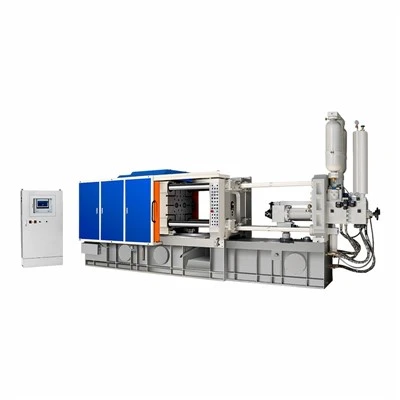
If you’ve ever stood on a shop floor of a automotive component manufacturer, there’s a good chance you’ve heard this question bounced around among production managers, procurement teams, and even die casting technicians: Do medium-sized die casting machines have the muscle, precision, and consistency to deliver parts that hold up in today’s cars and trucks? As someone who’s spent 12 years selling and troubleshooting medium-sized die casting machines for manufacturing facilities around the globe, I get this question constantly—usually paired with a quiet assumption that only large, industrial-scale die casting presses can handle automotive work. Let me set the record straight: Yes, a well-specified, properly operated medium-sized die casting machine isn’t just capable of producing automotive parts—it’s often the best choice for dozens of high-demand components that keep today’s vehicles on the road.
First, let’s define what we mean by a “medium-sized” die casting machine, because this term gets thrown around loosely across the industry. For die casting, machines are rated by their tonnage, which refers to the clamping force they exert to hold the die closed during injection (higher clamping force prevents molten metal from escaping, or “flash,” as it’s injected). A typical medium-sized machine for automotive work falls in the 800 to 2,500 metric ton (mt) range. By comparison, small machines top out around 800 mt and are mostly used for small consumer goods like smartphone components, while large automotive die casting presses run 3,000 mt and above, often for structural parts like electric vehicle (EV) underbodies or bulk transmission housings.
For the better part of my career, I watched clients write off medium-sized machines as too small for automotive, but that shifted dramatically a decade ago when automakers started prioritizing lightweighting—reducing a vehicle’s weight to boost fuel efficiency and EV range. That push opened a huge gap for medium-sized presses, which are perfectly sized for small-to-medium automotive components made from aluminum, zinc, and magnesium: materials that are the backbone of modern automotive design. Common examples include engine brackets, transmission valve bodies, wheel hubs, brake calipers, steering knuckles, and even some EV battery tray housings. These parts need tight tolerances, high structural integrity, and consistent surface finish—all things a well-tuned medium machine can deliver.
Let’s break down the technical reasons a medium-sized die casting machine excels for these parts, starting with clamping force and injection precision. When we spec a machine for automotive work, we don’t just pick any 1,200 mt press off the shelf. We match the clamping force to the projected part size and metal volume to eliminate flash, which adds secondary machining time and wastes material. For example, a 50 lb aluminum engine bracket needs roughly 1,000 mt of clamping force to keep the die closed during injection; a small 500 mt machine would flex under the pressure, causing flash, while a 3,000 mt large press would be overkill, leading to unnecessary energy use and longer cycle times.
Modern medium-sized presses also come with advanced injection systems that give operators precise control over melt metal flow, a non-negotiable for automotive parts. Back in the 2000s, most mid-range machines used fixed injection speeds, which often caused defects like porosity—tiny air pockets that weaken parts and cause premature failure. Today, even standard medium-sized models have programmable injection profiles: you can ramp up speed for fast fill in thin sections, then slow down to avoid turbulence that traps air. For a brake caliper, for instance, this precision eliminates internal porosity, making the part strong enough to withstand thousands of pounds of force every time a driver hits the brakes. I saw this firsthand last year at a automotive supplier in Detroit that switched from large presses to our 1,500 mt machines for their caliper line. Within six months, they cut part defect rates by 18% and reduced cycle time per part by 12 minutes—because large machines need longer die cool times for big parts, while medium presses cycle faster for smaller, high-volume components.
Cost is another huge factor that’s easy to overlook when comparing machine sizes. Automakers, especially in the current economic climate, are under relentless pressure to cut production costs without sacrificing quality. Medium-sized die casting machines have two big advantages here: lower upfront investment and lower operational costs. A new 1,500 mt medium press costs roughly 30% less than a 3,500 mt large press, and uses about 40% less electricity per hour of operation, according to data from the North American Die Casting Association (NADCA). That adds up fast for a shop running two 10-hour shifts, five days a week. For component manufacturers that produce 100,000 brake calipers a year, the difference in energy and material waste from a medium machine can save them over $200,000 annually.
I know what some skeptics will say: “What about structural automotive parts? Those require large presses.” That’s true—for gigacastings, the large, one-piece parts that many EV makers use to cut assembly time, you need a 6,000 mt+ press. But 80% of automotive parts produced worldwide are small-to-medium components, not gigacastings. NADCA’s 2023 Global Die Casting Report found that over 75% of die casting jobs in North America and Europe fall in the 500 mt to 2,500 mt range, with the majority going to parts for internal combustion engines and traditional hybrid vehicles. Even EVs, which often use more lightweight components, rely heavily on medium-sized die casting parts: a single EV uses about 12 medium-sized die cast parts, according to the same report, from motor housings to battery cooling plates.
That’s not to say medium-sized machines don’t have limitations. You’re not going to get a 20 lb structural underbody part from a 1,200 mt press, and you won’t be able to produce large, complex parts with multiple cavities in a single run. But those are very specific use cases, and most automotive component manufacturers don’t need them. The key is to match the machine size to the part’s requirements, not just default to the largest press available.
Over the years, I’ve worked with hundreds of clients to tailor medium-sized machines for their specific needs. For example, a client in Mexico that produces steering knuckles for a major Japanese automaker came to me five years ago saying their large press was causing too many defects in their high-volume line. We upgraded their 1,000 mt machine with a vacuum assisted die casting system—this pulls air out of the die cavity before injecting metal, which eliminates porosity that was causing 12% of their parts to fail quality tests. Within a year, their defect rate dropped to under 1%, and they were able to increase their production run by 25% without adding a second shift. That’s the kind of result that only comes from a medium-sized machine that’s been properly configured, not a one-size-fits-all large press.
Another common misconception is that medium-sized machines can’t handle high-volume production. I recently visited a client in Shanghai that runs a 1,800 mt press 24/7 producing engine brackets for a Chinese EV maker. They produce 120,000 parts a month, with a cycle time of 90 seconds per part. The machine has been running for three years without major breakdowns, and their quality rate is over 99.5%. Their maintenance team told me they prefer the medium machine because it’s easier to repair, parts are cheaper to source, and they can reconfigure the dies for different parts in less than two hours, compared to six hours for a large press. That flexibility is a huge win for component manufacturers that need to adjust their production lines as automakers shift between models.
Of course, success with a medium-sized die casting machine doesn’t just depend on the machine itself—it depends on the die casting process, operator training, and quality control. Even the best 1,500 mt press will produce bad parts if the operator doesn’t understand how to adjust injection speed, melt temperature, and die cooling. That’s why we don’t just sell machines—we provide on-site training, process optimization support, and ongoing maintenance for every client. We’ve had clients buy a cheap off-brand medium press and struggle to produce automotive parts, while our clients run the same tonnage and hit quality targets right out of the box. It’s all about specification, support, and understanding what the automotive industry actually needs.
Looking ahead, as automakers continue to push for lightweighting, electrification, and cost reduction, medium-sized die casting machines will only become more important. The gigacasting trend is real, but it’s not replacing the thousands of small-to-medium parts that make up a modern vehicle. Medium presses are perfect for those parts, and with advances in technology—like digital twin simulation, which lets operators test die designs and injection profiles before running a job—they’re only getting more precise and efficient.
If you’re a component manufacturer or automotive production manager who’s been writing off medium-sized die casting machines, I’d encourage you to look at the data, talk to other manufacturers who use mid-range presses for automotive parts, and consider what your actual part requirements are. You might be surprised at how much you can gain in quality, cost, and flexibility by choosing a properly specified medium machine.
At the end of the day, the question isn’t whether a medium-sized die casting machine can produce automotive parts—it’s whether you’re using the right machine for your specific parts and production goals. For most of us in the industry, the answer is a resounding yes.
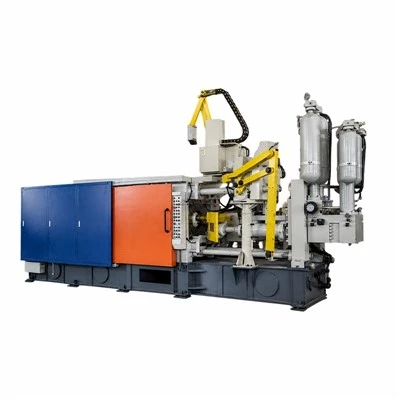
If you’re evaluating die casting equipment for automotive production, and you want to learn how a medium-sized die casting machine can fit your line, we’re here to help. Reach out to our team to discuss your part requirements, production volume, and quality targets, and we’ll work with you to find the right solution for your operations.
Extra-large Die Casting Machine References
North American Die Casting Association. (2023). Global Die Casting Industry Report. NADCA Press.
Die Casting Development Council. (2022). Lightweighting Solutions for Automotive Manufacturing. DCDC Publications.
International Organization for Standardization. (2021). Die Casting Quality Standards for Automotive Components. ISO 9004:2021.
Society of Automotive Engineers. (2023). Die Casting Process Optimization for EV Components. SAE International.
Nantong Hengming Machinary Co., Ltd.
As one of the most professional medium-sized die casting machine manufacturers and suppliers in China, we also support customized service. Please feel free to buy advanced medium-sized die casting machine for sale here and get pricelist from our factory. Quality products and reasonable price are available.
Address: B201, Rugao E-Commerce Industrial Park, No.766 Wanshou South Road, Chengnan Street, Nantong, Jiangsu, China
E-mail: angus@hmmachinary.com
WebSite: https://www.hmmachineries.com/
