Hey everyone, if you’ve ever dabbled in high-voltage circuits—think industrial power supplies, EV chargers, or even medical devices like X-ray machines—you’ve probably heard “reverse breakdown voltage” thrown around. And if you’re shopping around for high voltage diodes (that’s my lane, by the way), this term is non-negotiable. But let’s cut the jargon: what actually is reverse breakdown voltage, and why does it matter so much for the diodes I supply? High Voltage Diode
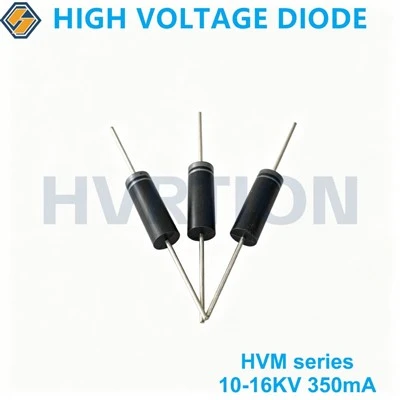
First, let’s reset the basics. A standard diode only lets current flow one way—forward, from anode to cathode. But flip the voltage, and you get reverse bias: the cathode’s negative charge repels electrons, so almost no current slips through… until you push too hard. That “too hard” point? That’s reverse breakdown voltage (VBR), and it’s the absolute limit your diode can handle before it starts to fail. For high voltage diodes, this isn’t just a spec number—it’s the line between a circuit that works and one that fries.
Wait, let’s clarify: not all breakdown is bad. There’s soft breakdown, where leakage current creeps up slowly, and hard breakdown, which is the catastrophic short-circuit kind. The high voltage diodes I offer are built to handle avalanche breakdown specifically—this is the “safe” breakdown mode where the diode doesn’t get damaged, just keeps working (as long as you pull the voltage back before it overheats). Zener diodes, for example, are engineered to break down at a precise, steady voltage for voltage regulation, which is why we stock both avalanche and Zener high voltage types for different jobs.
Now, why should you care about this for your project? Let’s say you’re designing a 10kV power supply for a lab: if your diode’s VBR is only 8kV, it’s going to fail the second you ramp up the voltage. And for high voltage applications, a failure isn’t just annoying—it can be dangerous. I’ve seen customers cut corners here, grab a generic low-voltage diode for their 15kV circuit, and end up with a charred mess and a week of downtime. That’s exactly why I make sure every diode I supply has a VBR rated 20-30% higher than the maximum voltage your circuit will see—safety margin isn’t optional here.
But how is VBR measured, anyway? It’s not just guessing. We test each high voltage diode by ramping up the reverse voltage slowly, monitoring leakage current. The standard is a tiny, specified leakage current (usually 10µA to 1mA) that triggers the “breakdown” mark. We don’t just test in a lab, either—we simulate real-world conditions: temperature swings, humidity, even minor voltage spikes, because VBR drops when it’s hot. A diode that hits 20kV at room temp might only handle 17kV at 125°C, which is a critical detail for industrial equipment that runs 24/7.
Wait, let’s talk about what affects VBR. It’s not a fixed number for every high voltage diode. The main factor is the semiconductor material—silicon is standard, but we also offer silicon carbide (SiC) diodes for extreme high voltage (think 30kV+) and high temp applications. SiC has a higher band gap, so it can withstand more reverse bias before breaking down. The doping level (how much we add impurities to the silicon to tweak conductivity) matters too: lighter doping means a wider depletion region, which leads to higher VBR, but that also makes the diode a bit less efficient at forward current. It’s a tradeoff, and that’s where my expertise comes in— I don’t just stock random diodes; I match the right VBR to your current and temperature needs.
A common mistake people make is confusing VBR with “peak reverse voltage (PRV).” PRV is the maximum reverse voltage a diode can handle momentarily—like a surge from a switch or a lightning strike. VBR is the sustained limit. So if your circuit has a 12kV continuous reverse bias and a 18kV occasional surge, you need a diode with a VBR of at least 18kV to handle the surge, and maybe a little extra for the continuous load. That’s the kind of nuance I walk customers through every day.
Let’s break down a real example. A recent customer was working on a plasma cutter, which runs on a 20kV power supply with 25kV transient surges. They initially ordered diodes rated for 22kV VBR, but I noticed their surge specs meant that 22kV would hit breakdown the second the spike hit. We swapped them for 30kV VBR diodes, and their failure rate dropped from 15% to zero. That’s the difference between knowing your stuff and just selling a part off a shelf—something I prioritize for every client, no matter how big or small.
Now, what happens if you exceed VBR? If it’s avalanche mode, you might get temporary leakage, but if you limit the current (with a resistor, for example), the diode will reset once the voltage drops. But if you push past that and let the current spike, you get thermal runaway: the diode overheats, melts the semiconductor, and becomes a short circuit. For high voltage circuits, that can mean damaged transformers, blown fuses, or even fire risks. That’s why I never recommend skimping on VBR—even if it means a slightly higher upfront cost, it’s way cheaper than replacing a whole circuit.
For those new to high voltage parts, let’s also clear up another point: reverse breakdown voltage isn’t the only spec, but it’s the most important. Forward voltage drop (Vf) is what affects efficiency, but if your diode can’t hold off reverse voltage, efficiency doesn’t matter at all. I always tell customers: “Get the VBR right first, then tweak the rest.” We stock high voltage diodes with VBR ranging from 5kV up to 50kV, and I can help you pick the right one for your exact setup.
Now, how do you choose the right VBR for your project? First, calculate the maximum reverse voltage your diode will ever see. That includes steady-state voltage, plus transients (look at your component specs or test data for surge ratings). Add 15-25% as a safety buffer—this accounts for temperature changes, manufacturing tolerances, and unforeseen spikes. For example, if your steady reverse voltage is 10kV, and your transients are 12kV, your target VBR should be at least 14kV, so I’d point you to our 15kV or 17kV diodes, depending on your current needs.
Also, keep in mind that VBR can vary slightly between batches. Every semiconductor diode has a tolerance, usually ±5-10%. So when you order, don’t just buy the minimum VBR you need—go a step higher, and I can send you bins with tighter tolerances if your project is super precise. That’s another value add I offer; not just bulk diodes, but quality control checks to make sure every part meets its rated VBR.
Wait, let’s talk about common applications where VBR is make-or-break:
- Medical devices: X-ray generators need 40-100kV, so their diodes need extreme VBR to avoid harming patients or equipment.
- Electric vehicle chargers: Fast chargers operate at 15-30kV, so diodes here need to handle both high voltage and fast switching, which ties into VBR.
- Industrial power supplies: Motor drives, laser systems, and welding equipment all run high voltage, and a diode failure here can halt production.
I’ve supplied diodes for all these use cases, and the number one question I get is, “What VBR do I need?” My answer is always, “Tell me your circuit’s max reverse voltage, including spikes, and I’ll pick the right one—no guesswork.” I don’t just sell a product; I help you avoid the headaches that come with wrong specs.
Let’s address a myth: some people think that higher VBR always means a better diode. Not exactly. A diode with a 50kV VBR might have a higher forward voltage drop, which wastes power, so if you only need 20kV, a 25kV diode is more efficient and cheaper. That’s where my experience comes in—balancing VBR with other specs to get the best value for your project, not just the highest number.
Another thing: temperature affects VBR. As I mentioned earlier, higher temperatures lower VBR. So if your diode is going to be in a hot environment (like an engine bay or a factory floor), you need to pick a VBR that’s rated for that temp. For example, a diode with 10kV at 25°C might only have 8kV at 100°C, so you’ll need a 12kV VBR at room temp to get 10kV at operating temp. I always note temperature derating factors on all our product sheets, so you don’t have to do the math yourself.
Now, if you’re reading this and you’re in the middle of a project, or you’ve been burning out diodes left and right because you picked the wrong VBR, let’s chat. I’ve helped hundreds of engineers and technicians troubleshoot their high voltage circuit issues, and odds are, it’s a VBR mismatch. I can send you sample diodes to test, answer your questions about tolerances or temperature derating, and make sure you get the exact high voltage diodes you need—no generic stuff, no hidden catches.
At the end of the day, reverse breakdown voltage is the foundation of reliable high voltage diode performance. It’s not just a number on a spec sheet; it’s the line between a circuit that runs smoothly and one that ends up in the trash. As someone who’s been in this game for years, I know how frustrating it is when a project hits a snag because of a part that should have worked. That’s why I stand by every diode I supply, and I’m here to help you get it right the first time.
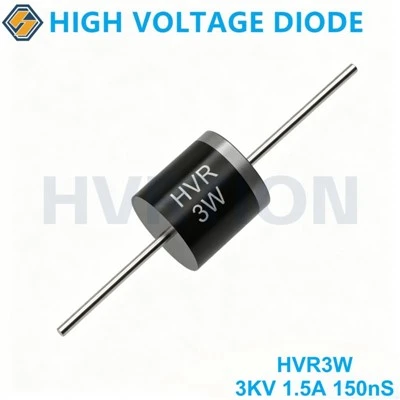
If you’re ready to place an order, or just want to run your specs by someone who actually understands high voltage diodes, reach out to connect for a supply chat. No sales pitches, no jargon—just straight talk about what your project needs.
450-750mA Standard Recovery HV Diode References
- Sze, S. M., & Ng, K. K. (2007). Physics of Semiconductor Devices. John Wiley & Sons.
- Semiconductor Industry Association. (2021). High Voltage Diode Application Notes.
- Electronics Design Handbook. (2019). Voltage Ratings for Semiconductor Components.
- International Electrotechnical Commission (IEC). (2020). Standard 60747-5-1: Semiconductor Devices – Diodes.
Anshan HVRTION Electronic Technology Co., Ltd.
As one of the most professional high voltage diode manufacturers and suppliers in China, we’re featured by quality products and good price. Please rest assured to buy discount high voltage diode for sale here and get quotation from our factory. We also accept customized orders.
Address: 17 East Jiefang RD., Tiedong District, Anshan, Liaoning, China.
E-mail: hvrtion@hotmail.com
WebSite: https://www.hvrtion.com/
