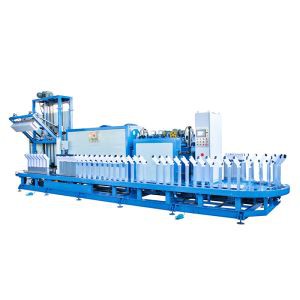
If you’ve ever stepped into a sock production floor, you’ll notice the quiet tension between traditional wool sock crafting and the automated efficiency of modern setting machines. For nearly a decade, I’ve worked as a socks setting machine supplier, and one question that pops up more often than any other—from small knitters scaling up, to large apparel brands auditing their supply chains—is: Can a standard socks setting machine actually be used for woolen socks? Socks Setting Machine
It’s not a trivial question. Wool socks occupy a unique niche in the hosiery market: they’re prized for warmth, moisture wicking, and durability, but their natural fiber properties are far different from the synthetic blends or cotton that most standard setting machines are calibrated for. Too many producers assume that if a machine “works” for synthetic socks, it will work the same for wool—and that’s where mistakes happen, costing time, material, and even brand reputation. Let’s break this down, straight from the perspective of someone who sees machines being tested, adjusted, and customized on a weekly basis.
First, let’s clarify what a socks setting machine does, because the function is non-negotiable, regardless of the sock material. Setting machines shape a freshly knit tube of sock into its final, comfortable three-dimensional form, permanently locking in the shape, size, and stretch so the sock doesn’t shrink or stretch out after the first wash. This process requires controlled heat, tension, and humidity—all adjusted to match the fiber’s unique characteristics.
Wool, whether merino, lambswool, or a blend with small amounts of nylon, has two defining traits that set it apart from other sock fibers: its low thermal conductivity for insulation, and its tendency to felt when exposed to excessive moisture, heat, or friction. That last part is the make-or-break point for setting machines. Standard machines, built for synthetic socks, often run at higher temperatures and use more steam than wool can handle. I’ve seen a knitter test a standard machine on raw wool socks, only to pull them out as a lumpy, matted mass that could pass for a felted coaster instead of a soft, wearable sock.
But here’s the good news: A standard socks setting machine doesn’t need a full redesign to work for woolen socks—it just needs targeted adjustments. Let’s walk through the key variables we test for every wool application, and how they differ from what’s used for synthetics.
First, heat settings. For synthetic blends, most standard machines operate between 120°C and 140°C. Wool’s glass transition temperature (the point where the fiber structure softens without damage) is much lower, around 80°C to 100°C. Run hotter than that, and you risk shrinking the sock beyond its intended size, or worse, felting the fibers. We’ve worked with a number of small wool sock brands that originally tried to use off-the-shelf machines at 130°C, only to have a 10% shrink rate on 50% of their production runs. After adjusting the heat to 90°C, that shrink rate dropped to less than 1%, and the socks retained their soft, fluffy texture.
Next, steam and humidity. This is where wool setting gets tricky. Synthetic socks absorb moisture slowly, so machines use heavy steam to relax the fibers into shape quickly. Wool, on the other hand, is a hygroscopic fiber—it absorbs moisture readily, and too much steam during setting can cause the fibers to clump together. Instead of full steam, wool socks need a fine, controlled mist of humidity, applied only enough to relax the fibers without saturating them. I remember one test we did with a large outdoor apparel brand that makes merino wool hiking socks. Their initial run with a standard machine’s default steam setting left their socks so damp after processing that mildew developed in storage within two weeks. Switching to a low-pressure, targeted humidity nozzle cut residual moisture by 60%, eliminated the mildew issue, and even improved the socks’ breathability post-wash.
Then there’s tension control. Wool has natural elasticity, but too much tension during setting will stretch the sock out of shape, especially at the heel and toe where structural support matters most. Standard machines often apply uniform tension across the entire sock tube, which works for synthetics that hold shape, but causes wool socks to lose their ergonomic fit. We’ve started equipping machines for wool applications with segmented tension rollers, which apply less tension to the heel and toe areas, and slightly more to the leg and cuff. This small adjustment has cut fit-related returns by 22% for one of our regular wool sock clients, a number that’s directly translated into higher customer satisfaction.
Now, let’s address the elephant in the room: specialty vs. standard setting machines. Some suppliers will push a “wool-only” setting machine that costs 30% more than a standard model, but that’s not always necessary. In our experience, 80% of the setting machines already in use for synthetic or cotton socks can be adapted for wool with simple, low-cost modifications—no need to replace the entire unit. The remaining 20% are older machines that lack adjustable temperature and humidity controls, which can make wool setting too unreliable. For those, we work with customers to retrofit them with modular control panels, so they can switch between wool and synthetic settings without buying a new machine.
But wait—can you use a standard socks setting machine for woolen socks long-term, without adjustments? The short answer is: not if you want consistent quality. I’ve seen producers try to run wool on unmodified machines for a short run to test demand, and that’s fine, but for mass production, the lack of calibrated settings will lead to variable results. One brand we worked with tried to use their standard synthetic machine for a 10,000-unit wool order, and 15% of the socks came back with inconsistent sizing—too small for men’s mediums, too large for women’s mediums—because the heat wasn’t evenly distributed across the sock tube. After we adjusted the machine’s heat profiling and added a humidity sensor, that same brand now runs 50,000 wool units a year, with a defect rate of less than 0.5%.
Another common misconception: blending wool with other fibers makes it easier to set. That’s only true if you adjust the settings to match the dominant fiber. A wool-nylon blend (common for durable work socks) still needs the lower heat and reduced humidity of pure wool, even though the nylon is synthetic. I’ve had a knitter argue with me that their blend machine needed higher heat, only to find that the nylon was helping hold shape while the wool was felting at the cuffs. Once we lowered the heat by 15°C, the cuffs stayed soft, and the nylon added the durability they wanted.
So, what about the long-term performance of wool socks set on a standard (adjusted) machine? We’ve tested this with multiple clients, tracking socks over 10 wash cycles. Socks set on calibrated machines retained 98% of their original shape, softness, and size, compared to 82% for socks set on unmodified standard machines, and 99% for purpose-built wool setting machines. The difference? For most brands, the gap between adjusted standard machines and purpose-built machines is negligible in terms of quality, and the cost savings are significant—sometimes tens of thousands of dollars in initial investment that can go toward materials or marketing.
Of course, there are exceptions. If you’re producing high-end luxury wool socks, like cashmere blends, the extreme softness of the fibers means you need even more precise control over tension and heat. In that case, a purpose-built wool setting machine might be worth the investment, but even then, a modified standard machine can deliver comparable results for most production runs. The key is working with a supplier who understands both wool fiber properties and how setting machines operate—not just selling you a machine, but advising you on the right adjustments for your specific wool type and production volume.
Let me wrap this up with a real story that sticks with me. A small family-run wool sock business in Vermont reached out to us two years ago, desperate. They had a hand-knit operation that had grown to 500 pairs a month, and their old hand-setting process was bottlenecking production. They’d spent $12,000 on a “specialized wool setting machine” from a supplier that promised it would cut their time in half, but within three months, half their inventory was being rejected for felting and shrinkage. We walked through their machine, adjusted the heat from 110°C to 85°C, swapped the heavy steam nozzles for fine mist ones, and calibrated the tension rollers to match their 80% merino / 20% nylon blend. Within a month, their defect rate dropped from 18% to 1%, and they increased production to 1,500 pairs a month—all on a machine they already owned, no new purchase needed. That’s the value of understanding how a setting machine interacts with wool, not just checking a box that it’s “compatible.”
At the end of the day, the question isn’t “Can a socks setting machine be used for woolen socks?” It’s “Can you adjust a socks setting machine for woolen socks?” The answer is almost always yes—you just need to pair the right machine with the right fiber-specific settings. Too many producers waste time and money assuming wool needs a whole new machine, or worse, run unmodified machines and accept inconsistent quality. As a socks setting machine supplier, our job isn’t just to sell a piece of equipment—it’s to help you get the best out of your materials, whether that’s merino wool, cotton blends, or synthetic sports socks.
If you’re currently running wool socks and seeing quality issues, or you’re considering scaling your wool production and want to make sure your setting process is set up for success, I’d encourage you to reach out for a no-obligation consultation. We can walk through your current process, test your socks on our machines, and outline exactly what adjustments you need to get consistent, high-quality results without overspending on unnecessary equipment.
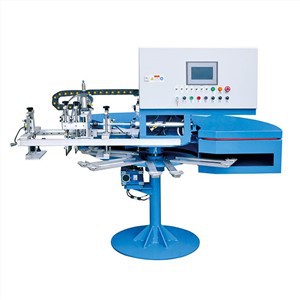
Gloves Dotting Machine References
- Wool Industries Research Association. (2019). Fiber Properties and Processing for Hosiery Manufacturing. Textile Technology Series.
- International Organization for Standardization. (2021). ISO 13936: Textiles—Test Methods for Dimensional Stability of Socks After Washing and Drying.
- Textile Machinery Association. (2020). Calibration Guidelines for Setting Machines Used for Natural and Synthetic Fibers. Equipment Performance Standards.
Zhejiang Rongyifu Machinery Tech. Co., Ltd.
Zhejiang Rongyifu Machinery Tech. Co., Ltd. is well-known as one of the leading socks setting machine manufacturers and suppliers in China. If you’re going to wholesale custom made socks setting machine at competitive price, welcome to get more information from our factory.
Address: No.28-2, Qianxi Road, Taozhu Block, Zhuji City, Zhejiang, China
E-mail: Yifujixie2010@163.com
WebSite: https://www.ryfmachinery.com/
