If you’ve ever spent a cold night reconciling a stockroom’s misaligned inventory counts—finding that your digital records show 12 pallets of fast-moving batteries, but only 10 sit on the floor, with no clear answer about where the other two went—you know how costly and time-consuming manual inventory errors can be. As a supplier of Automated Storage and Retrieval Systems (ASRS), I get asked this question more than any other: “How exactly does your system eliminate the count mistakes that hold my operations back?” It’s not magic—it’s a combination of precise, repeatable design, reduced human error, and end-to-end traceability that turns messy, error-prone manual inventory into accurate, reliable data you can act on. Automated Storage and Retrieval System

Let’s start with the core problem: manual inventory counts. Even for small to mid-sized warehouses, manual stock checks are a task ripe for mistakes. I’ve seen it firsthand in client facilities: a picker rushing to fulfill an order might scan the wrong SKU into a system instead of the one they pulled; a stocker might place a pallet of raw parts on the wrong shelf; a manager counting during a shift change might miscount a stack of small boxes and log 85 instead of 90. These aren’t malicious errors—they’re human, and they add up fast. A 2023 study from the Material Handling Industry (MHI) found that manual inventory processes have an average error rate of 3-5% across distribution and manufacturing operations. For a business holding $1 million in inventory, that means $30,000 to $50,000 worth of discrepancy every year—money tied up in missing stock, overordered products, and wasted labor fixing count mistakes. That’s the gap ASRS is built to close.
First, ASRS eliminates the single biggest source of inventory error: human intervention in storage and retrieval. Unlike a manual warehouse, where a worker drives a forklift, climbs a ladder, or leans into a high shelf to place or pull items, ASRS uses computer-controlled robotic cranes, shuttles, and conveyor systems to move every item in your inventory. These systems are programmed with exact, pre-set parameters for every SKU: dimensions, weight, optimal storage location, and quantity. When a pallet arrives at your facility, the ASRS’s inventory management software scans its barcode (or RFID tag, for even faster, more accurate identification), verifies that the item matches your order, and then directs the robotic equipment to place it in the precise location assigned to that SKU. No human has to guess where a pallet goes, no one has to write a quantity number on a shelf label, no one can misplace a box because they forgot to update a logbook.
For example, last year we worked with a client in the e-commerce consumer goods space who was losing $120,000 a year to inventory discrepancies from manual picking and storage. Before installing our ASRS, their workers often placed small personal care items in the same aisles as larger kitchen appliances, leading to mismatched counts when they took inventory. The ASRS’s software categorizes every SKU by size, weight, and turnover rate, so small, fast-moving items go into high-access, low-level storage, while bulky, slow-moving items go to high, narrow aisles. Every time an item is stored or retrieved, the system updates its digital inventory record in real time—no time lag, no handoff error, no miscommunication between shifts. After six months, their inventory accuracy jumped from 91% to 99.8%, cutting their discrepancy costs by 92%. That’s the kind of impact we’re talking about.
Next, ASRS replaces manual counting methods with automated, continuous inventory tracking. Manual inventory is a periodic task: you count once a quarter, or once a year, stopping operations for a full day or more to walk every aisle and check every shelf. That window of time is when most errors are found—too late, after you’ve already placed orders for stock you thought you had, or turned away customers because you ran out. ASRS works differently: it conducts “cycle counts” (small, frequent inventory checks) automatically, without stopping your operations. The system’s sensors track every movement of every item, so it can generate a count for any SKU in seconds, no worker has to leave their station to count. If a SKU’s digital record shows 50 units, the ASRS can verify that in a minute by pulling and counting a small sample, or cross-checking its stored pallets.
Even better, ASRS uses built-in verification tools to catch mistakes before they turn into inventory discrepancies. Our ASRS models are equipped with weight sensors on every shuttle and crane, for example. When a pallet of 50 water bottles is stored, the sensor records its exact weight; when it’s retrieved, the system checks that the weight matches the expected value. If a pallet is missing (say, a forklift operator pulled it by mistake and never returned it), the sensor will flag the mismatch immediately—so you don’t have to wait until your annual count to realize stock is gone. Some of our systems also use 2D vision scanners to confirm that the correct SKU, lot number, and quantity are moved each time. If a worker scans a wrong SKU number, the scanner catches it before the pallet is placed in storage, so the digital inventory stays accurate from the moment stock arrives.
Another key advantage of ASRS is audit-ready, end-to-end traceability. For businesses that need to comply with regulations (think pharmaceuticals, food and beverage, or aerospace manufacturing), inventory accuracy isn’t just about saving money—it’s about avoiding fines, recalls, or shutdowns. Manual systems make this hard: when you audit inventory, you have to cross-reference logbooks, pick tickets, and shelf labels, and even then, it’s easy to miss a discrepancy or a missing lot number. Our ASRS stores a full, timestamped log of every action: when a pallet arrived, who (or what equipment) moved it, when it was retrieved, and the exact quantity and SKU number. That means an audit can be done in hours instead of days, and the count is 100% accurate because it’s not based on manual entries.
We saw this with a pharmaceutical client last year, who was required by the FDA to conduct monthly inventory audits. Before ASRS, their audits took 3-4 days, and they had an average of 12 discrepancies per audit that they had to spend days investigating. After installing our ASRS, their audits take 4 hours, and they’ve had zero discrepancies in 18 months—because every item is tracked from receiving to shipping, with no room for human error. That’s not just about accuracy; it’s about reducing compliance risk, which is a huge bonus for regulated industries.
Of course, ASRS isn’t a perfect fit for every business. If you’re a small operation with just a few hundred SKUs, a manual system might still work, and the cost of an ASRS might not be justified. But for mid-sized to large businesses, the return on investment (ROI) from inventory accuracy alone is often just 18-24 months, thanks to lower discrepancy costs, less lost stock, and fewer hours spent on manual inventory counts. I’ve had clients tell me that their ASRS has paid for itself in just 12 months, just from eliminating the money they were losing to missing or miscounted stock.
At the end of the day, the goal of any inventory management system is simple: to know exactly what you have, where it is, and how much of it you have, at any time. Manual systems can’t deliver that consistently—human error is inevitable, no matter how careful your workers are. ASRS turns that messy, error-prone process into a precise, automated system that’s built for accuracy, scalability, and long-term reliability. If you’re tired of guessing at your inventory, of dealing with costly discrepancies, and of wasting hours every month counting stock, it’s worth exploring how an ASRS could work for your operation.
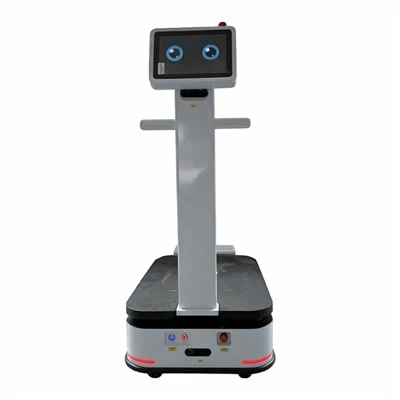
If you’re ready to see how an ASRS can improve your inventory accuracy, we’d love to chat about your facility’s needs.
Automated Guided Vehicle References:
Material Handling Industry. (2023). “Annual Warehouse Operations Error Report.” Industry Insights Series.
U.S. Small Business Administration. (2022). “Cost of Inventory Discrepancies for Small and Medium Businesses.” Small Business Finance Report.
Shenzhen Ginnee Intelligent Warehousing Robotics Co., Ltd.
As one of the most professional automated storage and retrieval system suppliers in China, we’re featured by quality products and low price. Please rest assured to wholesale durable automated storage and retrieval system in stock here and get quotation from our factory. We also accept customized orders.
Address: Room101, No.162 JunXin Road, Niuhu Community, Guanlan Strect, Longhua District, Shenzhen, Guangdong Province, China.
E-mail: huangyongmei@szginnee.com
WebSite: https://www.ginneerobotics.com/
