If you’re in the manufacturing, toolmaking, or precision engineering space, a surface grinding machine is one of those workhorse tools that makes or breaks your ability to produce flat, smooth, dimensionally accurate parts—whether you’re grinding hardened steel blocks, carbide inserts, or even ceramic components. As a surface grinding machine supplier with over 18 years of on-the-ground experience working with small job shops and large aerospace OEMs alike, I get dozens of calls and messages every week that start the same way: “Where can I buy a surface grinding machine that actually fits my needs, not just what a sales rep pushes?” Surface Grinding Machine
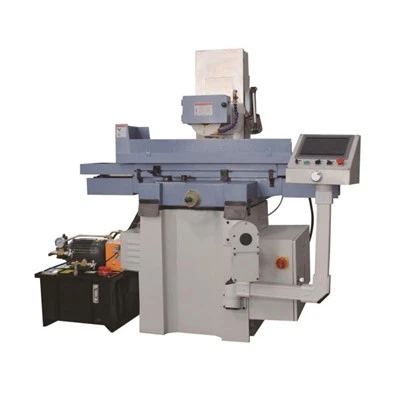
The short answer is that you have three primary routes to source one: direct from a specialized surface grinding equipment supplier, through a reputable industrial equipment distributor, or via the used machinery market. But the details of each route—what to look for, what to avoid, and how to make sure your purchase aligns with your shop’s specific needs—are where you’ll find the real value. Let’s break this down, from the questions you need to ask before you even start browsing listings, to the red flags that mean you should walk away from a seller.
First, let’s talk about how to narrow down exactly what kind of surface grinding machine you need, because wasting time looking at the wrong machines is the #1 mistake I see new buyers make. Surface grinders aren’t one-size-fits-all. There are three core types that cover 90% of industrial use cases: manual, semi-automatic, and CNC. If you’re a small toolroom doing occasional grinding jobs—like sharpening end mills or grinding small metal fixtures—a manual surface grinder might be all you need. They’re cheaper, simpler to maintain, and don’t require a dedicated operator with advanced programming skills. If you’re running 8-hour shifts grinding batches of identical parts, a semi-automatic machine that does automatic table traversing and wheel head feed will cut your labor time by half. For high-volume, precision work (like aerospace components that need tolerance within 0.0001 inches), a CNC surface grinder is non-negotiable—it lets you program consistent, repeatable paths that eliminate human error from the grinding process. That said, if you’re not prepared to invest in operator training and ongoing software updates, a CNC machine will end up being a very expensive paperweight for your shop.
Once you know what type you need, the first place to look is a specialized surface grinding machine supplier. This is where I come in, obviously, but there’s a reason that’s not just a sales pitch. Specialized suppliers don’t spread their focus across every type of industrial machine—we live and breathe surface grinding. That means we know the ins and outs of every component: the accuracy of the linear rails, the rigidity of the spindle, the quality of the hydraulic systems (for manual and semi-automatic models), and the precision of the CNC control software for automated machines. Unlike suppliers that sell lathes, mills, and grinders, our entire team has experience troubleshooting surface grinding-specific issues—like wheel truing problems, flatness errors, or thermal expansion that can throw off part dimensions.
When you work directly with a specialized supplier, you also get a level of customization that distributors and used sellers can’t offer. For example, if you need a grinder with a larger worktable to process big mold plates, or a special spindle for grinding carbide, or even a built-in coolant filtration system that’s tailored to your shop’s metal type (aluminum vs. steel), a good specialized supplier will build that into the machine before it ships. We also offer on-site installation and operator training—something that’s often an afterthought with big box industrial suppliers. I’ve had customers tell me they bought a machine from a general supplier, got it delivered, and spent three days trying to figure out the coolant system or the control software because the technician who installed it didn’t know the equipment. With a specialized supplier, our installers are grinding experts, so they’ll get your machine calibrated and running perfectly on the first day.
Of course, buying from a specialized supplier does have a few considerations. You’ll want to make sure they offer a warranty—at minimum, 12 months on parts and labor, and preferably an option to extend it for 2 or 3 years. You’ll also want to ask about after-sales support: do they have a local service technician within a 4-hour drive, or do you have to ship parts back to their factory every time something breaks? For small shops, a local service network is non-negotiable—if your grinder goes down on a Monday morning and you have to wait a week for a part, you’re losing revenue faster than the cost of a slightly more expensive machine with on-site support.
The second route is working with an industrial equipment distributor. Distributors act as middlemen between specialized suppliers (and sometimes manufacturers) and buyers. Their upside is that they might carry a wider range of brands, so if you have a specific brand preference (say, you’ve had good luck with a particular control system), a distributor can source that for you. They also often handle the logistics of shipping and financing, which can be helpful if you don’t have experience arranging large equipment purchases. But the downsides are significant. First, distributors rarely employ surface grinding experts—their sales teams know a little bit about every type of machine, but they won’t be able to tell you the difference between a precision-grade spindle and a standard industrial spindle, or why a certain coolant system is better for your work. Second, because they mark up the equipment to cover their own costs, you’ll almost always pay 10-15% more than you would buying directly from a specialized supplier. And if something goes wrong after delivery, the distributor will often point fingers at the supplier, leaving you stuck in the middle of a slow, frustrating resolution process.
The third route, which some buyers consider to save money, is the used machinery market. Used surface grinders can be a great deal if you know what to look for, but they’re also full of hidden risks. I’ve seen buyers walk away with a 10-year-old surface grinder that looked good on the outside, only to find out the spindle had worn down so much that parts came out with tolerance errors that were too small to measure with a basic caliper. The key here is to never buy a used surface grinder without having a qualified grinding expert inspect it in person. That means either bringing a colleague who has experience with surface grinders, or asking the seller to arrange a third-party inspection at your cost. Look for signs of wear: how much play is in the table’s linear rails? Does the spindle make any unusual noise when it’s running? Is the wheel head level, or do you notice signs of past crashes (scratches on the worktable, bent spindle components)? If a seller won’t let you inspect the machine in person, or is reluctant to share maintenance records, walk away—chances are they’re hiding something. That said, if you’re willing to put in the time to inspect a used machine, and you’re only doing occasional small jobs, a well-maintained used surface grinder can deliver years of reliable service for a fraction of the cost of a new one.
No matter which route you choose, there are a few non-negotiables to check before you finalize any purchase. First, confirm the machine’s precision rating. For most industrial applications, a surface grinder should have a flatness accuracy of at least 0.0002 inches over the entire worktable. If you’re working in toolmaking or aerospace, that number should drop to 0.0001 inches or less. Second, check the work envelope: make sure the machine’s maximum table size and travel distance can accommodate the largest parts you plan to grind. A common mistake is buying a machine that fits small parts, only to realize six months later you can’t process your new larger workpieces without upgrading. Third, ask about coolant systems—grinding generates a lot of heat, and poor coolant can lead to thermal expansion of your parts, which ruins dimension accuracy. Look for machines with a high-flow coolant system and a filtration system that removes metal shavings from the coolant, so it doesn’t scratch your workpieces.
Now, let’s talk about a common question I get all the time: should I buy new or used? For most shops, the answer is new—specifically, from a specialized supplier. The upfront cost is higher, but you get a warranty, local service support, and the peace of mind that the machine hasn’t been worn out by years of heavy use. I had a customer last year who bought a used surface grinder for $15,000, thinking he’d save money. Six months later, the spindle failed, and he had to pay $8,000 for a new spindle plus another $2,000 for installation, bringing his total cost to $25,000—almost the same as a new machine. He ended up trading the used grinder in, and we sold him a new one with a warranty, which has run without a single issue in two years.
That’s not to say used grinders are never a good choice. If you’re a hobbyist, or a small shop that only does a few small jobs a month, a well-inspected used grinder can be a great way to test the waters before investing in a new machine. Just make sure you’re not sacrificing precision or reliability to save a few bucks.
So, putting this all together, where should you actually go to buy? If you want a machine that’s built for your specific needs, with support that’s actually tailored to surface grinding, start by reaching out to a specialized surface grinding supplier. Avoid the one-size-fits-all distributors that sell every type of industrial equipment, and don’t take a risk on used machines without a full inspection. Before you contact any supplier, make sure you have a clear idea of your needs: what size parts do you grind, what tolerance you need, what your budget is, and whether you need manual, semi-automatic, or CNC capabilities. That way, when you start talking to sales reps, you’re not just looking at a list of machines—you’re finding the exact one that will make your shop more efficient, not just a tool that sits in the corner.
At the end of the day, a surface grinding machine is more than just a piece of equipment—it’s the backbone of your precision work. A poorly chosen machine will lead to scrap parts, lost revenue, and endless frustration. The right machine, from the right supplier, will help you deliver consistent, high-quality parts to your customers, grow your business, and keep your shop running smoothly for years. If you’re ready to talk through your specific needs, and find a surface grinding machine that fits your shop, reach out to us to start a conversation about your purchase.
Wide-Wheel Centerless Grinder References
- ASM International. Surface Finishing Fundamentals for Precision Manufacturing. 2021
- Modern Machine Shop. Guide to Surface Grinding Equipment Selection. 2022
- Manufacturing Extension Partnership. Small Business Guide to Industrial Equipment Purchases. 2020
- Society of Manufacturing Engineers. Precision Machining Standards for Surface Grinders. 2021
- Industrial Machinery Distribution Association. Best Practices for Sourcing Surface Grinding Equipment. 2022
Wuxi Mingxu Machinery Equipment Co., Ltd.
As one of the most professional surface grinding machine manufacturers and suppliers in China, we’re featured by quality products and good price. Please rest assured to buy the best surface grinding machine for sale here from our factory. Also, custom service is available.
Address: No. 5-5 Jinke Wealth Plaza, Changjiang North Road, Xinwu District, Wuxi City, Jiangsu Province
E-mail: yingyingmxjd@163.com
WebSite: https://www.mingxu-china.com/
