If you’ve ever looked under the hood of a modern electric vehicle (EV), you might’ve heard the term “hairpin motor” tossed around—and for good reason. These motors are the backbone of most new EV powertrains, packing more torque, better efficiency, and smaller size than the old wound stator motors we saw just a few years ago. But here’s the thing: a hairpin motor isn’t built on a random workbench. It requires a dedicated assembly line, and as someone who’s built these lines for automakers big and small, I get asked all the time: “What even goes into a full hairpin motor assembly line?” Hairpin EV Motor Assembly Line
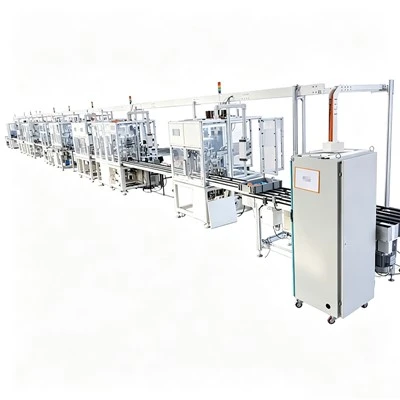
I’ll break it down for you, no stuffy engineering jargon, just the real components that make these lines work. And for the record, this isn’t some theoretical list I pulled from a textbook—every part here is something my team and I have installed, debugged, and tweaked for clients scaling EV production from 10,000 units a year to 100,000+.
First up, let’s start with the part that makes hairpin motors different from everything before: the hairpins themselves. These are not the thin copper wire you’d find in a traditional motor. They’re thick, rectangular copper pins, usually 1-3mm thick, shaped like that little U-shape you’d use for paper clips—hence the name. Before those pins even make it to the main assembly line, they have to be prepped on what’s called a hairpin forming and cutting station. This isn’t just a bender you’d buy at Home Depot. It’s a high-speed, precision machine that takes raw copper bar stock, strips it, cuts it to exact lengths, bends it into the perfect hairpin shape, and even trims the ends to a tolerance of 0.02mm—smaller than the thickness of a human hair. Skip the precision here, and the whole motor’s efficiency goes out the window. We’ve seen clients cut corners on this step and end up with 5% more energy loss, which is a huge deal for EV range.
Next, once you’ve got a bin full of perfect hairpins, you need something to load them into the stator. Stators are the stationary part of the motor—they’re the metal core that holds all the windings, and they come pre-made from steel laminations (think thin, stacked metal sheets that cut down on electrical loss). The stator loading station is the next critical piece. This is a robotic cell, usually with 6-axis robots, that picks up individual hairpins from a feed tray and inserts them into the stator’s slots. It’s not as simple as shoving a pin in, either. Each slot is slightly tapered, so the robot has to angle the pins just right to avoid scratching the enamel insulation (that thin plastic coating on copper that prevents short circuits). For big stators, that might be 400+ hairpins, so this station has to run 24/7 without a hiccup—any misinsertion here means you’re down a line and losing thousands of dollars an hour.
Now here’s a step that most people don’t talk about, but it’s make-or-break: the hairpin shaping and pre-forming station. Wait, I know I just said the hairpins are already shaped, but hear me out. When you load them into the stator, their legs are sticking out of both ends, and they’re all straight. But to connect them together, you need to bend those legs into neat little arcs so they fit into the stator’s terminal slots. This station takes each set of hairpins in a single slot, clamps them, and bends the protruding legs to a specific angle—usually around 90 degrees—so they line up perfectly for the next step. Get this wrong, and when you go to weld them, you’ll have gaps or overlaps that cause overheating. We once had a client who skipped this step and had to rework 20% of their stators, which cost them $200k in a single month. Never skimp on this.
Once all the hairpins are loaded into the stator and pre-bent, the next big step is the welding station. This is where those individual hairpins become a continuous winding. There are two main types of welding we use for hairpins: laser welding and resistance welding, and both have their place. Laser welding is super precise—great for small, thin hairpins, and it creates a strong, clean bond without damaging the surrounding insulation. Resistance welding is faster, better for high-volume lines, and works great for thicker hairpins that need a really tight, conductive connection. Some lines use both—laser for the internal slot connections and resistance for the outer terminal connections. Either way, this station has to check every weld for defects, because a single bad weld will turn a motor into a paperweight in a few hundred miles. We integrate in-line vision systems here that snap a photo of every weld and check for cracks, gaps, or bad conductivity—no exceptions. Even one missed bad weld is one unhappy EV owner.
After welding, you’ve got a stator that looks like it’s full of hairpins and welds, but those welds have sharp edges, and the whole stator is exposed to electrical current. That’s where the insulation and curing station comes in. First, we run a high-voltage test to make sure there are no short circuits. If a hairpin is scratched during loading or a weld is bad, this test will catch it immediately. Then, we apply an insulation coating—usually epoxy resin—over the entire stator, including the welds, to protect against heat and moisture. This isn’t just a spray, either. It’s a precision process where the stator is dipped into a resin bath, spun at a high speed to remove excess resin, then cured in an oven at a specific temperature for a set amount of time. Get the temperature wrong, and the resin will either be too soft (it will come off) or too hard (it will crack when the motor expands and contracts during use). We’ve had lines where the oven temperature drifted 5 degrees, and that led to 15% of stators failing the final test—small shifts, big problems.
Now, the stator is done, but it’s just one part of the motor. Next, we need the rotor. Wait, some assembly lines integrate rotor fabrication too, but most of our clients source rotors, so the line has a rotor insertion station. The rotor is the spinning part of the motor, usually made of permanent magnets for EV hairpin motors. This station is a low-tolerance robotic cell that lowers the rotor straight down into the stator, making sure it’s perfectly centered. If the rotor is even slightly off-center, you get what’s called “air gap eccentricity,” which causes vibration, noise, and huge efficiency loss. That’s why this station uses laser alignment tools—they check the gap between the rotor and stator at every point around the circumference, and adjust if needed before locking them together.
Once the rotor is in, you need to seal the motor, attach the end bells, and add all the external components: the housing, the bearings, the wiring harness for the motor controller, and the position sensor. That’s handled by the final assembly and integration station. This is where all the parts come together, and it’s usually a modular station so we can adjust it for different motor sizes. For example, a motor for a compact hatchback is smaller than one for a pickup truck, so we just swap out the tooling here instead of rebuilding the whole line. We also add a final functional test here—running the assembled motor on a dynamometer to check torque, efficiency, noise, and heat output. No motor leaves our lines without passing this test.
Wait, I can’t forget about the line control and quality management system. This is the brain of the whole assembly line, and it’s way more important than most people think. It’s not just a tablet where you press “start.” It’s a software platform that tracks every part, every step, every measurement, every defect, and every output. For example, if a hairpin forming station is running 5% more defects than normal, the system will flag it before it starts ruining stators. It also logs every motor’s data—so if a client has a recall, they can pull up exactly which parts were used, which station assembled it, and when it was made. This is non-negotiable for EV manufacturers, who have to meet strict safety and quality regulations.
I also want to mention the auxiliary systems that people don’t see, but keep the line running. There’s the material handling system—conveyors, lift tables, and part feeders that move the stators, rotors, and hairpins between stations, all synced to the line control system. Then there’s the utility support: compressed air for the robots, cooling water for the welding and oven stations, and power systems that can handle the high draw of the precision equipment. A lot of first-time line builders forget these, and end up with a line that works half the time because their power supply can’t keep up.
Now, I know this sounds like a lot, and it is. But here’s the thing: a good hairpin motor assembly line isn’t just a bunch of machines put together. It’s a coordinated system where every component works in sync. The forming station feeds the loading station, the loading station feeds the welding station, the control system tracks every step, and the quality checks catch issues before they become big problems. As someone who’s been building these lines for over a decade, I’ve seen lines that were thrown together with cheap parts fail, and lines built with precision equipment run 99% uptime for years.
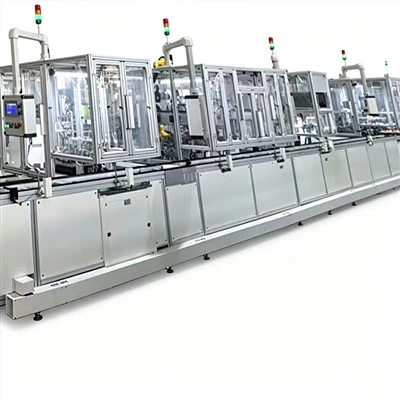
If you’re scaling EV production and need a hairpin motor assembly line that’s built to your specific needs—whether you’re making 5,000 motors a year or 150,000—we can work with you. We tailor every line to your motor specs, your output goals, and your quality standards, no one-size-fits-all garbage. If you’re ready to chat through your requirements, reach out to our team to start a conversation. We’ll walk you through every component, answer all your questions, and help you build a line that delivers reliable, high-efficiency hairpin motors for your EVs.
Hairpin EV Motor Assembly Line References
Miller, T.J.E. (2020). Electric Motor Drives: Modeling, Analysis, and Control. CRC Press.
Bosch GmbH. (2021). Automotive Electromechanical Assembly Technologies. Bosch Technical Publications.
Wang, Y., et al. (2022). Precision Welding for Hairpin Stators in EV Traction Motors. Journal of Manufacturing Processes.
National Renewable Energy Laboratory (NREL). (2023). Electric Drive Motor Assembly and Quality Control Standards. U.S. Department of Energy.
Juli Aoxuan Technology (Zhejiang) Co., Ltd.
Juli Aoxuan Technology (Zhejiang) Co., Ltd. is one of the most professional hairpin ev motor assembly line manufacturers and suppliers in China. With abundant experience, we warmly welcome you to buy durable hairpin ev motor assembly line made in China here from our factory. If you have any enquiry about cooperation, please feel free to email us.
Address: No.28, Guangming Middle Road, Haiyou Street, Sanmen County, Taizhou City, Zhejiang Province, China
E-mail: sales05@juli-china.com
WebSite: https://www.juli-winding.com/
