If you’ve ever walked through a factory floor or seen the sleek, paneled electrical cabinets that keep machinery, data centers, and even residential HVAC systems running smoothly, you might not stop to wonder how those cabinets come together at scale. As a supplier of electrical cabinet manufacturing equipment, I get asked this question constantly: “What’s the actual production capacity of these machines?” It’s not a one-size-fits-all answer—many factors shape how much a line can output in a day, a week, or a month, and understanding that capacity is key to choosing equipment that matches your business’s needs, whether you’re a small contractor building 50 cabinets a month or a large industrial firm turning out 2,000. Electrical Cabinet Manufacturing Equipment
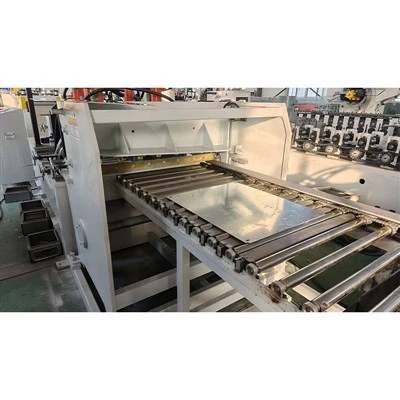
Let’s start with the basics. Electrical cabinet manufacturing machinery isn’t a single machine—it’s a system. A typical production line includes a CNC sheet metal cutter, a press brake for bending, a spot welder, a powder coating station, and an assembly cell, plus various conveyors, material handling tools, and quality checkpoints. Each component has its own speed, and the line’s overall capacity is limited by the slowest part, a concept called “bottlenecking” that’s familiar to anyone who’s worked in manufacturing. For example, if your CNC cutter can cut 20 steel sheets an hour, but your press brake only bends 15, the line’s maximum capacity tops out at 15 units an hour—no matter how fast the rest of the equipment works.
Now, let’s talk about real-world numbers, the kind I share with customers every day when they’re outfitting their shop. For a mid-sized, entry-to-mid level line aimed at small and medium cabinet builds (think NEMA 1 or NEMA 12 cabinets, common for commercial offices or light industrial use), the standard capacity is roughly 8 to 12 complete cabinets per hour, over a two-shift workday (16 hours total). That translates to between 128 and 192 cabinets a day, or about 2,500 to 4,000 a month, assuming a 22-working-day month. This line is built for flexibility too—it can switch between cabinet sizes (from 12x12x6 inches up to 60x40x20 inches) in less than 10 minutes, so it works for mixed runs, which most small to mid-sized shops do.
For larger operations, those focused on high-volume, standardized builds (like enclosures for power substations or large data center racks), there’s heavy-duty production line equipment. These lines are built with faster CNC cutters that can process 30 sheets an hour, robotic press brakes that bend panels in half the time of manual or semi-automated units, and fully automated material handling that moves parts from cutting to bending to welding without human intervention. A line like this can push out 25 to 35 cabinets an hour, which adds up to 400 to 560 a day, or 8,000 to 12,000 a month—enough to supply a major construction project or multiple regional distributors.
But here’s the part most manufacturers don’t talk about: capacity isn’t just about how many units come off the line. It’s about effective capacity, the actual number of good, ready-to-install cabinets you get, minus downtime, changeovers, and rework. For example, a line might be rated for 10 cabinets an hour, but if you have to switch between 10 different cabinet designs three times a shift, that adds 30 to 60 minutes of changeover time each time, cutting your effective output by 15 to 20 percent. Downtime for maintenance is another big factor—scheduled monthly servicing can take a line out for 8 to 12 hours, so factoring that in, a 10-cabinet-an-hour line might only deliver 8 cabinets an hour over a full month.
Rework is even more impactful. If a CNC cutter makes a small mistake on a panel hole, or a weld is misshapen, that cabinet has to be pulled off the line, fixed, or scrapped. For manufacturers using low-quality, off-brand equipment, rework rates can be as high as 10 to 15 percent, eating into your capacity and cutting into profits. That’s why as a supplier, we don’t just sell you a machine and walk away—we offer on-site training, 24/7 remote support, and regular maintenance checks to keep rework down to less than 2 percent, so you hit your rated capacity consistently.
Another variable that shapes capacity is material. Most cabinets are made of cold-rolled steel, but some are aluminum, stainless steel, or even galvanized steel for harsh outdoor environments. These materials have different hardness levels, so a CNC cutter set for steel will move slower on stainless steel, which can reduce line capacity by 10 to 25 percent. Thickness matters too—16-gauge steel bends faster than 10-gauge, so building thicker, heavier cabinets will naturally lower your output. We always ask customers what materials they’ll be using most often, so we can size their equipment to handle those specifics.
Let me give you a real example from a customer I worked with last year. A medium-sized electrical contractor in Ohio came to us needing to increase their output from 800 cabinets a month to 2,500. They were using a mix of manual and semi-automated equipment, with multiple bottlenecks: their old cutter was slow, and they were doing all bending by hand. We installed a mid-level automated line, paired with a robotic arm that handled panel transfer between cutter and press brake, and optimized their workflow to reduce changeover time between common cabinet designs. After three months of training and tuning, their effective output hit 2,700 cabinets a month—slightly over their goal. The key wasn’t just faster machines, it was aligning the entire line to their needs, not just selling them the highest-capacity equipment on the market.
On the flip side, a startup that only needs 500 cabinets a month doesn’t need a 10-cabinet-an-hour line. Overbuying equipment is a common mistake, and it’s a waste of capital. For smaller operations, modular equipment is the sweet spot—standalone CNC cutters or semi-automated bending stations that can be expanded as the business grows. A small shop starting with 500 cabinets a month might use a single CNC cutter and a manual press brake, with a capacity of 2 to 4 cabinets an hour, and add a spot welder and powder coating station as they scale, so they only pay for what they need when they need it.
Safety and compliance also play a role in capacity. Modern electrical cabinet manufacturing equipment is designed to meet OSHA, IEC, and NEMA standards, which means it has safety interlocks, dust extraction systems, and quality checkpoints built in. These features don’t just keep your team safe—they reduce unplanned downtime from accidents or non-compliant parts. A decade ago, many factories ran lines around the clock with minimal safety checks, but today, regulated downtime for inspections is part of the process, so equipment that’s built with compliance in mind actually has more consistent capacity over time.
What about custom orders? A lot of cabinet makers work on custom projects, not just standard designs. Custom runs mean every cabinet is slightly different, so changeover time is longer. For a line built for high-volume standard runs, custom orders might cut capacity in half or more. That’s why we offer lines designed for mixed production, with quick-change tooling that lets you switch between custom designs in 5 minutes or less. One customer in Texas does 60 percent custom work, and our line lets them balance custom jobs with standard orders without major drops in output.
Now, I want to be clear: no supplier can give you an exact capacity number without understanding your specific operation. A machine that works perfectly for one shop might bottleneck another because of their workflow, the types of cabinets they build, or the materials they use. That’s why we don’t just quote a number over the phone—we send a team out to assess your current floor space, your order volume, your customer base, and even your team’s skill level before we recommend equipment.
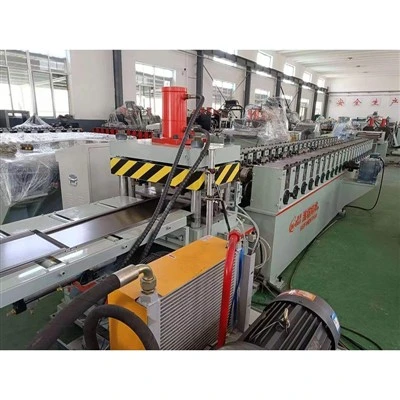
If you’re looking to upgrade your electrical cabinet manufacturing line or set up a new shop, capacity is one of the most important metrics to weigh, but it’s not the only one. You need reliability, flexibility, support, and equipment that grows with your business. Whether you’re a small shop just starting out or a large industrial firm needing to keep up with national demand, there’s a line that fits your capacity needs.
Cable Tray Roll Forming Line If you’re ready to talk through your specific goals and see what production capacity works for you, I’d love to connect. We can walk through line options, capacity projections, and how to tailor equipment to your unique workflow. Don’t make the mistake of guessing at capacity—get the facts from a supplier that’s worked with hundreds of electrical cabinet makers across different industries.
References
- “Electrical Enclosure Manufacturing: Capacity Planning and Best Practices.” Industrial Manufacturing Association, 2022.
- “CNC Sheet Metal Processing Capacities for Electrical Cabinets.” Fabricators & Manufacturers Association International, 2021.
- “Automation Impact on Effective Production Capacity in Cabinet Manufacturing.” Journal of Industrial Engineering and Operations Management, vol. 5, no. 2, 2020, pp. 45-62.
- “OSHA Safety Standards for Metal Fabrication Facilities.” Occupational Safety and Health Administration, U.S. Department of Labor, 2023.
Weifang Yue Jun Machinery Co., Ltd.
With abundant experience, we are one of the most professional electrical cabinet manufacturing equipment manufacturers in China. We warmly welcome you to buy durable electrical cabinet manufacturing equipment made in China here from our factory. We also accept customized orders.
Address: Kuiwen District, Weifang City, Shandong Province
E-mail: adrian@yuejunmachinery.com
WebSite: https://www.yuejunmachinery.com/
