If you’ve ever shopped for LED modules, chances are you’ve noticed the frequent question: do these energy-efficient, long-lasting lighting components contain mercury? As someone who’s been in the LED module supply business for over a decade, I get asked this at trade shows, in follow-up emails from potential clients, and even by casual homeowners who’ve upgraded their kitchen under-cabinet lights. It’s a valid question—mercury is a well-documented toxin, so knowing what’s in the products you specify, install, or sell matters. Let’s break this down, straight from a supplier who’s dealt with the ins and outs of LED manufacturing specifications for years. LED Modules
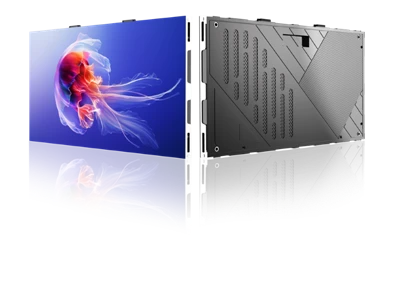
First, let’s get one thing clear: LED modules are not the same as compact fluorescent lamps (CFLs) or fluorescent tubes. If you’ve ever had a CFL break and panicked about mercury vapor, that’s a different technology. But because LEDs fall under the broader umbrella of solid-state lighting, there’s still a lot of confusion about their components. To answer this properly, we have to dive into how LEDs work, and how their manufacturing has evolved over the last 20 years.
Early LED modules, made in the 2000s and early 2010s, did contain trace amounts of mercury, but not in the way you’d find in a fluorescent bulb. Mercury was used in the manufacturing process for some of the semiconductor wafers that form the LED’s chip. Those tiny, light-emitting chips are made from materials like gallium, arsenic, or phosphors, and in the early days, mercury was a common dopant—an element added to adjust the band gap of the semiconductor, which controls what color light the LED produces. For example, blue LEDs, which are the base for most white LED modules, relied heavily on mercury doping back then. The amount was tiny, though: a single early LED module might have less than 0.1 milligrams of mercury total. To put that in perspective, a grain of rice is about 20 milligrams—so you’d need 200 early LED modules to have the same amount of mercury in one CFL bulb, which typically has 2 to 5 milligrams.
But here’s the big shift: by the mid-2010s, nearly all manufacturers, including the ones we partner with to source our modules, phased out mercury doping for most commercial LED products. The semiconductor industry developed alternative dopants—like indium, aluminum, and gallium—that can achieve the same precise color and performance without mercury. That’s a critical point for anyone working with modern LED modules. Today, standard white LED modules, color-tunable modules, and modules for high-bay lighting, residential fixtures, or retail displays almost always have zero intentional mercury content. I recently reviewed the specs for our top-selling linear LED module line, and the material safety data sheets (MSDS) confirm not a single gram of mercury is intentionally added.
That said, we can’t ignore the fine print: “zero mercury” doesn’t mean “mercury-free” in every single case. That’s a distinction I try to make clear to clients who are focused on sustainability or regulatory compliance, like facility managers for hospitals or schools, where hazardous material limits are strict. A very small number of niche LED modules—like those designed for extreme cold environments, or specialty infrared LEDs used in industrial sensing—might still have trace amounts of mercury left over from old stock or very specific, specialized manufacturing processes. For these, the amount is still so low that it falls well below global regulatory limits set by organizations like the IEC (International Electrotechnical Commission) or the EU’s RoHS (Restriction of Hazardous Substances) directive. RoHS, for example, limits mercury in electrical and electronic equipment to 0.1% by weight, and modern LED modules come in at 0.001% or less, so they’re not considered hazardous under most global rules.
The next question I always get after explaining this: why does there still so much misinformation about mercury in LEDs? Part of it is the lingering association with CFLs, which were widely marketed and used in homes for years. Another part is that a lot of online sources recycle old data from pre-2015, when mercury doping was more common. I’ve had clients come to us with old blog posts from 2012 that say all LEDs have mercury, and they’re shocked when I pull up the latest test reports for our current inventory. Also, some third-party testing labs still label all solid-state lighting as potentially containing mercury because of a tiny, unlikely risk from broken modules. Wait, broken modules? Is there any mercury risk if an LED module breaks?
That’s a fair question, and one I’ve thought through as a supplier, especially since we work with clients who handle large-scale installations and worry about end-of-life disposal. Let’s clarify: the risk of mercury exposure from a broken modern LED module is negligible. Unlike a fluorescent bulb, which has a glass tube filled with mercury vapor, LED modules are made of a plastic or aluminum heat sink, a circuit board, the tiny semiconductor chip, and phosphor coating on the chip. There’s no sealed glass chamber with mercury inside. The phosphor coating—responsible for turning blue light from the chip into white light—does not contain mercury. Even if the module breaks, the only potential hazard would be small amounts of lead in the solder on the circuit board, or rare earth metals in the phosphors, none of which are mercury.
But what about end-of-life disposal? That’s where my team and I put a lot of effort into educating our clients, regardless of whether our modules have mercury. Even though modern LED modules have almost no hazardous materials, recycling them properly is still better than throwing them in a landfill. In many regions, like the United States, the EU, and Australia, LEDs are classified as electronic waste, not hazardous waste, because their mercury content is so low. We partner with certified e-waste recyclers that process LED modules, recover materials like copper, aluminum, and the semiconductor chips, and dispose of any trace contaminants in line with local regulations. We also make sure to provide clear disposal guidelines with every bulk order we send out—something a lot of smaller suppliers skip, which leads to unnecessary confusion for clients.
Let’s talk about compliance, because that’s what drives a lot of our client’s purchasing decisions. For government contracts, school districts, or retail chains with global locations, they need to know that the LED modules they use meet strict environmental standards. For example, if you’re bidding on a municipal lighting project in California, you’ll need to comply with CalRecycle’s e-waste rules, which require low mercury content. All of our current LED module lines are RoHS 2 compliant, which means they meet the latest EU limits for mercury, lead, cadmium, and other hazardous substances. We also have REACH (Registration, Evaluation, Authorization, and Restriction of Chemicals) compliance for clients operating in the European Economic Area, and we can provide full test reports and material declarations for every order within 48 hours of a request.
I should also mention a common misconception among DIY installers who are switching from incandescent to LEDs. Some people think that because LEDs are made with semiconductors, they must contain the same toxic materials as other semiconductors, like old computer chips. That’s not the case for modern LED modules. Computer chips often have small amounts of mercury in their packaging or testing processes, but LED modules are designed specifically for lighting, with simplified, low-waste manufacturing. The only time you’ll find meaningful mercury in an LED product is if it’s a hybrid product that combines LEDs with another light source, like some newer fixtures that mix LED and fluorescent bulbs for specific color temperatures—but even then, the fluorescent component is the only part with mercury, not the LED module itself.
As a supplier, I’ve seen how this confusion about mercury in LEDs has held some clients back from making the switch to LED lighting, which is one of the most impactful ways to reduce energy use and lower utility costs. A typical LED module lasts 50,000 hours or more, compared to 1,000 hours for an incandescent bulb, so switching to LEDs saves not just electricity but also replacement labor and waste disposal costs. But when a client is worried about mercury, it’s hard to justify that switch without clear, reliable information. That’s why my team and I make it a priority to walk every client through the specs, share third-party test data, and be transparent about our manufacturing partners’ processes. We don’t hide behind fine print—if a client has a requirement for zero mercury, we can point them to specific module lines that meet that, and if they’re open to the very low trace levels, we can explain exactly what that means for their project.
Let me also address a recent development that’s come up in our industry: some manufacturers are promoting “mercury-free LEDs” as a selling point, and while that’s technically true for most modern products, it’s important to note that this is the standard now, not a special feature. Ten years ago, claiming your LEDs were mercury-free would have been a big selling point because most did have trace levels, but today, any reputable LED module supplier should be offering mercury-free products as their baseline. If a supplier is still advertising “low-mercury LEDs” as a unique benefit, they’re probably using older, outdated components that are less energy-efficient and have shorter lifespans.

So, to circle back to the original question: do LED modules contain mercury? The short answer for 2024 and beyond is no, not intentionally, and in almost all cases, not in any trace amount that would pose a health or environmental risk. The only exceptions are very small, niche specialty modules for industrial or scientific uses, which are clearly labeled and regulated. For anyone working on a project—whether it’s a small retail store upgrade, a municipal road lighting project, or a residential build—you can safely use standard commercial LED modules without worrying about mercury exposure, whether during installation, use, or disposal, as long as you recycle them properly.
LCD Showcase If you’re in the market for LED modules for your next project, I’d be happy to walk you through our product lines, share compliance documents, and answer any other questions you have about materials, performance, or pricing. We work with clients across industries, from small interior design firms to large industrial contractors, and we pride ourselves on being transparent about what’s in every module we supply. Whether you need linear LED modules for office lighting, high-power modules for outdoor fixtures, or color-tunable modules for retail displays, we have options that meet your performance and environmental requirements. Feel free to reach out to discuss your needs and get a custom quote for your next order.
References
- International Electrotechnical Commission (IEC) 62471: Photobiological safety of lamps and lamp systems
- EU RoHS 2 Directive (2011/65/EU): Restriction of hazardous substances in electrical and electronic equipment
- U.S. Environmental Protection Agency (EPA): Mercury in Lighting Products
- Lighting Europe: Solid-State Lighting Material Composition and Environmental Performance Report, 2023
- REACH Regulation (EC) No 1907/2006: Registration, Evaluation, Authorization and Restriction of Chemicals
Suzhou One World Technology Co., Ltd.
With abundant experience, we are one of the most professional led modules manufacturers and suppliers in China. Please feel free to buy cheap led modules for sale here from our factory. All customized products are with high quality and competitive price.
Address: Room 928, No.28 Wansheng Street, Suzhou Industrial Park, Suzhou, Jiangsu Province
E-mail: sales@oneworldtech.cn
WebSite: https://www.yishitongtech.com/
