As the owner of a small but busy tube metal laser cutting machine supplier, I get at least three calls a week from fabricators who’ve hit a wall with their cutting jobs. “I followed the manual, but my cut edges are jagged,” one might say. “I’m wasting half my stock because the laser pierce doesn’t go through the square tube,” another will text mid-project. These aren’t questions about how to push a button or load a tube—they’re about how to adjust parameters to make the machine work for their specific material, part, and timeline. After 12 years in this trade, I’ve learned that the best cuts don’t come from a one-size-fits-all setup; they come from tuning five core parameters, step by step, to match what you’re cutting. Let me walk you through what I tell every customer who calls, because getting this right makes all the difference in efficiency, quality, and profit. Tube Metal Laser Cutting Machine
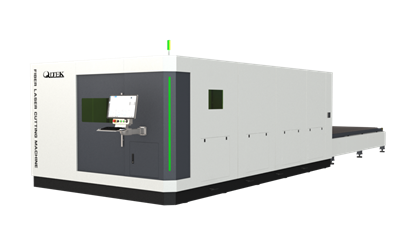
First, let’s start with the basics that set the foundation for every adjustment: the material itself. I once had a customer run a 2-millimeter thick stainless steel tube on a preset for mild steel, and by the time the job was done, he’d ruined three tubes, burned through a nozzle, and spent two extra hours troubleshooting. That’s a mistake no fabricator wants to make. Every material has unique thermal properties that dictate how the laser energy interacts with it. Mild steel, for example, has a lower melting point and absorbs fiber laser energy efficiently—so you can run faster speeds and higher power without too much risk of dross (that sticky, metal residue that clings to cut edges). Stainless steel, on the other hand, has higher chromium content, which creates a hard oxide layer. You can’t run the same speed here; if you do, the laser won’t pierce deep enough, and you’ll get an uneven edge. Aluminum is even trickier: it reflects a lot of fiber laser light, so you need to adjust both power and assist gas to prevent back reflections that can damage the laser’s lens or resonator. That’s why I always tell customers to start with material thickness and type, not the machine’s default settings. A quick note to keep in mind: if you’re cutting a 6-millimeter round aluminum tube vs. a 6-millimeter square aluminum tube, the square shape has more mass per inch along the cut line, so you’ll need a slight power bump to compensate.
Next up, assist gas pressure and type—this is the parameter I see most fabricators mess up. The assist gas isn’t just for blowing away molten metal; it also cools the cut zone and prevents oxidation. For mild steel, most customers use compressed air or nitrogen at around 10 to 15 bar. But if you’re cutting thin 1-millimeter mild steel, too much pressure will actually blow small droplets of molten metal back onto the tube’s outer surface, leaving a messy blemish. For thicker mild steel (over 4 millimeters), you need higher pressure—18 to 20 bar—to push the dross completely away from the cut edge. Stainless steel is where argon or high-purity nitrogen comes in. I used to advise customers to use 99.9% nitrogen for stainless steel, but I recently had a customer test 99.5% nitrogen for a 3-millimeter tube and got the same clean, oxide-free edge at a lower cost—so that’s a small adjustment I always mention. For aluminum, you need a mix: compressed air works for thin aluminum, but for anything over 3 millimeters, use argon to reduce oxidation and help the molten metal flow more smoothly. The key here is to test a small piece first. I keep a stack of scrap tubes in my warehouse specifically for this purpose—let customers run a 1-inch test cut on the material they’re working with, adjust pressure by 1 bar each time, and pick the setup that leaves no dross. It takes 5 minutes, but saves hours of rework later.
Then there’s laser power and cutting speed, two parameters that are inextricably linked. You can’t adjust one without the other. Let’s use an example: cutting 2-millimeter mild steel with a 3-kilowatt laser. If you run the laser at full 3kW and a speed of 5 meters per minute, you’ll get a clean cut, but if you slow that speed down to 3 meters per minute, you’ll overheat the material, cause a heat-affected zone (HAZ) around the cut, and maybe even warp thin tubes. On the flip side, if you keep the speed at 5 m/min but drop the power to 2kW, the laser won’t deliver enough energy to melt the metal, so you’ll get a partial cut that requires secondary work. For thicker materials, the ratio shifts: 6-millimeter mild steel needs closer to 4kW of power and a slower speed, around 2.5 m/min, to ensure the laser can penetrate all the way through. I also tell customers to pay attention to the pierce delay, which is the time the laser sits in one spot to create a hole before starting the cut. For thick tubes, a too-short pierce delay means the hole isn’t deep enough, so the dross will stick. For thin tubes, a too-long pierce delay will burn a hole through the opposite side of the tube. I usually suggest a pierce delay of 0.5 seconds per millimeter of material thickness as a starting point, then tweak from there.
No one talks about nozzle size enough, but it’s a critical adjustment that directly impacts cut quality. The nozzle is the small tip that delivers the assist gas right to the cut zone, and using the wrong size can ruin even the best power and speed setup. For thin materials (under 3 millimeters), use a small nozzle—0.8 to 1.0 millimeters in diameter—because the small opening concentrates the assist gas, keeping the cut tight and clean. For thicker materials (over 4 millimeters), a larger nozzle (1.5 to 2.0 millimeters) is better, because you need more gas flow to push away the larger volume of molten metal. I once had a customer use a 1.0mm nozzle on 5-millimeter stainless steel, and he kept getting dross that wouldn’t come off. When he switched to a 1.5mm nozzle, the problem was gone. It’s that simple. Also, make sure the nozzle is aligned correctly with the laser beam—most machines have an auto-align feature, but I tell customers to check it manually every 10 jobs. A misaligned nozzle can cause the assist gas to blow off-center, leading to uneven cuts or even damaged parts.
Finally, there’s tube rotation and focus position, parameters specific to tube cutting that don’t come up in sheet metal cutting. Tubes aren’t flat sheets, so how you rotate the tube as it cuts affects the cut’s consistency around the entire circumference. For round tubes, if you’re cutting a long part that wraps 180 degrees around the tube, you need to adjust the rotation speed to match the cutting speed. If the tube rotates too fast, the cut will be stretched; too slow, and the laser will overlap, burning the edge. For square or rectangular tubes, the corners are a special case—these areas have a smaller radius than the flat sides, so the laser’s spot size is different. I always tell customers to slow down the speed by 20% when cutting corners, because the material there is more concentrated, and the laser can easily overheat and leave a rough edge. The focus position is another tube-specific adjustment: for most tubes, you want to set the focus slightly above the top surface of the tube, usually 0.5 to 1 millimeter, to ensure the laser penetrates through the tube’s wall thickness instead of just cutting the surface. For thick tubes, you might need to set the focus slightly below the surface, but that’s only after testing a small scrap piece.
Now, let’s get to what really matters: when should you make these adjustments, and how do you know when you’ve got it right? I tell customers to do a test cut on every new material type, every time they change a tube size, or every time the job’s quality starts to slip. A good test cut has three checks: first, run your finger along the cut edge—if there’s no dross, you’re good. If there is dross, check assist gas pressure first, then speed, then nozzle size. Second, look at the heat-affected zone around the cut—if it’s more than 1 millimeter wide, you either ran too slow or used too much power, so adjust those parameters down. Third, check the dimensional accuracy of the test piece—if the cut is off by even 0.1 millimeters, your focus position or tube rotation is probably off.
I’ve seen fabricators save thousands of dollars a month just by making these small parameter adjustments instead of blaming the machine. I had a customer who was wasting $1,200 a month on ruined aluminum tubes until we adjusted his assist gas from air to argon and his power down by 500 watts. The same quality, but no more warped parts. Another customer switched nozzle sizes for his mild steel jobs and cut his rework time by 70%. That’s the power of getting these adjustments right.
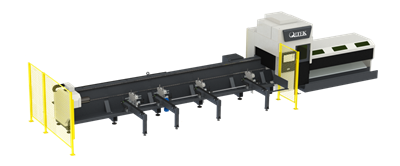
If you’re struggling with your tube metal laser cutting machine—if your cuts are too slow, you’re getting dross, or you’re wasting materials—don’t just stick with the default settings. Every job is different, and a little tuning goes a long way. I’ve been doing this long enough to know that the best cuts aren’t made by the machine alone; they’re made by someone who takes the time to match the parameters to their material and part. When you’re ready to stop fighting your machine and start making it work for you, I’m here to help you get the right setup for your jobs. Reach out to me to discuss your specific needs, whether you’re cutting small diameter round tubes or thick square profiles, and I’ll walk you through the adjustments you need to get clean, efficient cuts every time.
Material Storage and Automatic Loading/Unloading System References
- International Organization for Standardization. (2019). ISO 9013:2019, Thermal cutting – Classification of cut edges, dimensional characteristics and tolerances.
- Steen, W. M., & Mazumder, J. (2010). Laser Material Processing (4th ed.). Springer-Verlag London.
- DWG Solutions. (2021). Tube Laser Cutting Best Practices: Parameter Tuning for Round, Square, and Rectangular Profiles.
- American Welding Society. (2018). Guide for Laser Cutting of Metals (AWS D1.1/D1.1M Supplement).
- Preci S.A. (2022). Assist Gas Selection for Fiber Laser Cutting of Ferrous and Non-Ferrous Metals.
Suzhou Quick Laser Technology Co., Ltd.
Suzhou Quick Laser Technology Co., Ltd. is one of the most professional tube metal laser cutting machine manufacturers and suppliers in China, featured by quality products and good price. Please feel free to buy durable tube metal laser cutting machine for sale here from our factory. For more information, contact us now.
Address: No. 6, Qingqiu Street, Industrial Park, Suzhou, Jiangsu Province, China
E-mail: info@qlteklaser.com
WebSite: https://www.qlteklaser.com/
