As someone who’s spent 12 years in the high-voltage distribution box (HVDX) supply business—walking production floors, troubleshooting field installations, and fielding calls from electricians who’ve had a box fail mid-peak load—I’ve learned that “high voltage” isn’t just a number on a spec sheet. For clients, especially industrial plant managers, commercial developers, and renewable energy operators, these boxes aren’t just metal cabinets: they’re the gatekeepers of power reliability, and their standards aren’t arbitrary. They’re non-negotiable for safety, compliance, and long-term performance. High-Voltage Distribution Box
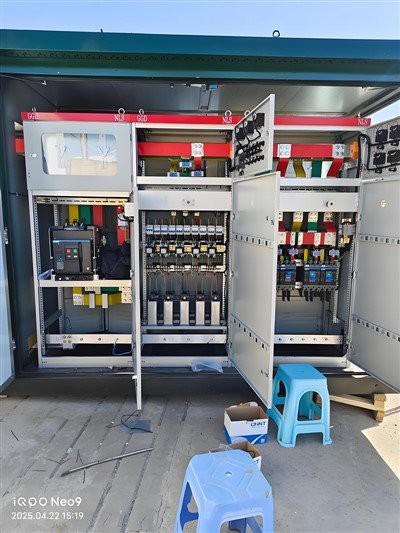
Let’s break down the standards that matter most, the unspoken checks we run at our facility, and why cutting corners here is a mistake no one can afford.
First, let’s get the basics right: a high-voltage distribution box isn’t the tiny unit you might see powering a backyard shed. These handle 1kV to 52kV, the range that runs assembly lines, feeds urban substations, and connects wind farm arrays to the grid. For context, a standard residential unit tops out at 240V—so the stakes here are exponentially higher.
The first and most formal set of standards comes from global and regional regulatory bodies, and they’re not suggestions. For our North American clients, we align strictly with IEEE standards—specifically IEEE C37.20.2 for switchgear assemblies and IEEE C62.11 for surge protection. In Europe, IEC 62271 series is non-negotiable, and in Asia, GB 7251 for low-voltage extensions and GB 14048 for high-voltage control gear. We don’t ship a single box without third-party test reports confirming it meets these.
One key requirement from these standards is insulation integrity. High voltage needs to stay contained—no arcs, no leaks that can cause fires or fatal shocks. We test every unit’s dielectric strength at 1.5 times its rated voltage for 60 seconds; if there’s even a faint leak detected, it gets reworked before it leaves the facility. Last year, we had a client who tried to save $200 by skipping this test on a custom 15kV box—we caught it, and they later told us that same box would have failed at their plant during a summer peak, costing them 12 hours of downtime and $80k in lost production. That’s the kind of risk we refuse to pass on.
Next, mechanical durability. HVDXs live outside, often in harsh environments: coastal areas with salt spray, desert regions with extreme temperatures, industrial sites with constant vibration from heavy machinery. The standards here focus on enclosure rating (IP code) and structural rigidity. For coastal installations, we build with 316 stainless steel (IP56, meaning dust-tight and protected against heavy seas) instead of the standard galvanized steel. For desert sites, we use gaskets rated for -40°F to 185°F to prevent cracking from heat expansion. We also conduct vibration testing equivalent to 10 years of field use before a box is approved—no flimsy brackets here. A common mistake we see from new suppliers is using off-the-shelf enclosures; those often can’t stand up to real-world conditions, leading to water damage and component failure within a year.
Then there’s safety interlocking, a standard that’s easy to overlook until it saves a life. High-voltage boxes have live parts inside, so the standards mandate that you can’t open the front access panel without first disconnecting the power, and you can’t access the internal busbars if the main breaker is on. We’ve seen far too many accidents where maintenance workers tried to bypass interlocks to save time, and it’s almost always because the original box didn’t have robust interlocks built in. At our facility, we test interlocks repeatedly—if a worker can force the panel open without power off, it goes back to the line. This isn’t just a rule; it’s a promise to the teams that work on these boxes every day.
Thermal management is another critical standard that makes orbreaks performance. When high-voltage current flows through components, heat builds up—too much, and connectors can corrode, circuit breakers can trip unexpectedly, or wiring can melt. The standards require that a box’s internal temperature stays within 40°F of ambient, even at full load. For units powering continuous industrial processes, we add forced air cooling or thermal sensors that trigger alarms before temperatures get dangerous. Last winter, a food processing plant we supply called us because their HVDX kept tripping in cold weather; we realized the standard vented design was letting too much cold air in, causing condensation on components. We redesigned the box with heated gaskets for their climate, and they haven’t had a trip since. That’s the kind of tailored compliance that comes from knowing the standards, not just reading them.
It’s also important to note that standards aren’t one-size-fits-all. A HVDX for a wind farm substation has different requirements than one for a downtown high-rise. Wind farm boxes need to handle variable loads from turbines, often in remote locations where maintenance is hard—so we add extra surge protection and self-diagnostic sensors. Urban boxes, meanwhile, need to be compact and aesthetically pleasing, so we use low-profile enclosures that blend into building exteriors while still meeting IP54 ratings. We work with each client to map their specific environment, load requirements, and regulatory rules before we even start manufacturing.
As a supplier, we don’t just sell boxes—we provide end-to-end support that aligns with these standards. Our field technicians conduct site inspections before installation to ensure foundations are level and power feeds are properly sized, which prevents unnecessary stress on the box. We offer 24/7 troubleshooting for the first year, and all our boxes come with a 10-year warranty that’s only valid if the unit was installed per standards guidelines. This isn’t about forcing rules; it’s about making sure every client gets a box that will perform for decades, not just a few years.
I’ve been in this business long enough to see how the market has shifted: more demand for renewable energy, more clients pushing for cost savings, but still a core need for reliable, standard-compliant equipment. The difference between a good HVDX supplier and a great one isn’t just their products—it’s their attention to the small details that the standards are designed to enforce. It’s the extra dielectric test, the tailored enclosure material, the interlock check that no one else does.
If you’re a plant manager, commercial developer, or renewable energy operator sourcing high-voltage distribution boxes, don’t just go for the lowest bid. Ask about the third-party test reports, the enclosure ratings, and the safety interlock protocols. A box that meets standards isn’t just a legal requirement—it’s an investment in your operations, your team’s safety, and your bottom line.
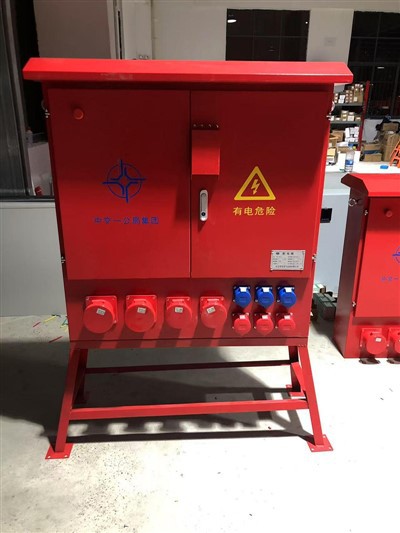
We’re here to walk you through every step, from initial design to post-installation support. Our team has the expertise to ensure your HVDX meets all relevant standards, is tailored to your specific application, and is built to last. Whether you’re replacing an old unit, expanding your power infrastructure, or designing a new project, we can help you choose the right solution. Reach out to our team to discuss your requirements and get a customized quote.
Lv Distribution Board References:
- IEEE C37.20.2-2020, Standard for Metal-Clad and Metal-Enclosed Switchgear for AC Systems Above 1 kV and up to and Including 52 kV
- IEC 62271-200:2019, High-voltage switchgear and controlgear – Part 200: AC metal-enclosed switchgear and controlgear for rated voltages above 1 kV up to and including 52 kV
- GB 14048.1-2012, Low-voltage switchgear and controlgear – Part 1: General rules
- National Electrical Code (NEC) Article 450, 2023 Edition, for High-Voltage Distribution Equipment Installation Requirements
Anhui Nanxian Electric Co., Ltd.
With abundant experience, we are one of the most professional high-voltage distribution box manufacturers and suppliers in China. We warmly welcome you to buy advanced high-voltage distribution box for sale here and get quotation from our factory. All customized products are with high quality and low price.
Address: Factory Unit 03-2, Building 21, Feidong Yinfeng Industrial Park Co., Ltd., Northeast Corner of Manquan Road and Changle Road, Hefei Circular Economy Demonstration Park, Feidong County, Hefei City, Anhui Province.
E-mail: 541580567@qq.com
WebSite: https://www.nxelepower.com/
