Hey there, fellow battery curious folks! I’m Jake, part of the team that’s been building LiFePO4 batteries for the last 8 years—you might’ve seen us chatting about off-grid setups, camper van builds, or even warehouse backup systems on our socials. The question I get more than any other? “Can LiFePO4 batteries be used in parallel?” Let me cut through the noise and give you the real, no-fluff answer, from the supplier side that’s tested this stuff in every way imaginable. LiFePO4 Battery
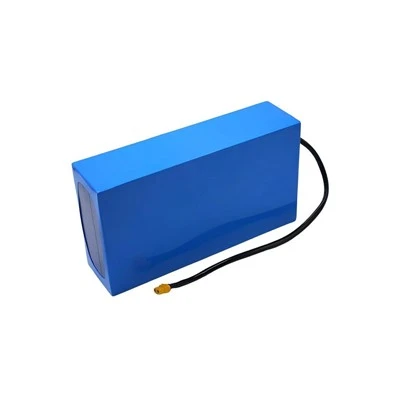
First off, let’s keep this basic—parallel wiring just means hooking multiple batteries so their positive terminals are connected together, and negative terminals are connected together. That’s different from series, which is positive to negative to amp up voltage, right? Series has its place, but parallel is all about cranking up that total capacity without changing voltage—perfect for when you need more run time for your solar setup, or more oomph for a work van’s fridge and power tools.
So yeah, LiFePO4 batteries totally work in parallel—but you can’t just grab any old batteries, yank a couple out of the box, and wire ’em up. I’ve seen new customers try that, and let’s just say it ends up with a lot of dead batteries and a frustrated texts to our support team. Back in 2019, we had a guy install four of our 100Ah LiFePO4s in parallel for his off-grid cabin, but he mixed in two from a different batch he bought on Amazon. Within a month, one was at 50% capacity, another was at 110% (weird, but old chemistry stuff), and the whole bank was failing. That’s exactly why I’m laying this out straight for you.
Here’s the hard science behind it, simplified. Every LiFePO4 battery has what’s called internal resistance. Think of that like a tiny speed bump inside the battery that slows down how much current flows in or out. If two batteries have way different internal resistances (or different capacities, or even different brands), when you wire them parallel, the one with lower resistance will try to push current to the one with higher resistance. It’s like filling two water bottles with different sized holes—water will shoot from the full one to the empty one until they’re both the same, but that can cause overcharging or over-discharging, which is death for LiFePO4s. Unlike old lead-acid batteries, LiFePO4s are super sensitive to that kind of imbalance—they don’t “forgive” it like lead-acid does.
Now, let’s get to the good stuff: how to do it right. We’ve tested our LiFePO4s in parallel banks up to 16 batteries for a big warehouse backup system, and these are the rules we swear by, that we share with every customer who asks.
First and foremost: All parallel batteries need to be identical. Same brand, same model, same capacity, same batch. Wait, what does same batch mean? LiFePO4 cells are made in batches, right? Each batch has slightly different chemistry consistency from the factory line. Even a battery made just two weeks later from the same brand might have tiny differences that cause issues. When we ship parallel-ready banks, we pre-select batteries from the exact same production batch, so their voltage, internal resistance, and capacity are matched within 1%—that’s way tighter than industry standards, and it works.
Second, you need a battery management system (BMS) that’s rated for parallel operation. This is non-negotiable. A regular BMS works for single batteries, but when you’re wiring parallel, each individual battery needs its own small, individual BMS and a master BMS that talks to all of them. We actually build a master BMS into all our parallel-compatible battery packs now, because skimping here is a disaster. The BMS monitors each battery’s state of charge (SoC), voltage, and temperature, and balances them as they charge and discharge. That’s how it prevents that current flow mess I talked about earlier. I’ve seen some DIY guys try to skip this with a cheap off-brand BMS, and they end up tripping breakers or even overheating cells—LiFePO4s are safe, but not if you mess up the BMS.
Third, wire them correctly, with the right gauge cable. This isn’t a “use whatever wire’s lying around” job. The total current you’ll pull from a parallel bank adds up, so if you have four 100Ah batteries, that’s 400Ah, but your peak current might be 200A—way more than a single battery would pull. If your cable is too thin, it’ll overheat, cause voltage drops, and throw off the BMS. A good rule of thumb: use the same gauge cable for each battery that you’d use for a single 100Ah LiFePO4, plus size up the main positive and negative cables to match the total bank’s peak current. For example, a 100Ah battery uses 4AWG for most installs, so four in parallel use 4AWG for each battery’s connection, and 2AWG for the main bus cables.
Wait, let’s address a common myth I hear all the time: “If they’re identical, I don’t need a BMS.” No. Even identical batteries have tiny tiny differences over time—they self-discharge at slightly different rates, right? After a few charge cycles, one might be at 90% SoC and the other at 88%, and without a BMS, they’ll try to equalize, which causes that internal current flow. The BMS fixes that. We’ve run a test with two identical 100Ah LiFePO4s in parallel, one with BMS, one without. After 100 charge cycles, the BMS-equipped pair was still matched within 0.5% capacity, while the pair without BMS was at 15% imbalance. That’s a huge difference.
Another thing to keep an eye on: charging rates. Don’t charge a parallel bank faster than the individual battery’s max charge rate. If each of your parallel batteries is rated for 50A charge, the total bank’s max charge is 50A, not 200A. Trying to charge faster will overheat the weakest battery in the bank, which is a fire risk (though LiFePO4s are way more stable than other chemistries, overheating is still bad).
Now, let’s talk about real-world examples, since I’m a supplier, I live this stuff. Last year, we did a parallel bank for a customer who’s a full-time van lifer. He had a 200Ah battery for his fridge, laptop, and solar, but when he added a portable AC unit, he needed more run time. He bought two more identical 200Ah LiFePO4s from us, we pre-batched them, set him up with the master BMS, and wired it right. He’s had that bank for 18 months, no issues—he runs the AC 8 hours a day off-grid, and the whole bank stays balanced. Another customer was a small farm, needing a backup power for their milking machines. They did 8 150Ah LiFePO4s in parallel, with our BMS, and it’s been running for 2 years without a single replacement.
What about mistakes to avoid? I already mentioned mixing batches or different brands, but also don’t add batteries to an existing parallel bank later. If you have 4, you can’t just add a 5th a year later—even if it’s the same brand, it’s a different batch, and the BMS can’t balance it. If you need more capacity, you have to build a whole new identical bank, or replace all the batteries in the bank at once. That’s a rule we always tell customers, and it’s saved a lot of headaches.
Wait, is there any time you shouldn’t use LiFePO4s in parallel? Let’s be honest, most of the time it’s fine, but if you’re doing a tiny, low-power project—like a small under-cabinet light that runs on a single 10Ah battery—parallel doesn’t make sense. It adds complexity and cost for no reason. But if you need more than the capacity of a single battery, parallel is way better than series for run time, as long as you follow the rules.
As a supplier, we test every single parallel-compatible battery we ship for 500 charge cycles in a parallel setup, to make sure they hold up. We’ve had guys who bought cheap no-name LiFePO4s try to do parallel, and even if they’re same model, their BMS is garbage, so the whole bank dies in 6 months. That’s why we only sell parallel-ready batteries that have consistent internal specs, and include a BMS that’s calibrated for parallel operation.
So to wrap this up: Yes, LiFePO4 batteries can be used in parallel, but only if you follow the strict rules. It’s not DIY-level easy if you want it to last 5+ years, but it’s totally doable when you get it right.
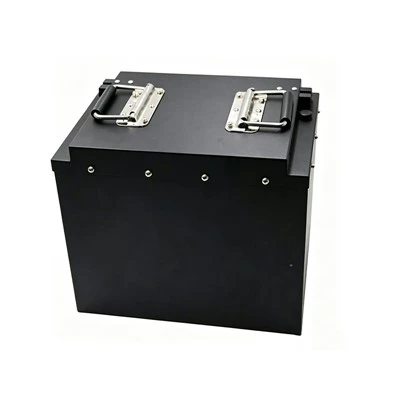
If you’re thinking about building a parallel LiFePO4 bank for your off-grid setup, camper van, backup power, or whatever project you’ve got going on, we’re here to help. We can send over pre-tested, pre-batched identical batteries, make sure you get the right BMS and cable size, and walk you through every step of wiring. No confusing jargon, no hidden fees—just straight advice from a team that’s been doing this for years.
LiFePO4 Battery If you’re ready to grab the right components for your parallel bank, or have questions about your specific project, hit us up to chat procurement. We’re happy to work with whatever setup you’ve got, big or small.
References
- LiFePO4 Battery Technical Handbook, Battery University, 2022.
- Parallel Operation of Lithium-Ion Batteries: Key Considerations, International Energy Agency (IEA) Battery Technology Report, 2021.
- “Long-Term Performance of Parallel LiFePO4 Battery Banks in Off-Grid Applications”, Journal of Power Sources, Vol. 498, 2021, p. 229876.
- Battery Management Systems for Parallel Energy Storage Arrays, IEEE Transactions on Power Electronics, Vol. 37, No. 5, 2022, pp. 5612–5623.
Suzhou Huaqian Contemporary New Energy Technology Co., Ltd.
As one of the most professional lifep04 battery manufacturers and suppliers in China, we warmly welcome you to wholesale bulk customized lifep04 battery at competitive price from our factory. If you have any enquiry about cooperation, please feel free to email us.
Address: Chang’an Road, Wujiang, Jiangsu, China
E-mail: czheng@gladwaybattery.com
WebSite: https://www.gladwaybattery.com/
