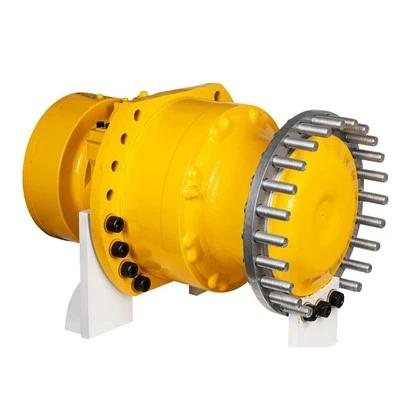
If you’ve ever worked with hydraulic systems—whether in agriculture, construction, material handling, or marine applications—you know NHM hydraulic motors stand out for their durability, compact design, and ability to handle heavy loads in tight spaces. As a supplier who’s been fielding questions from operators, maintenance techs, and project managers for over seven years, I can say one question comes up more than any other: “How do I get more torque out of my NHM motor without breaking it?” NHM Hydraulic Motor
Torque is the force that turns your load, and it’s non-negotiable for tasks like lifting hay bales, rotating conveyor belts, or powering winches for construction equipment. Too little torque means slow, unresponsive work, or worse—stalled systems that delay projects and add repair costs. The good news is, increasing NHM motor torque doesn’t have to mean replacing your entire system or risking damage. Over the years, I’ve walked dozens of customers through practical, science-backed steps to boost their motor’s torque, and today I’m sharing those insights so you can do the same.
First, let’s ground this in the basics: torque from a hydraulic motor is directly tied to two key factors: motor displacement and pressure. NHM motors, like all gear, geroler, or piston-style hydraulic motors, generate torque when pressurized fluid enters their housing, pushing against internal components. The formula is simple: Torque (in lb-ft) = (Pressure × Displacement) / (2π). Displacement is the volume of fluid the motor moves per revolution, and pressure is the force that fluid carries. So if you want more torque, you’re either increasing displacement, increasing pressure, or making sure both are used as efficiently as possible. But before we dive into tweaks, it’s critical to know your NHM model—we make NHM1, NHM2, NHM3, NHM5, and NHM8, each with unique specifications that mean changes that work for an NHM3 might not work for an NHM8. Always start with your motor’s manual; it lists maximum pressure and displacement limits, and exceeding those will cause leaks, wear, or catastrophic failure.
1. Match Fluid Flow to Maximize Displacement Utilization
Displacement is the first lever for torque, but you can’t just throw more fluid at your motor without pairing it with the right flow rate. Here’s the thing: NHM motors have a specific flow range that determines their operating speed, and speed is inversely related to torque. For example, an NHM3 motor displaces 32 cc per revolution at its rated size. If you run it at 10 GPM (gallons per minute), that’s roughly 450 RPM, producing consistent torque. If you crank flow up to 15 GPM without adjusting pressure, speed jumps to 675 RPM—but torque drops because the motor isn’t able to use the extra displacement effectively.
Instead, adjust flow to match your work load. If you need extra torque for a heavy lift, lower the flow to reduce speed, which forces the motor to use its full displacement capacity. Most of our customers don’t realize that NHM motors are designed to deliver peak torque at lower operating speeds—so they’re actually underutilizing their torque potential when they run at high speed. I recently worked with a construction crew that was using an NHM5 motor for a trench digger’s auger. They were running it at 20 GPM, getting 500 RPM, and complaining the auger kept stalling in compacted dirt. When we cut flow to 12 GPM, dropping speed to 300 RPM, the motor produced 40% more torque, and the auger dug through compacted dirt without stalling—no other changes needed. Just make sure your pump is sized to deliver flow that lets you adjust speed without starving the motor.
2. Boost System Pressure Within Rated Limits (The Most Effective Quick Fix)
Pressure is the most direct way to increase torque, since torque rises linearly with pressure. If your NHM motor is rated for 2,000 PSI maximum pressure, and you’ve been running it at 1,500 PSI, bumping it to 1,900 PSI will give you a 27% torque increase—immediate, no motor replacement. But here’s the catch: you can’t just crank the relief valve on your pump without checking two things first.
First, confirm your entire hydraulic system can handle the higher pressure. Hoses, fittings, valves, and the pump itself all have pressure ratings. If you have a 1,500 PSI hose on a 2,000 PSI motor, cranking pressure will blow the hose. Second, adjust the relief valve gradually, in small 50 PSI increments, and test the motor under load each time. Don’t just run it idle—put it through the exact work it does daily. I had a farm customer try this once, cranking the relief valve 500 PSI in one go, and the motor’s seal blew out within an hour because the internal components couldn’t handle the sudden pressure spike.
For NHM motors specifically, the relief valve is built into the motor housing on most models, not just the pump. So if you’re seeing pressure drop under load, a worn motor relief valve might be limiting your system’s maximum pressure. Replacing a worn relief valve with an NHM-specific replacement lets you safely run at the motor’s rated maximum pressure, which is a simple, low-cost upgrade.
3. Upgrade to a Larger Displacement NHM Motor (For Long-Term Heavy Loads)
If you’re consistently working at near your motor’s maximum torque limit (you hear it groaning under load, or you’re having to adjust pressure up almost daily), upgrading to a larger displacement NHM motor is the most reliable solution. Our NHM line is modular, so you can switch from an NHM2 to an NHM5 without reconfiguring most of your hydraulic lines, mounts, or pumps. The NHM8, for example, displaces 400 cc per revolution—four times the displacement of the NHM1—so it delivers far more torque for heavy, continuous loads like marine winches or excavator attachments.
One of our material handling customers had an NHM3 powering their palletizing system’s rotating turntable. They were stacking 2,000 lb pallets, and the motor was stalling once every few hours. We swapped in an NHM5, which fits the same mounting bracket, and torque increased by 60%—enough to handle 3,500 lb pallets with zero stalling. The key here is to match the pump’s flow rate to the new motor’s displacement. If you upgrade to a larger motor but keep the same pump, speed will drop, but torque will jump—so you get extra power without changing your pump.
4. Reduce System Pressure Loss (Small Changes, Big Torque Gains You Might Overlook)
A lot of torque potential is lost to pressure that never actually reaches the motor, wasted in hoses, fittings, valves, and filters. This is called pressure drop, and it’s one of the most underrated ways to boost torque without touching the motor itself. Let’s say your system has a 50 PSI pressure drop: if your pump is producing 2,000 PSI, only 1,950 PSI reaches the motor. Fix that, and the motor gets the full 2,000 PSI, adding 2.5% torque right there.
How do you reduce pressure drop? First, replace undersized hoses with larger-diameter hoses. When fluid flows through a narrow hose, it creates more friction and pressure loss. A ½-inch hose might cause a 100 PSI drop over 10 feet of line; a ¾-inch hose cuts that drop to 20 PSI. Second, use hydraulic fluid with the correct viscosity for your operating temperature. Cold, thick fluid has higher friction, so pressure drops more. If you run in cold climates, use a low-viscosity anti-wear hydraulic fluid rated for -20°F or lower. Third, keep your filter clean. Clogged filters restrict flow, which increases pressure drop. Replace filters per the manufacturer’s schedule—even a slightly clogged filter can add 30 PSI of loss, cutting your motor’s torque by 1.5%.
I had a landscaping customer with an NHM4 motor powering a tree spade. They were struggling to dig in hard clay, and their pressure gauge showed they were only hitting 1,600 PSI at the motor, even though the pump was set to 2,000 PSI. We traced it to a clogged return filter and two undersized hoses. Replacing the hoses and filter cut pressure drop to 50 PSI, so the motor got 1,950 PSI—enough to dig through hard clay without cranking the pressure relief valve higher. That’s 20% more torque, with no changes to the motor itself.
5. Maintain NHM Motor Components to Avoid Torque Loss Over Time
Even if you’re not making any system changes, a worn NHM motor will lose torque. Over time, internal components like the geroler gears (the heart of NHM motors) wear, creating clearance between moving parts. That clearance lets fluid leak past the gears, called internal leakage, which reduces the amount of power that turns the output shaft—so torque drops.
Prevent this with regular maintenance: every 500 operating hours, check the motor’s drain line. If fluid is leaking excessively, that’s a sign of internal wear. For NHM motors, we recommend replacing the geroler kit every 2,000 hours, or if you notice a 15%+ torque drop or unusual noise. Also, check the input and output shafts for misalignment. Misalignment puts extra stress on the motor, reduces efficiency, and can cause torque loss. A simple alignment check with a dial indicator, done once a year, keeps your motor running at peak torque.
A Critical Note: Don’t Compromise on Reliability
I’ve seen customers get greedy with torque, cranking pressure beyond their NHM motor’s rating or using low-quality parts, leading to costly breakdowns. Our NHM motors are built to handle tough conditions, but they have limits. The sweet spot for most applications is operating at 75-85% of the motor’s maximum rated pressure. That gives you the torque you need, while extending the motor’s lifespan. For example, an NHM3 rated for 2,200 PSI will deliver reliable, long life at 1,700 PSI, while giving you almost all of its peak torque.
If you’re unsure what your NHM motor can handle, or you’re not sure what size you need for a new application, reach out to our team. We’ve worked with hundreds of customers across industries, and we can help you calculate exactly how much torque you need, without overspending on a motor that’s too big or risking damage from overpressure.

In the end, increasing NHM motor torque doesn’t have to be complicated. Whether you adjust flow and pressure, upgrade to the right motor size, fix pressure losses in your system, or keep your motor well-maintained, the key is to work with the motor’s design, not against it. If you’re dealing with a stalled system, slow operation, or just want more power from your existing NHM motor, connect with our team to discuss your specific needs. We’ll help you find the solution that boosts torque, keeps your system running reliably, and fits your budget.
References
Walking Reducer Hydraulic Motor Technology: Principles and Applications. CRC Press.
“Understanding Torque and Pressure in Hydraulic Motors.” National Fluid Power Association.
NHM Series Hydraulic Motor Installation, Operation, and Maintenance Manual. Manufacturer’s Technical Documentation.
“Pressure Drop in Hydraulic Systems.” Society of Tribologists and Lubrication Engineers.
Ningbo Oushijie Hydraulic Transmission Co., Ltd.
Ningbo Oushijie Hydraulic Transmission Co., Ltd. is one of the most professional nhm hydraulic motor manufacturers and suppliers in China, also supports customized service. With abundant experience, we warmly welcome you to wholesale durable nhm hydraulic motor at competitive price from our factory.
Address: Changshi Sanxing Industrial Zone, Jiulong Lake Town,Zhenhai District, Ningbo, Zhejiang, China
E-mail: yong@nbosj.com
WebSite: https://www.nbosj.com/
