If you’ve ever stood next to an industrial mixer during a production run, you’ve probably felt that low, thrumming vibration that tells you the tank’s contents are in motion—rather than sitting still at the bottom. What you might not notice, though, is the quiet, unassuming component that makes that motion work: the baffle. Most suppliers and plant operators overlook it until their mix starts sloshing instead of blending, or until a batch comes out uneven, or worse, until mechanical wear cuts their mixer’s lifespan short. As someone who’s worked in industrial mixing equipment for 12 years—answering calls at 2 a.m. from plant managers panicking over a spoiled batch, walking through fabrication floors, and testing designs in our in-house lab—I can tell you this: the best baffle design isn’t one-size-fits-all. It’s tied straight to what you’re mixing, your mixer’s geometry, and the results you actually need. Industrial Mixing Equipment

Let’s start with why baffles matter, because a lot of folks skip this basic step. When a mixer’s impeller spins, it throws fluid outward against the tank walls, creating a suction at the center that pulls material upward. Without baffles, that outward flow creates a whirlpool—think the drain in your sink—where everything spins as one mass. Solids sink to the bottom, light liquids float to the top, and you end up with separate layers instead of a uniform blend. Baffles break that swirling, radial flow into axial and tangential motion, which cuts through separation, reduces dead zones, and makes your impeller work far more efficiently. But get the design wrong—too many baffles, too long, misaligned—and you’ll waste energy, wear out your impeller faster, or even cause cavitation that damages the equipment.
Over the years, we’ve tested three core baffle designs against hundreds of material and tank combinations, and each has a clear sweet spot. Let’s break them down, including when to use (and when to skip) each.
First, there’s the standard wall-mounted, flat baffle. This is the workhorse design: a long, narrow metal strip bolted horizontally to the inside wall of a cylindrical tank, usually spaced evenly around the perimeter. The industry rule of thumb here is four baffles, each occupying 1/10 the tank’s diameter in width, and mounted 1/10 the tank’s height below the liquid surface. It’s cheap to fabricate, easy to install, and versatile enough for most common jobs—blending paints, mixing food processing slurries, combining liquid detergents, even suspending small solid particles like agricultural fertilizers. We’ve installed this design in 70% of our industrial mixers, and it’s proven reliable for continuous 10-hour runs.
But here’s the catch: it’s not perfect for every scenario. If you’re mixing a low-viscosity fluid—think water, alcohol, or thin industrial solvents—too many wall-mounted baffles can create shear forces that break down delicate materials. For example, we worked with a pharmaceutical client a few years back that was blending a liquid peptide solution; their original four-wall baffles were creating excess shear that degraded the active ingredient, ruining 300-gallon batches every week. We swapped to a smaller, narrower baffle profile, spaced with a wider gap, and cut shear damage by 92% without losing blend uniformity. Another issue: if your tank is conical instead of cylindrical (common for drying or solid-handling processes), wall-mounted baffles leave dead zones in the bottom cone where material can’t circulate. The flat surface stops flow, so fine powders or heavy solids pile up there and don’t mix.
That leads us to the second design: the anchor baffle, sometimes called a bottom-mounted baffle. Instead of attaching to the tank walls, this baffle is a flat or curved plate mounted to the tank’s bottom, usually aligned to cut across the center. It’s ideal for conical tanks or applications with high-viscosity materials—like thick pastes, polymer resins, or industrial adhesives—where wall-mounted baffles don’t reach the bottom layer. We tested this in a food processing plant mixing chocolate fondant, a 10,000-centipoise paste that would cake solid at the tank bottom if it didn’t circulate. Their original wall baffles left a 2-inch layer of unmixed fondant every run, which would harden and clog the impeller. Installing a 12-inch anchor baffle at the cone’s base broke that dead zone, and within two runs, the fondant blended evenly from top to bottom.
The downside here is that anchor baffles add a small amount of complexity to cleaning and maintenance. For sanitary applications—pharmaceuticals, food, or cosmetics—crevices where the baffle meets the tank bottom can trap bacteria or product residue. We solve that by using a seamless, polished anchor baffle that’s welded directly to the tank’s bottom, no sharp edges or gaps for buildup. But if you need to perform CIP (clean-in-place) cycles regularly, that welded design is still easier to sanitize than, say, a hanging baffle we’ve seen some cheaper suppliers use.
Which brings us to the third, more specialized design: the axial-flow baffle, often a segmented or pitched baffle, used almost exclusively with axial impellers. Unlike the flat, static baffles we’ve talked about, these are angled, shorter baffles that sit just below the liquid surface, aligned to push flow downward along the tank’s center. This is the go-to for mixing gasses into liquids—like aerating water for wastewater treatment, or blending CO2 into carbonated beverage syrups—or for large-batch mixing where you need uniform flow across the entire tank height.
We worked with a municipal water treatment facility last year that needed to add ozone to raw water to kill pathogens; their existing flat baffles created too much radial flow, which left pockets of un-aerated water at the tank’s bottom. Swapping to six pitched axial baffles cut ozone usage by 18% and reduced treatment time by 25%, because the angled design forced the ozone bubbles to circulate all the way through the tank instead of rising to the top and escaping. The only time to skip this design? If you’re mixing high-solids slurries, because the angled baffles can catch large particles and cause clogging. We saw a mining client try it for blending ore slurry, and within a week, their baffles were caked with solid rock, requiring daily disassembly for cleaning.
Now, a few common mistakes we see plant operators (and even some smaller equipment suppliers) make when choosing baffles. The biggest is using the same baffle design for all mixer sizes. A 50-gallon pilot-scale mixer doesn’t need four full-size wall baffles—those create unnecessary shear and waste energy. For small tanks (under 100 gallons), we typically use two half-width baffles spaced on opposite sides, which is enough to break the whirlpool without overdoing it. Another mistake: mounting baffles too close to the impeller. If a baffle sits within the impeller’s blade width, it can cause excessive turbulence that wears out the impeller in half the expected time. We follow a 2:1 rule: the gap between the baffle and the impeller blade should be at least twice the impeller’s diameter.
Also, don’t assume more baffles equal better mixing. We once tested a mixer with eight wall baffles for a batch of paint; it used 30% more power than the same mixer with four baffles, and the blend uniformity was identical. Extra baffles just add unnecessary load to your motor, leading to higher energy bills and earlier equipment failure.
At the end of the day, the best baffle design depends on four key factors: your mixer’s tank shape and size, the viscosity and type of material you’re mixing, the level of uniformity you need, and any special requirements like sanitary cleaning or low shear for delicate materials. There’s no universal “best” design, but there’s a right design for every application.
If you’re dealing with a blending problem—uneven batches, high energy costs, equipment wear that you can’t explain—chances are your baffle is the culprit. We’ve helped hundreds of operations adjust their baffle designs to fix these exact issues, cutting product spoilage, reducing energy use, and extending mixer lifespan. If you’re looking to troubleshoot your current setup or spec a new mixer with the right baffle for your needs, reach out to our team to discuss your requirements. We can walk through your process, run quick test simulations in our in-house lab, and make a recommendation that fits your specific operation.
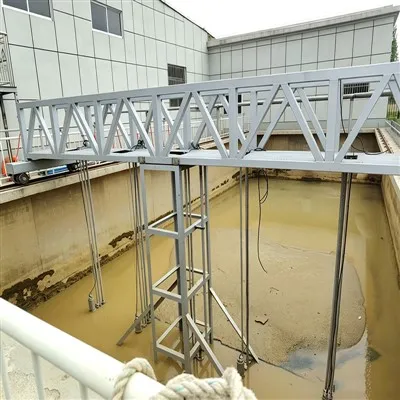
Center Drive Sludge Scraper References
- Frijlink, H. J., & Houwing, J. H. (2005). Mixing in Industrial Processes: Principles and Practice. CRC Press.
- Joshi, J. B., & Watkinson, A. P. (1991). Industrial Mixing: Theory and Practice. Butterworth-Heinemann.
- Tatterson, G. B. (1991). Fluid Mixing and Gas Dispersion in Agitated Tanks. McGraw-Hill.
- Paul, E. L., Atiemo-Obeng, V. A., & Kresta, S. M. (2004). Handbook of Industrial Mixing: Science and Practice. John Wiley & Sons.
Shandong Ningye Machinery Equipment Co., Ltd.
Shandong Ningye Machinery Equipment Co., Ltd. is one of the most reliable industrial mixing equipment manufacturers and suppliers in China. With abundant experience, we warmly welcome you to buy discount industrial mixing equipment made in China here from our factory. Quality products and low price are available.
Address: Workshop No.16, Dongcao Village Industrial Park, Guangda East Road, Songguantun Subdistrict, Economic and Technical Development Zone, Dezhou City, Shandong Province
E-mail: wjkningye@cn-ningye.com
WebSite: https://www.cn-ningye.com/
