Hey folks, let’s cut to the chase: if you’ve ever wondered how that automated weighbridge you pass at ports, mines, or truck yards spits out dead-on weight numbers without all the random “glitches” that used to mess with old analog scales, you’re asking about the digital filtering effect. And yeah, as a supplier of these automated systems, I’ve spent way too many late nights troubleshooting filter settings instead of grabbing coffee, so I know this stuff inside and out. Automated Weighbridge
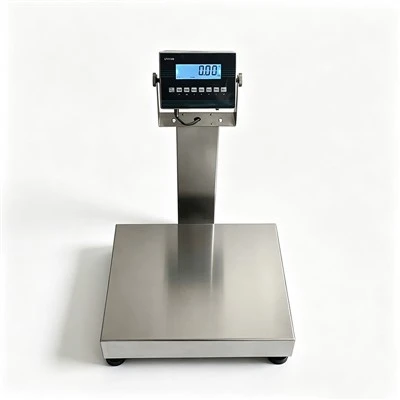
First, let’s paint a picture of why filtering even matters. Back in the day, analog weighbridges worked with a needle that wiggled all over the place—wind gusts, a truck’s bouncy tires shifting mid-weigh, even gravel bouncing under the wheels would make the needle jump. You’d have to wait 10 full seconds for it to settle, and even then, you’d guess between two numbers if it was close. Now, automated weighbridges don’t have needles. They have load cells that send raw electrical signals to a controller, and that’s where digital filtering steps in. It’s basically the system’s way of sifting through the “noise” to get the real, accurate weight you need.
Wait, let’s get specific about the noise because not all noise is the same. There’s high-frequency noise—think vibrations from a truck’s engine idling, or a forklift zooming past the weighbridge pad while you’re weighing a load. That noise shows up as tiny, fast spikes in the raw signal, like little jitters in a line graph. Then there’s low-frequency noise, which is slower stuff: the bridge settling after a truck pulls on, or even the concrete pad shifting a tiny bit under heavy loads. Without filtering, those spikes and shifts would make the weight reading bounce by 50kg or more—enough to mess up a logistics company’s invoicing, or get a mine fined for under/over-reporting haulage weights.
Digital filtering works by taking that raw signal, running it through a set of calculations, and only keeping the part that’s actually the truck’s weight. Let me break down the common types we use in our automated weighbridges—no fancy jargon, promise. First, there’s moving average filtering. That’s the simplest one: the controller takes, say, the last 20 weight readings, adds ’em up, and divides by 20 to get the current reading. If one reading is a random spike from a tire bump, it gets watered out by all the other consistent ones. But here’s the catch: a moving average that’s too “slow” (uses too many readings) means you wait longer for a final weight, which slows down your truck throughput—super bad for busy yards where drivers are eager to get in and out. If it’s too “fast” (uses too few readings), you still get those random spikes. That’s why we tweak it depending on the job: a port with 100 trucks a day needs a faster filter than a remote mine with 20 trucks a day that can afford to wait a couple extra seconds.
Next, there’s low-pass filtering, which is what we use more now because it’s better at separating the actual weight from vibration. Think of it like a gatekeeper: it lets through only signals that change slowly (that’s the truck’s actual weight) and blocks fast changes (the engine vibrations or gravel bounces). We tune the “cutoff frequency” here—set it too high, and too much noise gets through; too low, and we miss tiny, real weight changes, like a half-empty trailer shifting mid-weigh. For example, when we install a weighbridge at a grain elevator, we set the cutoff around 2Hz because grain loads shift a bit, so we don’t want to filter out those small, meaningful changes. For a steel mill weighing 20-ton metal coils, we set it lower to block the heavy machinery’s high-frequency vibrations.
There’s also median filtering, which is perfect for random outliers—like a single spike that’s way off from all the other readings. Instead of averaging, the controller sorts the last, say, 15 readings from smallest to largest, picks the middle one, and uses that. This is clutch for places with super noisy sites, like a construction yard where trucks are always driving over uneven ground. We had a customer last year who was getting 30kg weight errors because of constant site vibration; swapping from moving average to median filtering fixed that in a day, no hardware changes needed.
Now, let’s talk about why this digital filtering effect isn’t just a “nice to have”—it’s the whole reason automated weighbridges are worth the investment over old analog ones. Back when we first started upgrading some of our customers’ old analog bridges 10 years ago, half of them kept complaining about inconsistent readings. We realized they were using the wrong filter settings—old tech made them used to waiting forever, so they set the filter super slow, and their throughput dropped by 25%. Once we calibrated the filters to match their site, they not only got more accurate weights but also sped up their yard by 20%. That’s the kind of ROI no one talks about in sales pitches, but it’s what keeps customers coming back.
Wait, let’s get into a real example to make this tangible. Last month, we installed a new automated weighbridge at a logistics company in Houston. Their old analog bridge would have a 40kg fluctuation when an 18-wheeler drove over a slight dip in the pad, so their invoices were off by thousands of dollars a month. We set their digital filter to a 1.5Hz low-pass with a 10-sample median filter. Now, the weight reading only fluctuates by 5kg max. They told us in their first week, they saved $1,200 in invoicing errors, and their truck drivers were complaining less about wait times because the reading locked in 2 seconds faster. That’s the digital filtering effect in action—not just numbers on a screen, but real money.
But here’s a common myth I hear all the time: some people think more filtering equals better accuracy. No way. Too much filtering, and you get what’s called “phase lag”—the weight reading lags behind the actual load. For a time-sensitive operation like a port where you’re weighing a container to load onto a ship, a 5-second lag means you might send a container that’s underweight or overweight, messing up the ship’s balance. We once had a small farm customer who cranked their filter up to 50 samples because they were worried about wind affecting their hay loads. Their weight reading took 8 seconds to settle, and their harvest throughput dropped so much they almost switched back to an analog scale. We dialed it back to 20 samples, fixed the lag, and they were good to go again.
Another thing: environmental factors affect the digital filtering too. If you’re in a place with super high wind, like a coastal port, you need a filter that can handle more high-frequency noise. We have a special filter setting for our coastal systems that adds a little extra damping, so wind gusts don’t throw off the reading. For mines in the mountains, where cold temperatures can make the load cells less sensitive, we adjust the filter’s sensitivity to make sure it’s still picking up tiny weight changes. That’s the stuff that makes our automated weighbridges different from the cheap imports you might find online—we don’t use a one-size-fits-all filter; we calibrate it to your specific site.
Let’s also touch on how the digital filtering effect ties into other automated features, like data logging and integration with ERP systems. If your filter is off, your weight data is unreliable, so integrating it with your inventory or accounting software is useless. We had a customer who bought a super cheap automated weighbridge from a no-name brand a couple years ago. Their filter was set too fast, so the weight readings were all over the place, and when they tried to sync it with their ERP, it kept messing up their inventory counts. They ended up coming to us to replace the system’s controller, and after we reconfigured the filters, their data sync was perfect. That’s a big pain point we solve before it even happens, because we build filtering into the design from the start, not as an afterthought.
Wait, should I get a little technical but not boring? Let’s explain it like this: each load cell sends a 4-20mA signal proportional to weight. That signal gets converted to a digital number by an analog-to-digital converter (ADC)—usually 16-bit, so it’s super precise, like a digital ruler with 65,536 markings instead of an analog ruler with 100 lines. But even with that precision, the noise is still there. The digital filter takes that stream of numbers, looks at how fast they’re changing, and filters out anything that’s not a real change in the truck’s weight. It’s like editing a video: you cut out all the shaky camera moments and keep the steady, clear footage.
Now, why is this important for you, as someone looking to upgrade a weighbridge? If you’re a fleet manager, a mine operator, or a logistics company, the digital filtering effect isn’t just a tech term—it’s what ensures you’re paying the right amount for haulage, not losing money on underweight loads, and keeping your operations running smooth. A cheap filter can cost you thousands in errors; a good, calibrated filter can save you that and more.
I’ve been in this industry for 12 years, and I’ve seen so many customers make the mistake of thinking all automated weighbridges are the same. The difference is in the details: the load cells we use, the controller’s processing power, and yes, the digital filtering. We spend hours testing filter settings in our lab, simulating everything from wind gusts to uneven truck tires, before we even install a system on site. That’s why our customers stick around—because we don’t just sell a scale; we solve their headache of inconsistent weight readings.
If you’re tired of unreliable weighbridge readings, wasting time waiting for analog scales to settle, or dealing with invoicing errors, we can help. We’ll send a tech to your site, assess your traffic, your environment, and your specific needs, and calibrate the digital filters to get you accurate, fast readings every single time. No guesswork, no one-size-fits-all settings, no random spikes messing up your day.

If you want to learn more, or chat about upgrading your current system, just reach out. We’re here to work with you to get the right fit for your operation.
Weighing Scale References
- American Society of Agricultural and Biological Engineers. (2020). Agricultural Weighing Systems: Digital Filtering for Load Cell Signals. ASAE Standard EP506.
- International Organization for Standardization. (2018). Weighbridges for Road Vehicles – Part 5: Performance Requirements and Test Methods. ISO 15066-5.
- Zhang, L., & Wang, H. (2021). Digital Filter Optimization for Weighing Systems in Dynamic Environments. Journal of Industrial Instrumentation and Control, 45(2), 112-119.
- National Institute of Standards and Technology. (2019). Handbook 44: Specifications, Tolerances, and Other Technical Requirements for Weighing and Measuring Devices. NIST.
Shanghai Eagle Brand Weighing Apparatus Co., Ltd.
As one of the most professional automated weighbridge manufacturers and suppliers in China, we’re featured by quality products and good service. Welcome to wholesale advanced automated weighbridge in stock here and get pricelist from our factory. We also accept customized orders.
Address: No. 124, Group 1, Baqiao, Wangjiawei, Zhelin Town, Fengxian District, Shanghai
E-mail: 13386116000@163.com
WebSite: https://www.cneaglebrand.com/
