If you’re in the market for fin press machines—whether for HVAC heat exchangers, automotive cooling systems, or industrial heat transfer components—you’ve likely wondered: Can these tools actually be tailored to my specific production needs? As someone who’s been supplying fin press equipment for over 12 years, I can tell you the answer isn’t a simple “yes” or “no.” It depends on three core factors: your production scale, the complexity of the fin profiles you’re manufacturing, and the long-term goals of your operation. Over the years, I’ve worked with dozens of clients who start with generic machine inquiries and end up with custom solutions that cut their production time by 20%, reduce material waste, and even let them add new product lines without buying entirely new equipment. Fin Press Machine
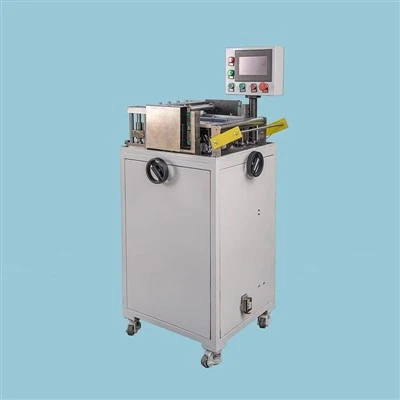
Let’s start with the basics: What is a fin press machine, anyway? For the uninitiated, these devices shape thin metal (usually aluminum or copper) into finned structures that maximize heat transfer in everything from car radiators to residential AC units. The standard machine does a few key jobs: it feeds metal strip, punches patterns to create the fin’s shape, cuts the fin to length, and often stacks or outputs finished parts. Generic, off-the-shelf models work for high-volume, low-variety production (think a factory making the same fin profile for a budget HVAC unit for 5 years straight). But if your operation is different—say, you run a custom heat exchanger shop that makes 10 different fin profiles a month, or you’re switching from aluminum to copper mid-year—off-the-shelf machines will leave you bottlenecked.
I remember a client who came to me two years ago from a small automotive parts manufacturer. They’d just landed a contract to make fins for a new electric vehicle battery cooling system, which required a thinner, more intricate profile than their old machine could handle. Their generic fin press struggled with 0.1mm aluminum— a common thickness for EV components—because its punch mechanism was set for 0.2mm material. They were wasting 15% of their metal each run, and the fin precision was too inconsistent for the automaker’s standards. We didn’t build them a whole new machine; we customized the punch and die set to handle thinner material, adjusted the feed system to work with narrower strip, and added a quick-change tooling feature so they could swap dies in 10 minutes instead of the 2 hours their old machine took. That small customization cut their material waste in half and let them meet the automaker’s delivery deadline—something a generic machine never could have done.
Not all customizations are about part size or thickness, either. Another frequent request is for integration with existing production lines. Many of our clients don’t just make fins in a vacuum; those fins get sent to a fin stacking machine, a tube forming press, or a robotic assembly line. Off-the-shelf fin presses are often designed to output parts at a fixed rate, which might not match the speed of the rest of your line. Last year, a commercial HVAC company reached out because their fin press was outputting 120 fins per minute, but their stacking machine could only handle 90. The excess parts were piling up, and they had to assign an extra worker to remove them and store them for later—wasting labor and floor space. We customized the machine’s output speed control to sync with their stacking line, and added a small part storage buffer to catch excess fins when the line needed a quick reset. It was a software tweak more than a hardware one, but it solved a problem their generic machine never addressed.
Now, let’s get into what actually goes into customizing a fin press machine, because there are different levels of customization. The first, and most common, is tooling customization: dies and punches. If you have a unique fin profile—say, a wavy fin with specific louvers that improve airflow, or a stepped edge that lets fins fit tighter in a heat exchanger tank—you can get custom dies made for your press. The key here is working with a supplier that has in-house die design and manufacturing. A lot of big equipment brands outsource their tooling, which adds weeks to the lead time and means the dies might not fit your machine perfectly. We make our dies in-house, so we can adjust them on the fly if a client’s design changes mid-project.
The second level is hardware modifications beyond tooling. That might include adjusting the feed roller system to handle different material widths, adding a servo motor for more precise part cutting, or installing a safety feature specific to your workspace. For example, a 24/7 plant might need a machine with emergency stop sensors that are placed at waist height for line workers, while a smaller shop might want a machine with a smaller footprint to save floor space. We had a client last year who only had a 10×10 foot space for their fin press, which was too small for the standard model we supplied. We shrunk the frame slightly, modified the feed mechanism to be more compact, and even adjusted the control panel to be mounted on a movable arm so it could be tucked out of the way when not in use. They didn’t have to move their entire factory to fit a new machine—we just customized the existing design.
The third, more advanced level is software customization. Modern fin press machines run on PLC (programmable logic controller) systems that let you adjust parameters like feed length, punch force, and cycle speed. Generic machines are pre-programmed with a set of default parameters, but if you need to track part counts for quality control, or integrate the machine with your ERP system to log material usage, you can customize the software to do that. One of our long-term clients, a global manufacturer, needed their fin press machines to automatically log every batch of fins made, track material waste per batch, and send alerts when a die needed replacement. We customized the PLC software to connect to their existing cloud-based ERP, so their managers could check production data from anywhere, and set up predictive maintenance alerts that reduced unplanned downtime by 30%.
But here’s the thing: not every client needs a fully customized machine. Sometimes, a mid-range, configurable off-the-shelf model is exactly what they need. I always make that clear to clients who come to me asking for “customization” just because they think it sounds like a better deal. For example, a small shop making standard AC fins for residential units might not need a custom machine if their production volume is steady and their fin profile is common. A configurable machine lets you swap tools for different fin profiles, adjust speed, and even adjust material thickness without rebuilding the entire machine— it’s a middle ground between generic and fully custom. I never push clients into more customization than they need, because over-customizing can add unnecessary cost and lead time. The sweet spot is matching the customization to your specific production needs, not the other way around.
Of course, there are limits to what you can customize. You can’t turn a 10-ton fin press into a 50-ton one, for example, because the frame and motor are fixed for safety and structural integrity. There are also limits to how thin or thick a machine can handle, based on its design. Generic machines are usually built for a range of 0.1mm to 0.5mm material, so if you need to work with 0.05mm foil for micro-channel heat exchangers, you’ll need a custom build, not a tweak to a standard machine. That’s why it’s so important to share all your specs up front when you talk to a supplier: not just the fin profile, but material type, production volume, line speed, and any existing equipment you need to integrate with.
I’ve seen too many clients skip that step, leading to miscommunication and a machine that doesn’t work for their needs. Last year, a client came to us with a custom fin design, but only told us the material width and thickness—they didn’t mention that their line ran 24/7, so we’d initially built a machine with a standard maintenance schedule. It took us a few weeks to adjust the cooling system and motor to handle continuous operation, but because we’d built a flexible core machine, we could make that tweak without starting over. That’s why communication is just as important as customization itself: a good supplier will ask you all the right questions to make sure the final machine fits your needs, not just their product line.
At the end of the day, fin press machines can absolutely be customized— it’s just a matter of what you need, and working with a supplier who has the expertise to deliver that. For small shops with unique fin profiles, it might be custom tooling and a compact frame. For large factories integrating into a full production line, it might be software sync and speed adjustments. For everyone in between, there are configurable options that let you adjust key features without a full custom build.

If you’re tired of generic fin press machines that hold back your production, or you’re launching a new line that needs a machine tailored to your exact needs, reach out to us to discuss your requirements. We can walk you through the different customization options, help you avoid over-spending on features you don’t need, and build a solution that fits your production goals.
Servo Cutting Machine References
- Manufacturing Engineering and Technology, Kalpakjian S., Schmid S.R.
- Journal of Mechanical Engineering, “Customization of Industrial Press Machinery” Vol. 45, No. 2, 2020
- ASME International, Design Guidelines for Fin Press Equipment for Heat Exchangers, 2019
Suichang Lvye Machinery Co., Ltd.
We are one of the most professional fin press machine manufacturers in China, also support customized service with low price. We warmly welcome you to buy discount fin press machine for sale here from our factory. If you have any enquiry about quotation, please feel free to email us.
Address: No.402, Mudanting East Road, Miaogao Street, Suichang County, Lishui City, Zhejiang Province
E-mail: L528753@outlook.com
WebSite: https://www.suichanglvye.com/
